
12 Dogue de Bordeaux training topics
Every common Dogue de Bordeaux challenge, with first steps and guides to read.
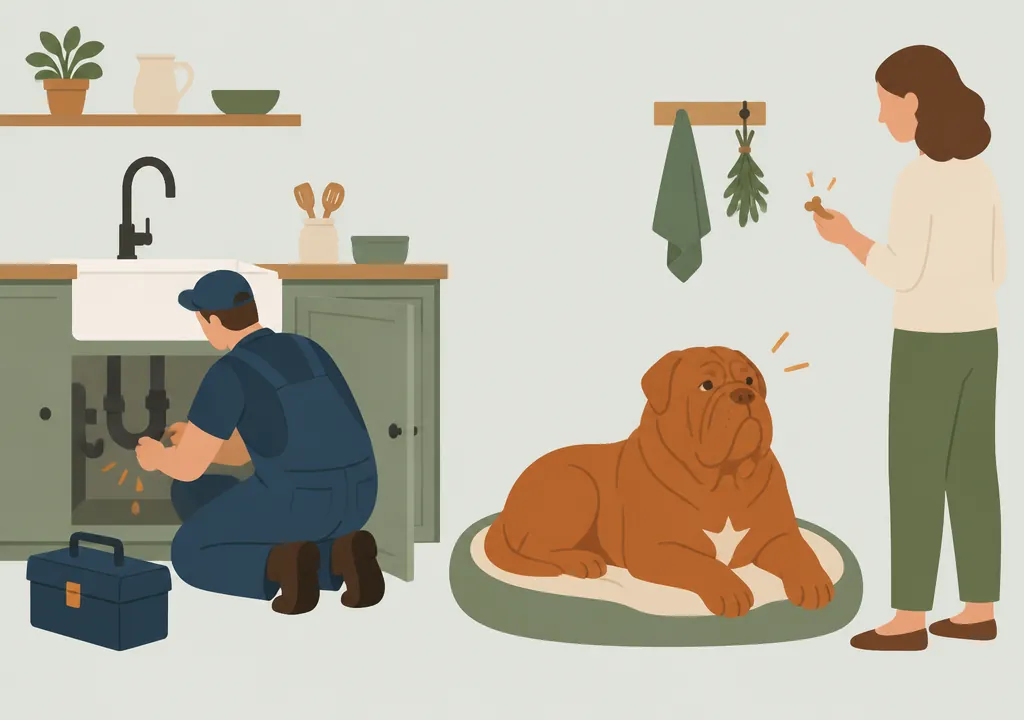
Reserve with visitors
Help a reserved guardian accept visitors without stress.
Reserved by nature, a Dogue de Bordeaux shows a hundred pounds of watchfulness when a visitor comes to the door. Early lessons teach a future giant that attention and relaxing near activity earn rewards.
The full guide runs from choosing rewards to calm management around guests.
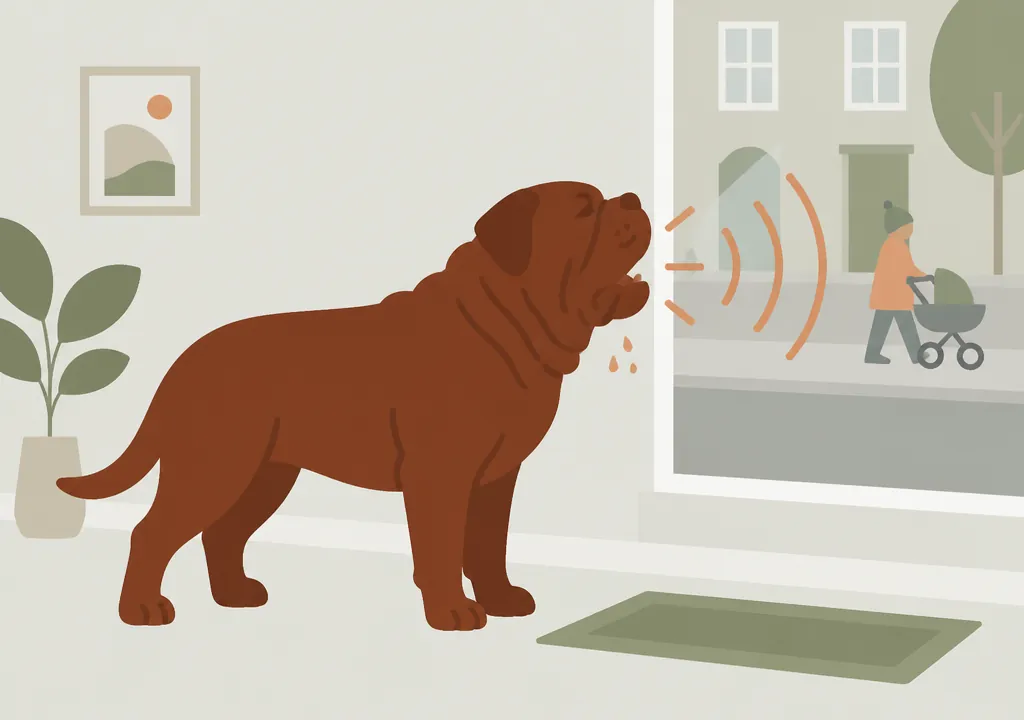
Barking at the window
Teach a deep-voiced watcher to check, then settle.
A person passes the house, your Dogue de Bordeaux watches quietly, and nobody responds. Later, an alarm brings everyone to the window. That difference is worth noticing. A household can become very attentive to noise while overlooking the quieter choices it would like the dog to make more often.
Rewarding calm means giving those choices a clear outcome before a bark is needed, while the dog can still choose easily between watching and resting. It also means arranging a comfortable resting place and managing events that remain too difficult while the household is busy. Neither a reward nor a familiar mat makes every view or arrival manageable immediately.
Read the full guide: Dogue de Bordeaux Barking: Triggers and Rewarding Calm
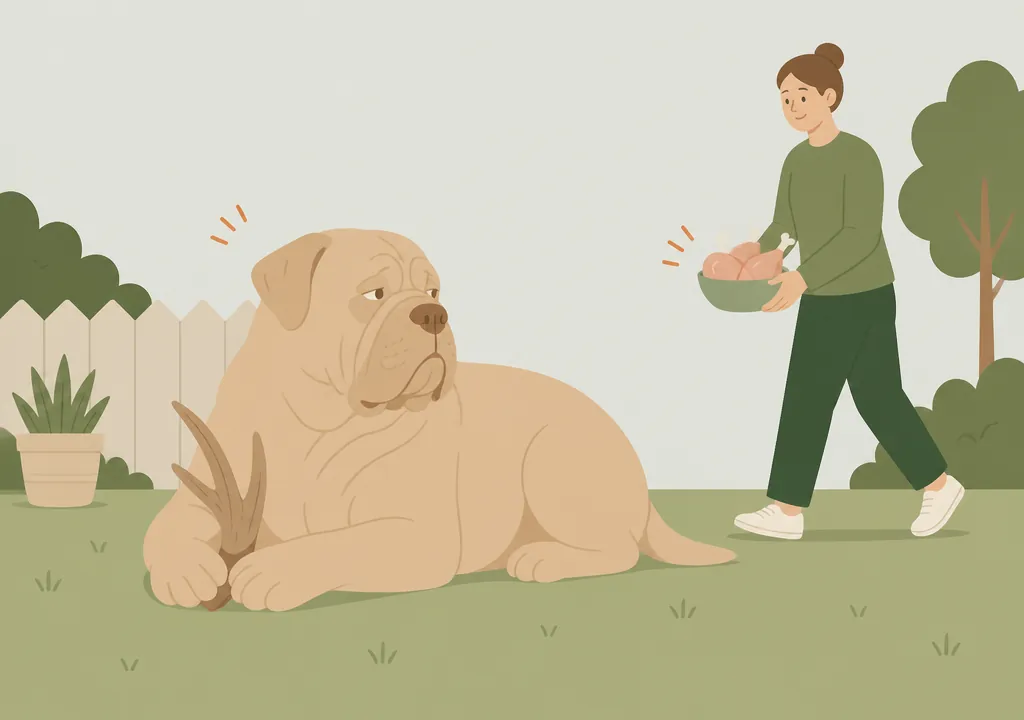
Guarding food and chews
Build trust around bowls and chews from day one.
Your Dogue de Bordeaux guards because the breed was built to watch and stand firm, and bowls and the front window are where it shows. It is an instinct to manage, not a skill to teach.
The full guide explains why a Dogue guards and how to shape a calm presence.
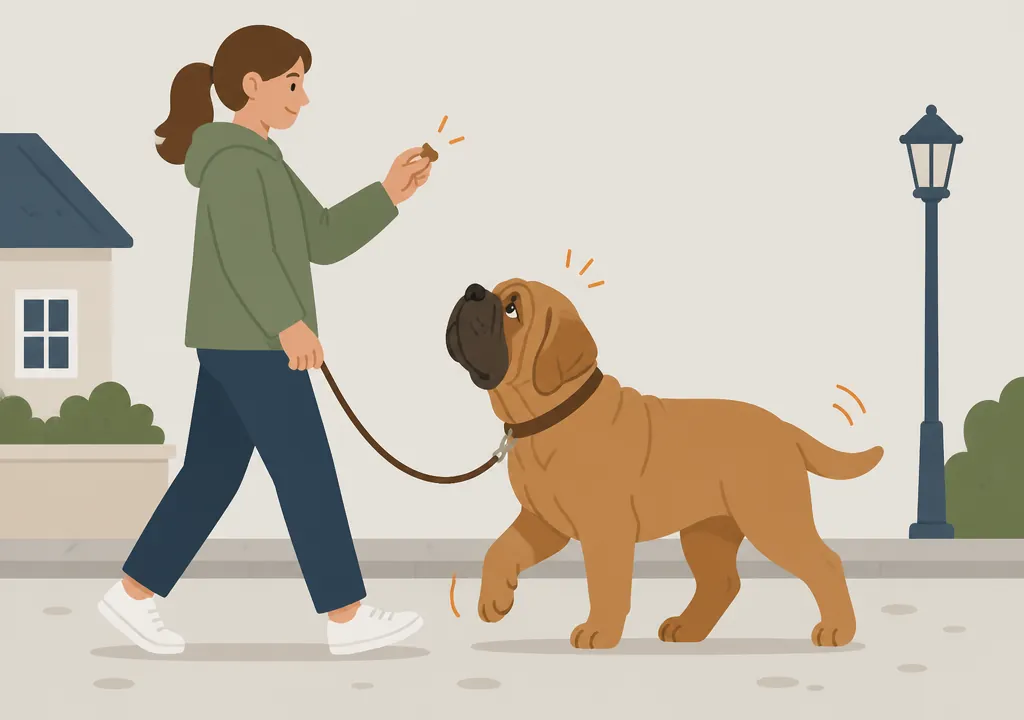
Pulling on the leash
Start loose leash habits while your Dogue is still small.
Boredom, not missing miles, is what makes a Dogue de Bordeaux pushy on the leash and off it. A Dogue with a regular job works a rally course and then flops onto cool tile.
The full guide sizes up your dog's needs and shows which jobs suit this heavy build.
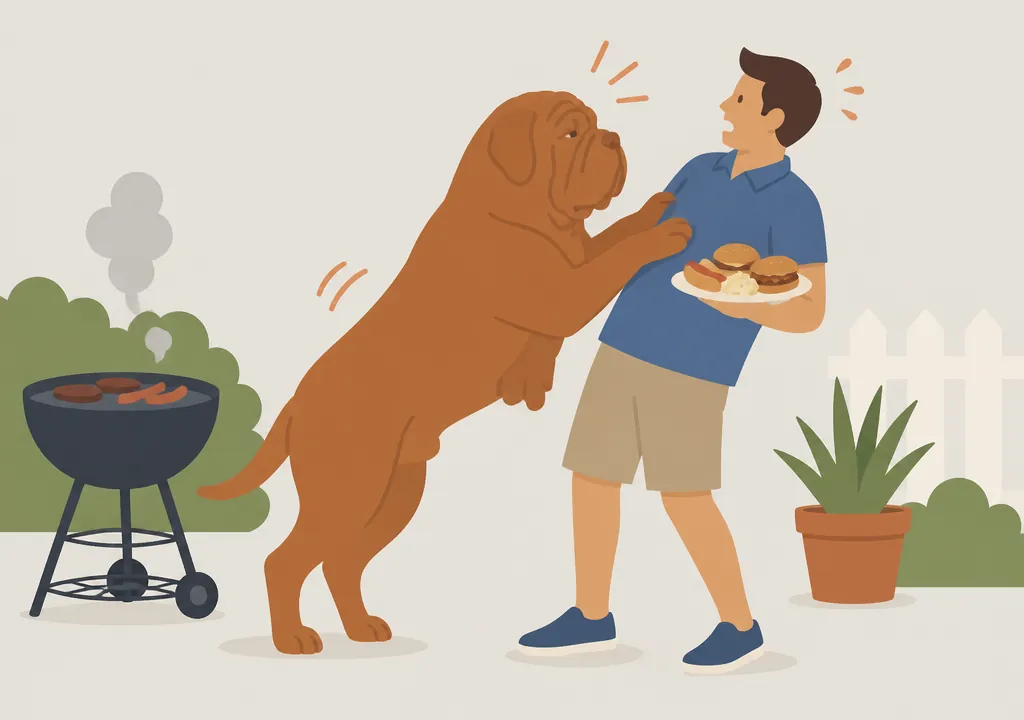
Jumping on people
Keep all four paws down when a heavy dog says hello.
A friendly Dogue de Bordeaux can make a greeting difficult simply by putting a large body where a person was planning to stand. Enthusiasm does not remove the need for safe footing and usable space. Before asking the dog for better manners, arrange the adults so that nobody has to absorb a jump while trying to deliver a training lesson.
The plan below rehearses a brief approach with a willing helper, teaches what earns contact and then carries that arrangement to arrivals. The front doorway comes later because opening it, handling belongings and greeting a strong French Mastiff are several jobs at once. A planned greeting gives each adult one clear responsibility and lets the dog learn without the whole visit depending on immediate success.
Read the full guide: Polite Greetings for a Dogue Who Outweighs Most Guests
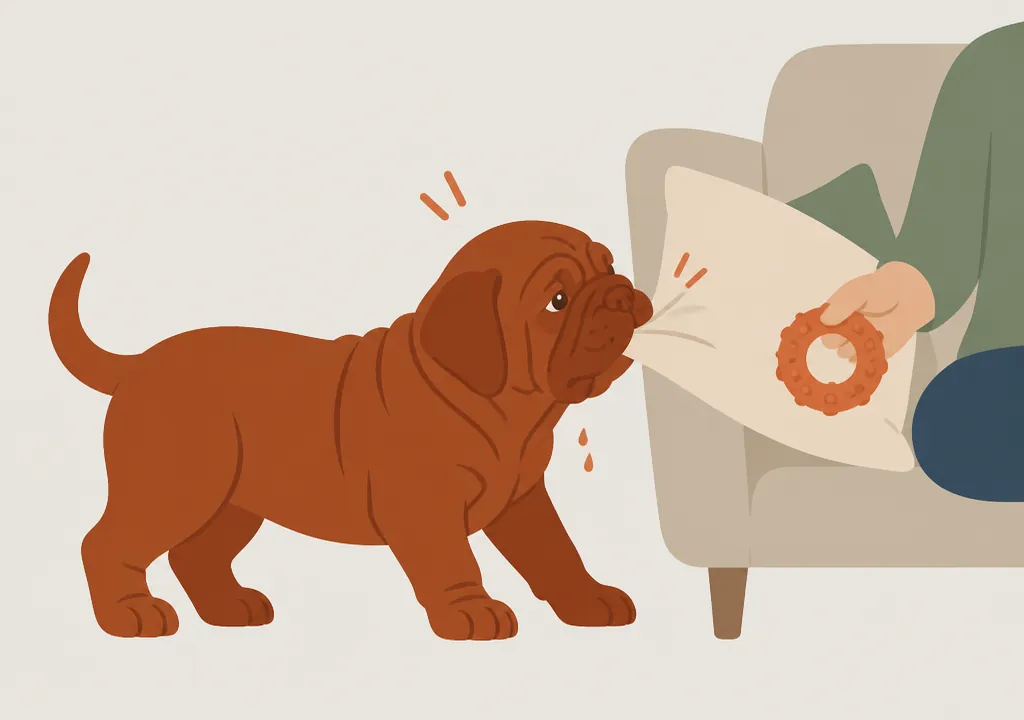
Puppy mouthing
Guide a mastiff puppy's mouth gently onto toys.
One predictable routine trains a Dogue puppy's mouth and bladder alike. Keep the potty route the same, supervise indoors and reward the moment the puppy finishes, because missed signals get harder to manage at full size.
The full guide follows one day from waking to bedtime, crates and accidents included.
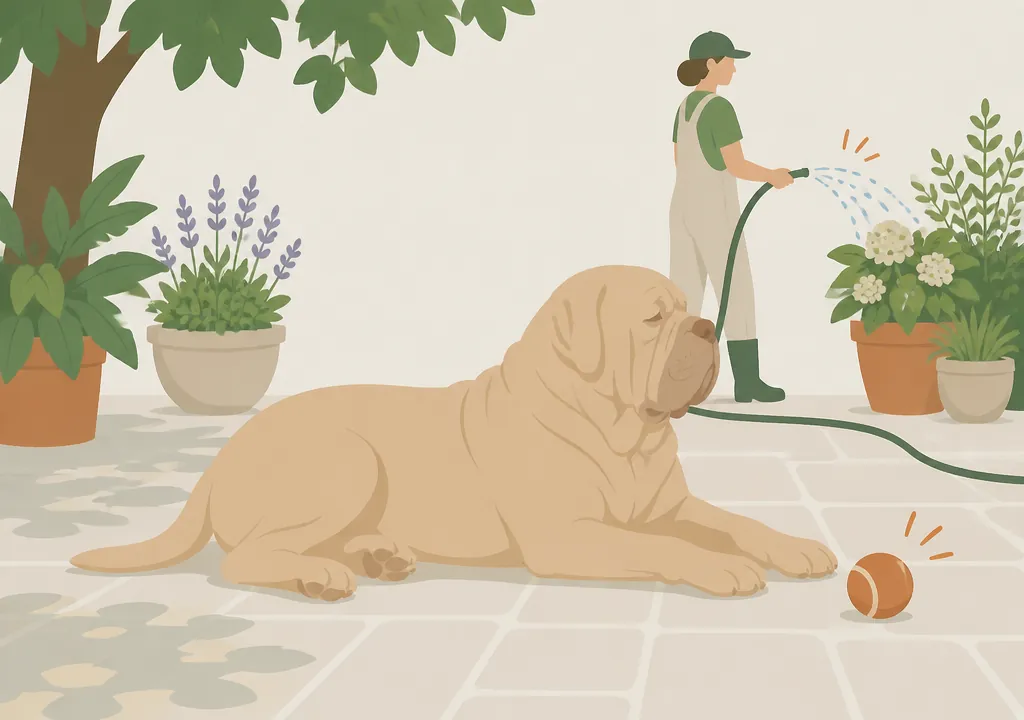
Exercise and rest while growing
Protect growing joints with the right mix of play and rest.
Relentless mileage is the wrong target for a Dogue de Bordeaux. Powerful body, moderate energy and still-forming joints mean movement, thinking and recovery have to fit together.
The full guide maps exercise, brain games and weather decisions into a daily rhythm.
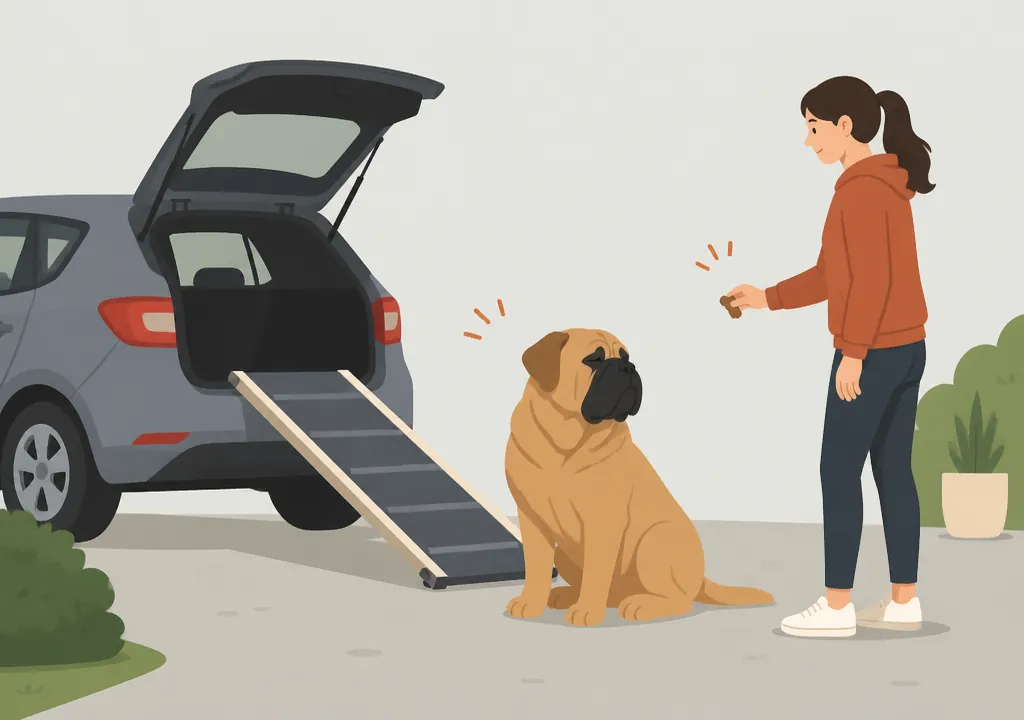
A stubborn streak
Find rewards that motivate a dog who likes to think it over.
Learning a cue quickly does not mean a Dogue de Bordeaux will use it around visitors. A sensitive, powerful dog who thinks it over is not being defiant.
The full guide separates trainability from compliance and matches rewards to your dog.
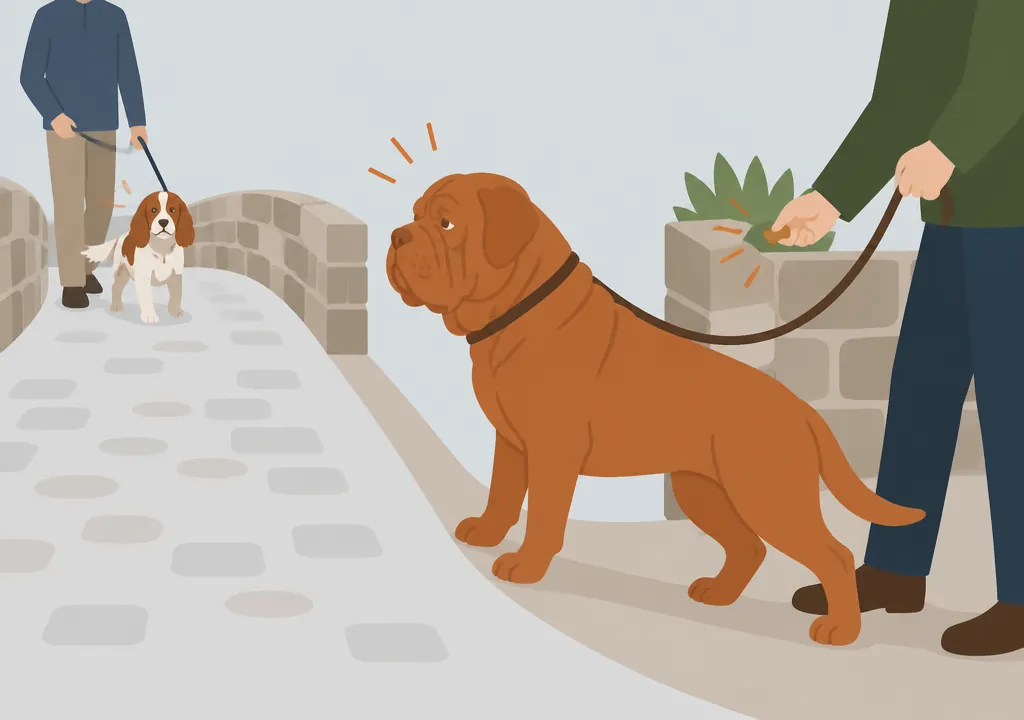
Tension with other dogs
Keep meetings with other dogs calm and well spaced.
The standard calls the Dogue vigilant and courageous without being aggressive, and the dog rates middle marks with other dogs and strangers. At up to 110 pounds, a small lapse in manners becomes a big problem.
The full guide separates vigilance from aggression and keeps dog meetings calm.
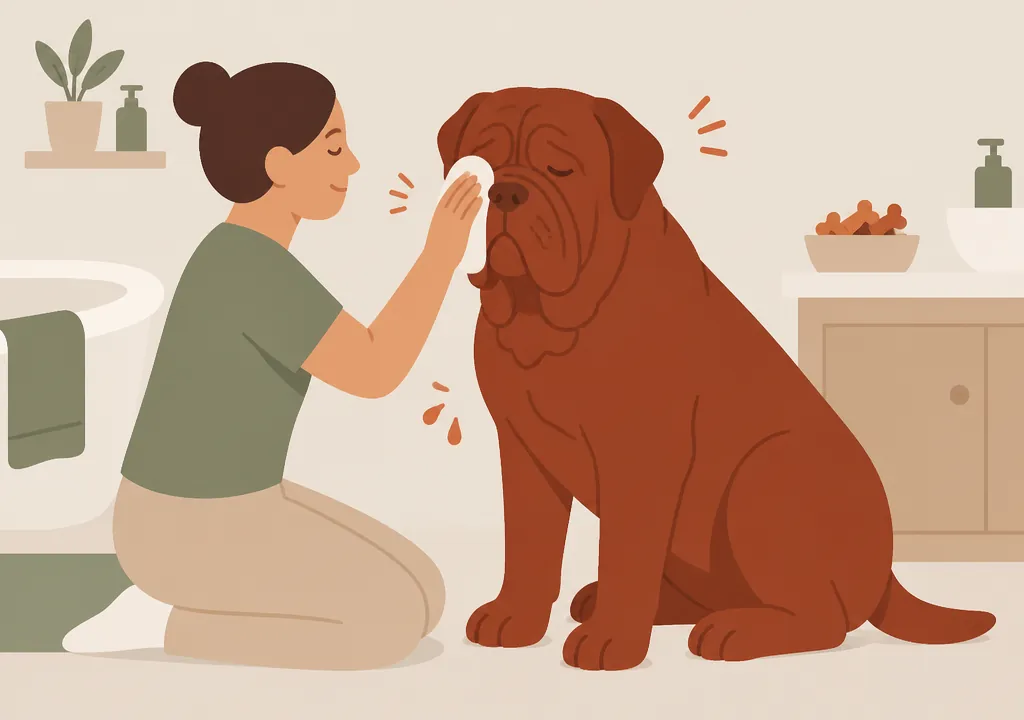
Face, ear, and nail care
Make wrinkle, ear and nail care easy for a big dog.
Accepting a hand on the cheek does not mean your Dogue de Bordeaux welcomes the cloth that follows it. Offering a paw may be comfortable until a nail tool moves closer. Each change adds something to the experience, and the response can change with it. Separating those moments gives you more useful information than deciding the dog dislikes grooming altogether.
A dog this large benefits from a clear way to participate and a dependable way to pause. The adult needs those signals too, because finishing the whole task can otherwise become more important than noticing how it feels.
Read the full guide: Making Wrinkle, Ear and Nail Care Easy for Your Dogue de Bordeaux
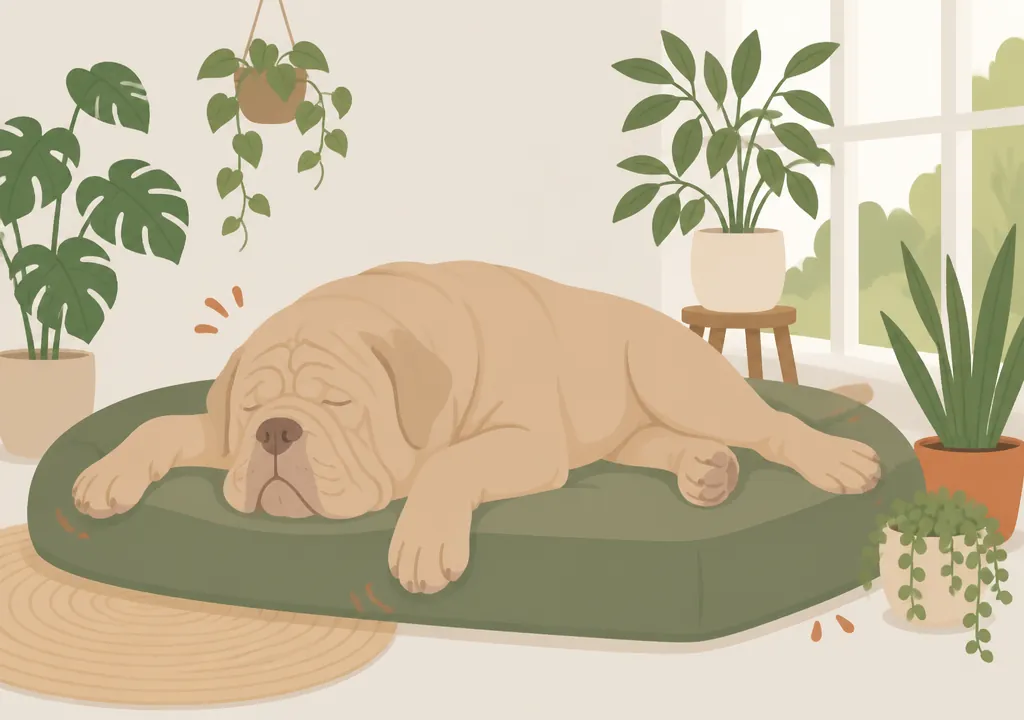
Time alone
Teach a devoted dog that time apart is calm and safe.
Deeply attached and very large, a Dogue de Bordeaux needs more than a crate that fits. Entering, staying and being alone are three different skills, and a dog with only the first can fall apart alone.
The full guide matches each sign at the crate to a rewarded next step.
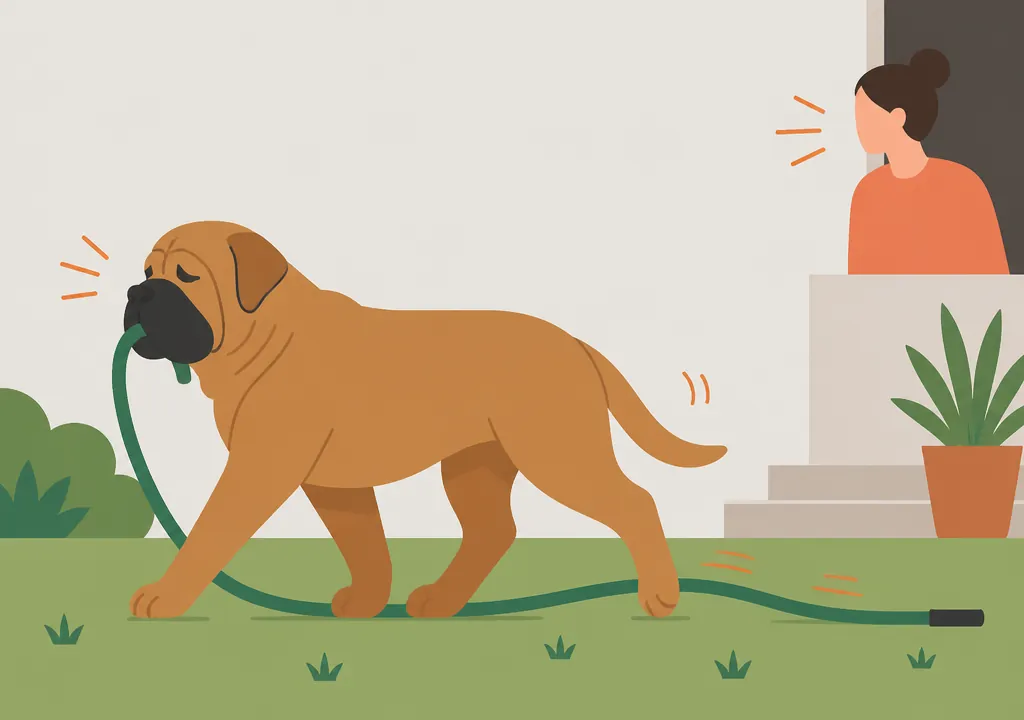
The adolescent months
Stay patient through a slow-maturing breed's teenage phase.
A teenage Dogue de Bordeaux can receive several different answers to the same action. One adult rewards waiting by the door, another opens it while the dog pushes forward, and a third repeats a cue until everyone becomes frustrated. A larger body makes that confusion more noticeable, but it does not make the lesson clearer to the dog.
Adolescence is a useful time to coordinate the people doing the teaching. Familiar responses may become less reliable around excitement or distraction, and a dog who looks nearly grown still needs manageable practice. Strength and maturity do not arrive as one finished package.
Read the full guide: Getting Your Teenage Dogue de Bordeaux Through Adolescence