
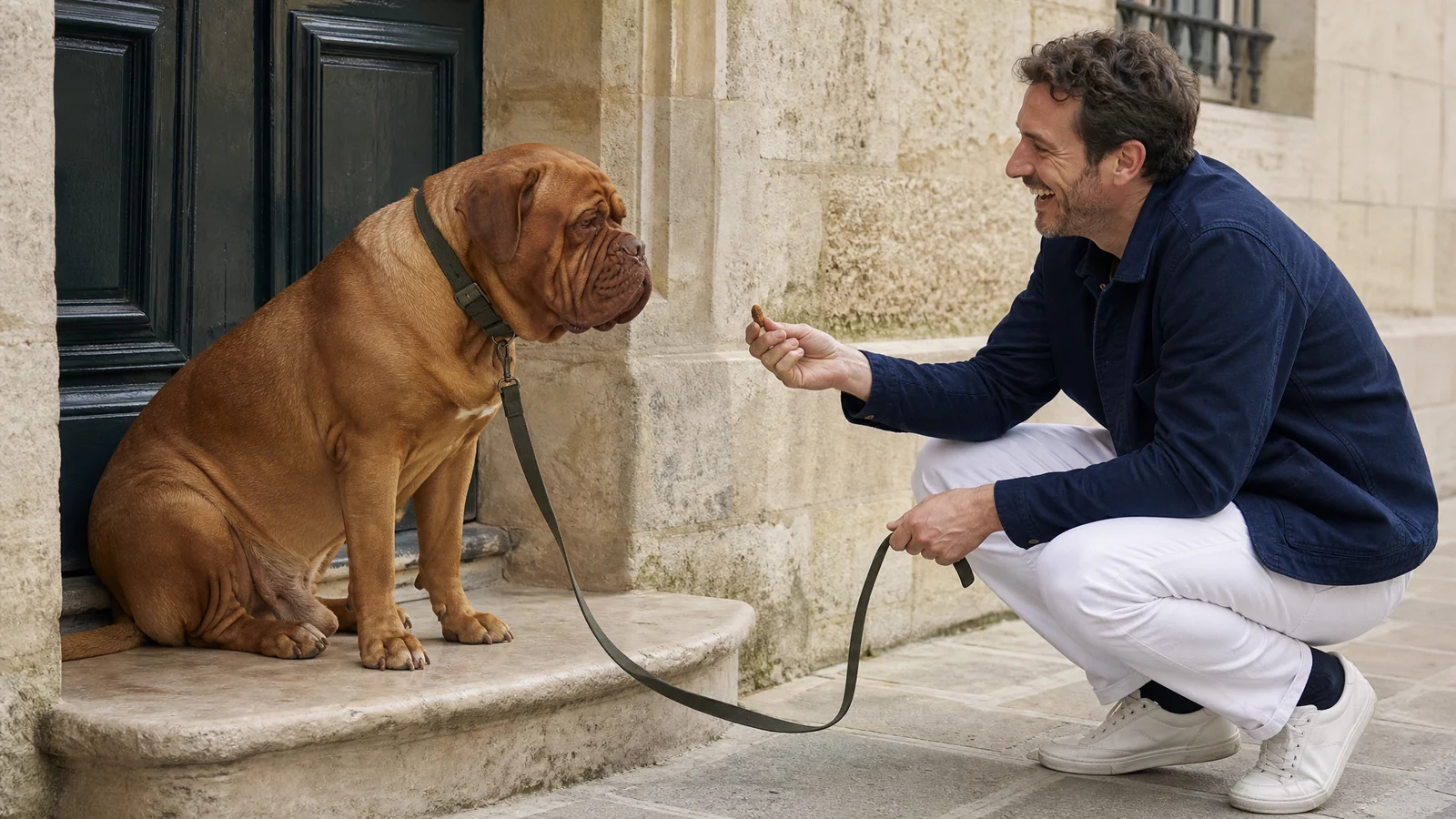
At a doorway, a stationary Dogue de Bordeaux leaves the person holding the leash with a practical decision. You can keep repeating the request, or examine what makes the next movement difficult to choose. The dog may be uncomfortable, uncertain about the destination or simply unclear about the action you intended. Calling the moment stubborn does not distinguish those possibilities.
This guide focuses on cooperation when movement stalls, from ordinary room changes to a familiar walking route. We will check comfort, examine what the transition predicts and teach a small movement response away from the difficult situation. Rewards then support an understandable choice instead of becoming a growing offer made while a large dog remains planted. The goal is comfortable participation that you can use again tomorrow.
Dogue de Bordeaux Temperament and Stalled Motivation
The breed's calm appearance can encourage people to assume that a motionless dog is making a deliberate statement. Appearance alone cannot tell you why the dog stopped. Notice the place, the requested movement and what happens when you give them room to look or change position.
The UKC breed description recognizes an attentive guardian temperament, while individual behavior still depends on the situation. A French Mastiff may notice something you have not noticed. Pausing to understand the setting gives you more useful choices than treating the breed description as an explanation for every refusal.
Keep the immediate situation safe. Move away from traffic or other hazards using a familiar manageable route when possible, and avoid turning a narrow passage into a prolonged training session. A difficult moment is not always the right place to teach a new skill.
Our Dogue de Bordeaux trainability guide examines the broader question of learning and reliability. Here, the narrower job is understanding what happens between standing still and taking the next comfortable step with you.
Comfort Comes Before Motivation
Check whether the movement itself has changed. A dog who previously crossed a threshold easily but now hesitates may need assessment rather than more rewarding food. Notice footing, room temperature, recent activity and whether similar reluctance appears elsewhere, without deliberately repeating a movement that seems uncomfortable.
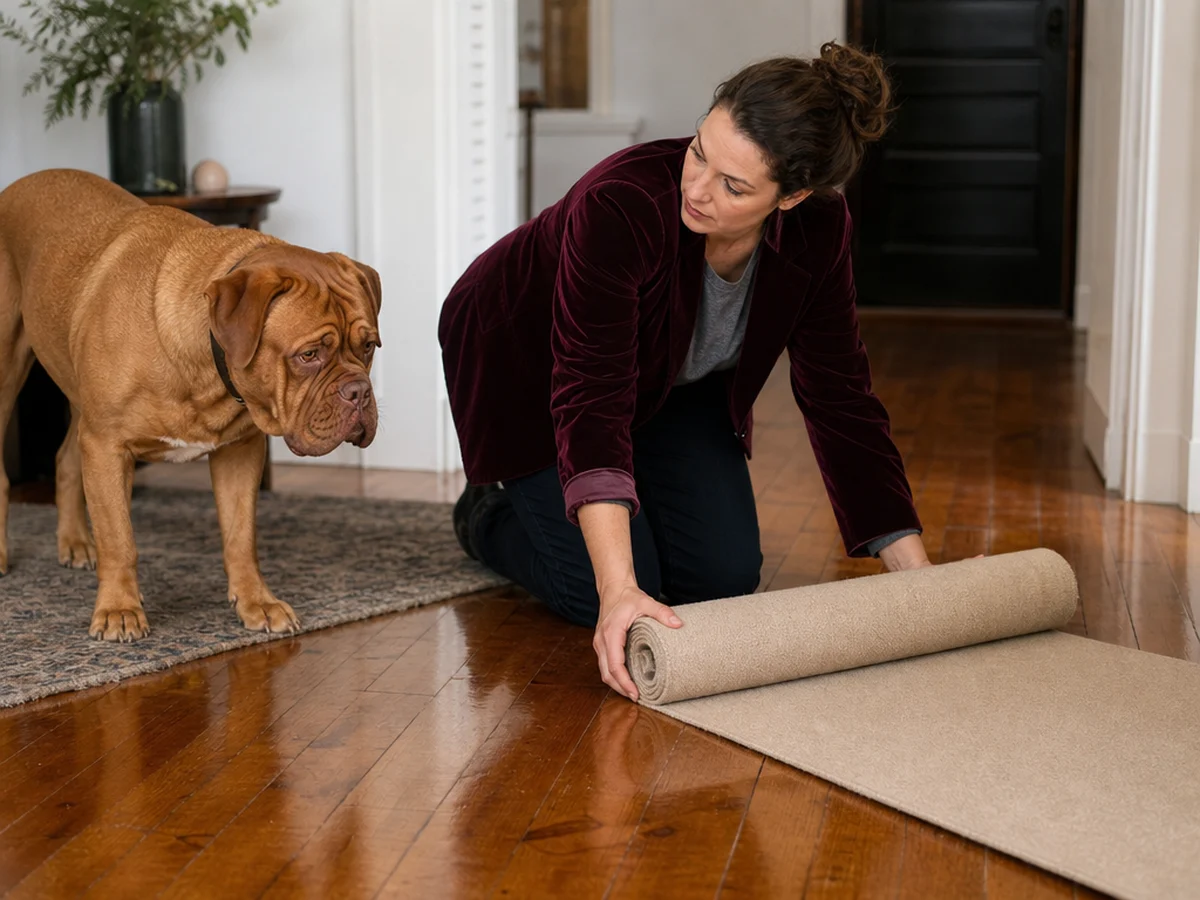
Continue regular veterinary visits, bringing up any sudden change or lasting difficulty with movement, rest or handling. Describe the exact action that has become difficult. Saying the dog refuses to turn on a particular surface gives a clearer starting point than saying their temperament has worsened.
Review the equipment involved in the transition too. A twisted strap, an awkward attachment or a leash caught around furniture can change the task. Check the setup calmly and follow fitting guidance rather than assuming that resistance means the dog needs a stronger request.
Comfort includes having room to move. A large Dogue may find a route awkward when a chair, another dog or a person occupies part of it. Clear the space and allow time for a comfortable turn before asking for the next step.
When discomfort is possible, stop treating the moment as a reward comparison. Obtain appropriate help and preserve easy ordinary activities that remain suitable. Training works best when the requested movement is reasonable for the dog to perform.
What Movement Predicts for Your Dogue de Bordeaux
The place beyond a doorway may matter more than the doorway itself. Moving toward the bathroom can predict handling, entering the car can predict a journey and leaving the yard can end exploration. Notice the experience attached to the transition before deciding that the dog lacks interest in cooperating.
Compare a comfortable version with the difficult one. The dog may cross the same threshold freely when nobody is waiting with equipment, or approach a room readily when the next activity is familiar. Those differences help identify what deserves gradual teaching.
Do not lure the dog into a situation they then find hard to leave. A reward can bring them closer without changing how they feel about what happens afterward. Keep the next step small and allow retreat when introducing a new or uncertain experience.
Sometimes the useful change is to make the destination less demanding. A brief visit to a room without handling, followed by an ordinary exit, can help separate the location from a difficult task. Keep necessary care under an appropriate professional plan rather than using practice to delay it.
A Simple Movement Response for Your Dogue de Bordeaux
Teach a small shared movement in an easy place before relying on it at a difficult threshold. Begin with the dog near you, a clear route and a suitable reward ready. The response should be simple enough that both dog and person can recognize when it has happened.
Use a familiar invitation if the dog already understands one. Otherwise, make your movement small and easy to follow, rewarding voluntary steps with you before adding a consistent word. You are explaining an action, not asking the dog to work out a long sequence.
- Choose a quiet area with secure footing and room to turn.
- Invite a small step beside you without drawing the dog into pressure.
- Acknowledge that step and deliver the reward in the new comfortable position.
- Pause, then repeat only while the dog remains willing to participate.
Battersea's marker guidance explains how timely feedback identifies the rewarded action. Keep the reward connected to the step itself, rather than waiting until the dog has wandered somewhere else or begun another behavior.
End with an easy ordinary activity. A small lesson does not need to become a tour of every doorway in the house. The response becomes useful through clear repetitions that leave the dog willing to try again.
Motivation at a Difficult Transition
Return to the difficult location only in a version the dog can manage. That may mean beginning farther away, opening more space or removing equipment associated with a harder task. Use the familiar movement response for a small part of the route rather than asking for the whole transition at once.
Let the dog inspect the setting. A pause to look is not automatically a failure, and a slower comfortable step can be more useful than hurried movement followed by withdrawal. Watch whether they remain available to you instead of measuring success only by speed.
Keep a clear way out of the lesson. If the dog cannot move comfortably toward the destination, return to an easier position and reconsider the next step. Repeating the cue in the same difficult spot gives little new information.
For a large Dogue, the adult's position can change the available route. Standing directly in the path or leaning over the dog's head may make movement awkward. Walk the route yourself first, then check that your position leaves a natural path for the dog beside you.
Revisit the transition during quiet periods, not only when you urgently need to leave. Practice loses clarity when the person is rushing and the destination is unavoidable. Arrange the necessary routine separately while the skill develops.
Rewards That Support Motivation
A reward should make a clear action worthwhile. If every stalled moment produces a succession of increasingly exciting offers, the dog may learn a different pattern from the one you intended. Prepare something suitable before practice, ask for an achievable response and reward that response promptly.
RSPCA training guidance includes food, toys and praise as possible rewards. Observe what the dog values in the current setting, rather than assuming the same choice works equally well during rest, exploration and a busy household moment.
Access can also be useful when the destination is safe. Moving with you may lead to a permitted sniffing area or a familiar shared activity. The outcome should follow an understandable request, with ordinary care still available outside formal training.
Once the response is familiar, keep the reward available without displaying it throughout every request. Acknowledge the action and then deliver the reward. If the response disappears, return to easier teaching rather than treating hidden food as a test the dog must pass.
Consistent Requests Around a Dogue de Bordeaux
Agree on the response you are teaching and the word used to invite it. Different adults may unknowingly ask for different movements while believing they are using the same cue. One may expect a single step, while another expects the dog to cross the whole room and remain there.
Show the successful version to another caregiver during an easy session. Let them observe your position and the reward location before taking a turn. The new person's movement is another feature the dog may need help understanding.
Use a short household agreement to preserve the lesson. Keep it practical enough that someone returning home tired can still follow it.
- Use the same cue for the same manageable action.
- Keep the route clear before inviting movement.
- Prepare the reward rather than bargaining after a long pause.
- Reduce difficulty when the dog cannot respond comfortably.
Our Dogue training foundations connects these habits to the wider routine. A consistent small movement can support daily life without becoming a demand that the dog follow every human step.
Motivation Changes That Need More Help
Seek individual support when the pattern persists despite reasonable adjustments or when approaching the dog becomes unsafe. A veterinarian can assess changes in comfort, and a qualified reward-based professional can help examine the learning situation. Bring specific observations of the locations and movements involved.
Fear around a destination needs more than increasing the reward. Give the dog space and arrange a plan that addresses their concern. Do not repeatedly take them closer simply to prove that the hesitation will eventually disappear.
Notice whether the issue affects other parts of life. Changes in sleep, appetite, social tolerance or ordinary movement can provide important context. Share those observations rather than assuming that a newly difficult transition is an isolated training problem.
Cooperative Movement With Your Dogue de Bordeaux
Make the next step comfortable, clear and worthwhile. Check what the route predicts, teach a manageable response elsewhere and bring it back in small pieces. The dog's participation gives you information about the arrangement.
Patience is most useful when it leads to a practical adjustment. A clearer route, a smaller request or appropriate professional help can change what happens at the next threshold. Comfortable movement grows from understandable practice, with enough space and time for the dog to participate willingly.
 CareMaking Wrinkle, Ear and Nail Care Easy for Your Dogue de Bordeaux
 BehaviorCan a Dogue de Bordeaux Be Left Alone? Teaching Calm Time Apart
 Puppy trainingGetting Your Teenage Dogue de Bordeaux Through Adolescence