
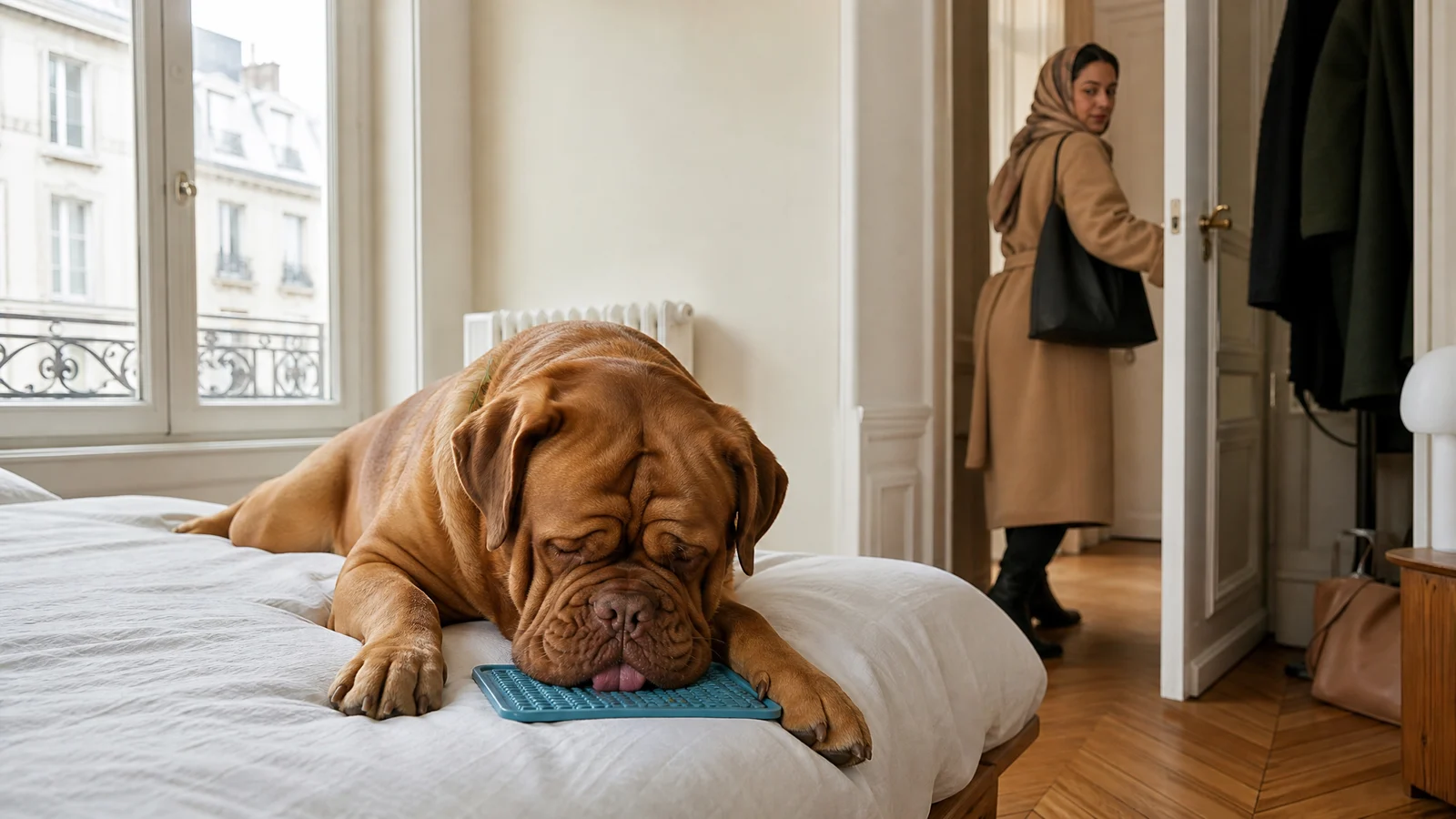
The time you need to be away tomorrow may be much longer than the time your Dogue de Bordeaux can currently spend alone comfortably. That gap deserves a practical arrangement, not a test of endurance. Some dogs rest through ordinary departures, while others become worried before anyone reaches the door. Affection alone cannot tell you which experience your dog is having.
Teaching time apart works best alongside reliable care for absences that exceed the dog's present ability. These are separate jobs with different measures of success. Coverage lets necessary life continue, while practice gives your French Mastiff manageable experiences of you leaving and returning.
The plan below starts with observation, then builds both arrangements. It explains how to choose a small lesson, turn it into an actual outing and respond when your dog's behavior calls for extra support.
What Alone Time Looks Like for Your Dogue de Bordeaux
A quiet house when you return does not reveal what happened while you were away. Use a camera during an absence your dog already appears to manage, or observe a very small separation while another adult watches. The RSPCA separation guidance recommends observation because signs of difficulty can happen out of sight.
Record actions rather than a verdict such as good or naughty. Note whether your Dogue changes resting position, checks the door, eats, watches outside or moves repeatedly between rooms. Compare these actions with their behavior when someone is home. A dog lying rigidly beside the exit presents a different picture from one sleeping loosely on a familiar bed.
| What you notice | What to examine next |
|---|---|
| Rest continues after departure | Whether that comfort lasts through the current short absence |
| Food is abandoned as you leave | Whether an easier departure changes the response |
| Barking follows movement outside | Whether a quieter room reduces exposure to that event |
| Pacing or escape attempts increase | Immediate care coverage and professional support |
Keep the comparison modest. You do not need to leave a worried dog longer to collect convincing footage. End an unsuccessful practice safely and retain the short recording for discussion with a professional. The purpose is to discover a workable starting point without repeatedly creating the problem you hope to change.
Care Coverage Before Longer Alone Periods
Write down the departures that cannot currently fit inside a comfortable lesson. Work shifts, appointments and travel need real coverage if your Dogue cannot manage them. A training plan cannot promise that a necessary absence will become easy by a particular date, so make arrangements before increasing the practice.
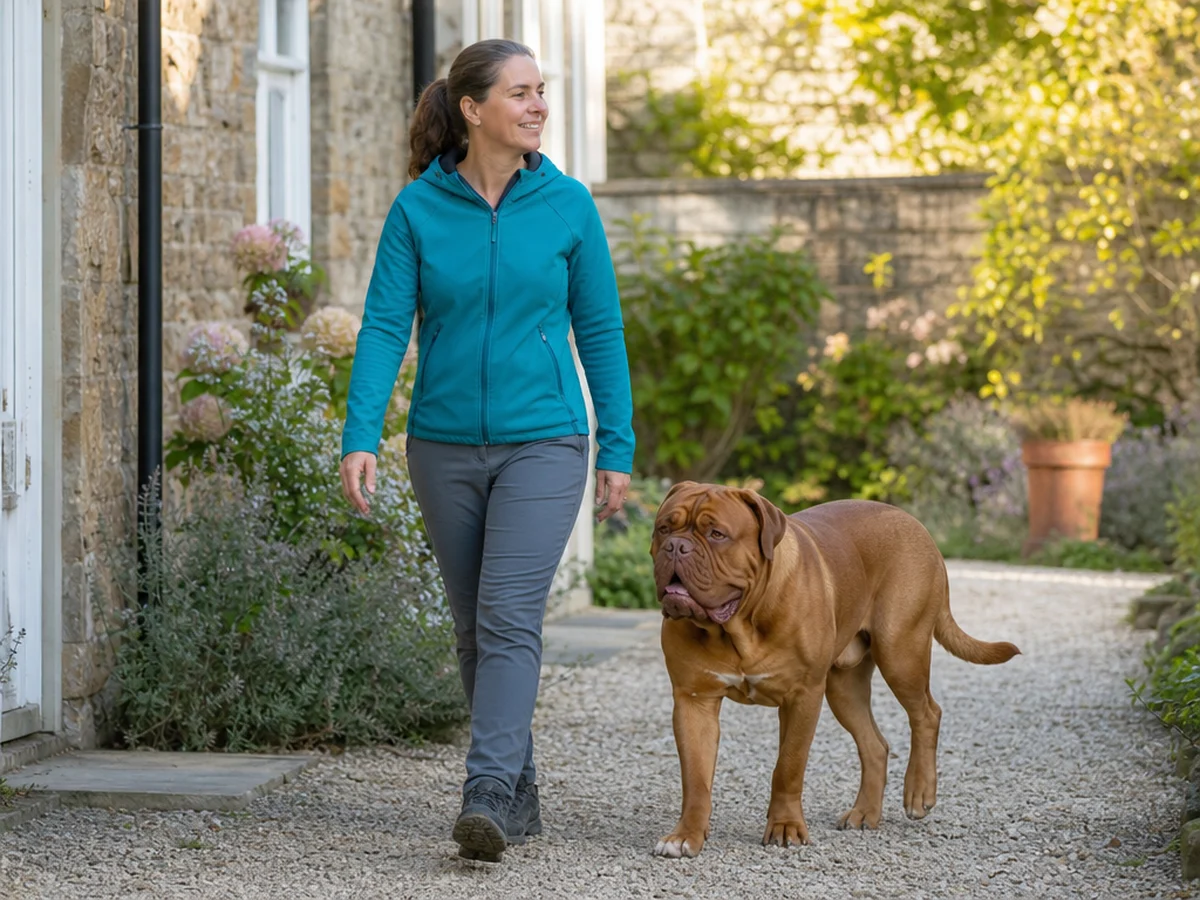
A Familiar Person in the Home
A trusted adult staying with your Dogue may be the simplest option when unfamiliar surroundings are difficult. Check that the dog actually settles with this person after you leave. Someone being physically present is useful only if their presence meets the dog's need for company and safe care.
Arrange an ordinary shared visit first. Show the person how to offer bathroom breaks, secure doors and provide food without a crowd at the entrance. The AKC breed standard describes a substantial guarding breed, which makes thoughtful introductions and competent handling more useful than assuming any available sitter will suit.
Include the quiet parts of care in the handover. Explain where the dog normally sleeps and which household sounds deserve a simple environmental adjustment. A sitter who repeatedly calls the dog over for entertainment may unintentionally make an otherwise restful visit busier than the dog needs.
Care Away From Home
Some Dogues enjoy spending time in a familiar person's house. Others find a different room, resident animals or repeated arrivals unsettling. Introduce the arrangement while you can stay nearby and observe, then check a brief handover before relying on a full day.
Ask about separation from other animals, secure access and quiet rest. A busy group setting is not automatically the answer for a dog who dislikes being alone. Choose the environment according to the individual dog's comfort, rather than treating constant activity as a substitute for that comfort.
A Household Plan That Survives Changes
Share departure times instead of assuming another adult will be home. Identify the gap between one person leaving and another arriving, and arrange a backup for delays. Even a carefully practiced short absence can become a much larger demand when an appointment runs late.
- Name the adult responsible for each necessary absence.
- Give that person the current care and door-security instructions.
- Keep contact details available if the dog does not settle.
- Separate the care schedule from the optional practice schedule.
Review whether the arrangement is affordable and repeatable. If it is becoming impossible to maintain, tell your veterinarian or behavior professional promptly. They need that information to help build a realistic plan, rather than an ideal schedule that nobody in the household can sustain.
A Starting Alone Lesson Your Dogue Can Manage
Choose a settled part of the day after ordinary needs have been met. Comfortable activity can help your Dogue rest, but exhausting the dog is not the aim. Our guide to Dogue play and rest explains how to make the change from activity to quiet more understandable.
Begin with the smallest separation that remains ordinary to this dog. That might mean briefly stepping out of sight within the home, or touching the exit and returning to your seat. If even that changes the dog's breathing, posture or ability to rest, make the movement smaller and seek help with choosing the starting point.
The ASPCA absence guidance emphasizes keeping practice shorter than the period that produces distress. The clock is therefore a record of what happened, not an instruction to remain away after your dog is struggling. Return while the current separation still feels manageable whenever possible.
Use a comfortable, secure space that your Dogue already knows. A crate is appropriate only if confinement is genuinely restful for this individual. Our Dogue crate training guide covers that separate skill. Closing a crate around a worried dog does not teach the emotional part of being alone.
An appropriate food activity may accompany an easy lesson if the dog uses it safely. Watch what happens when it ends, too. Eating briefly and then becoming frantic does not mean the whole absence was comfortable, and swallowing a reward is not by itself evidence that the current step is suitable.
When Alone Practice Becomes a Small Outing
A household movement and an actual departure can mean different things to your Dogue. Carry the comfortable lesson toward a real exit in small changes, while keeping care coverage available. You are looking for continued ease as the circumstances change, not merely a longer period without barking.
Leaving With Ordinary Belongings
Notice whether shoes, a bag or keys change the dog before the door opens. If so, practice a harmless version of that action separately, then return to an ordinary home activity. Repeatedly performing the whole departure ritual while the dog grows more worried would make the rehearsal harder rather than more useful.
Combine a familiar departure action with a very short exit only after both pieces look comfortable. Watch the camera from close enough to return promptly. Avoid adding several new details and a longer absence at once, because an unsettled response would then be difficult to interpret.
Returning Without Raising the Stakes
Come back calmly and offer normal contact if your Dogue wants it. There is no need to withhold affection to prove independence. Allow a bathroom break or drink when appropriate, then let the household return to its usual pace before deciding whether another lesson would be useful.
End practice while it is still going well. An easy repetition does not create an obligation to attempt a harder one immediately. On the next occasion, begin with something familiar and review the response before changing duration. Comfortable repetition can be valuable even when the recorded time stays the same.
Keep the recording conditions consistent enough to compare. A camera pointed only at the bed may miss a dog standing by the front door, while loud background audio can hide vocal changes. Position equipment safely out of reach and check the view before beginning the lesson.
When Alone Time Calls for More Support
Escalating pacing, repeated attempts to escape, trembling or sustained vocal distress need a different response from a simple household distraction. Stop stretching absences and use the safest care arrangement available. Punishment after a departure cannot explain the missing skill and may add worry to your return.
Regular veterinary visits provide an opportunity to discuss changes in comfort and behavior. Contact your veterinarian sooner when the change is sudden, severe or accompanied by other signs of being unwell. A qualified professional using reward-based methods can examine the departure pattern and build practical lessons alongside that veterinary assessment.
- Bring short recordings showing departure and the earliest change in behavior.
- Describe the space used and whether another person or animal was present.
- List the absences you can cover and the ones you cannot currently avoid.
- Report what has changed since the dog last rested comfortably alone.
Do not assume adding a second dog will solve the difficulty. Company from another animal and separation from a particular person are different experiences. Decisions about another pet should stand on their own, while the current dog's care and learning needs receive direct attention.
If distress starts during a lesson, return and make the situation safe. Waiting outside for a perfect silent moment can prolong a frightening experience. The useful adjustment happens before the next departure, when you shorten the separation or change the support so that distress is less likely to begin.
Keeping Dogue de Bordeaux Alone Time Workable
Care coverage and practice should remain connected without becoming interchangeable. Tell each caregiver which departures your Dogue currently handles and which still need company. A comfortable lesson is progress, but it does not automatically change the arrangements for tomorrow's longer appointment.
Look for ordinary rest, flexible movement and a dog who can resume normal activity around your return. These observations matter more than a general time target. Keep records simple enough to use, including the setting and behavior as well as the duration.
Your next useful step may be a slightly longer outing, another easy repetition or better support for an unavoidable absence. Choose it from what your Dogue shows you. That keeps time apart a learnable part of daily life rather than a deadline the dog must meet.
 Puppy trainingGetting Your Teenage Dogue de Bordeaux Through Adolescence
 Training basicsAre Dogue de Bordeaux Easy to Train? Sweet but Stubborn
 BehaviorWhy Does My Dogue de Bordeaux Guard the Home?