
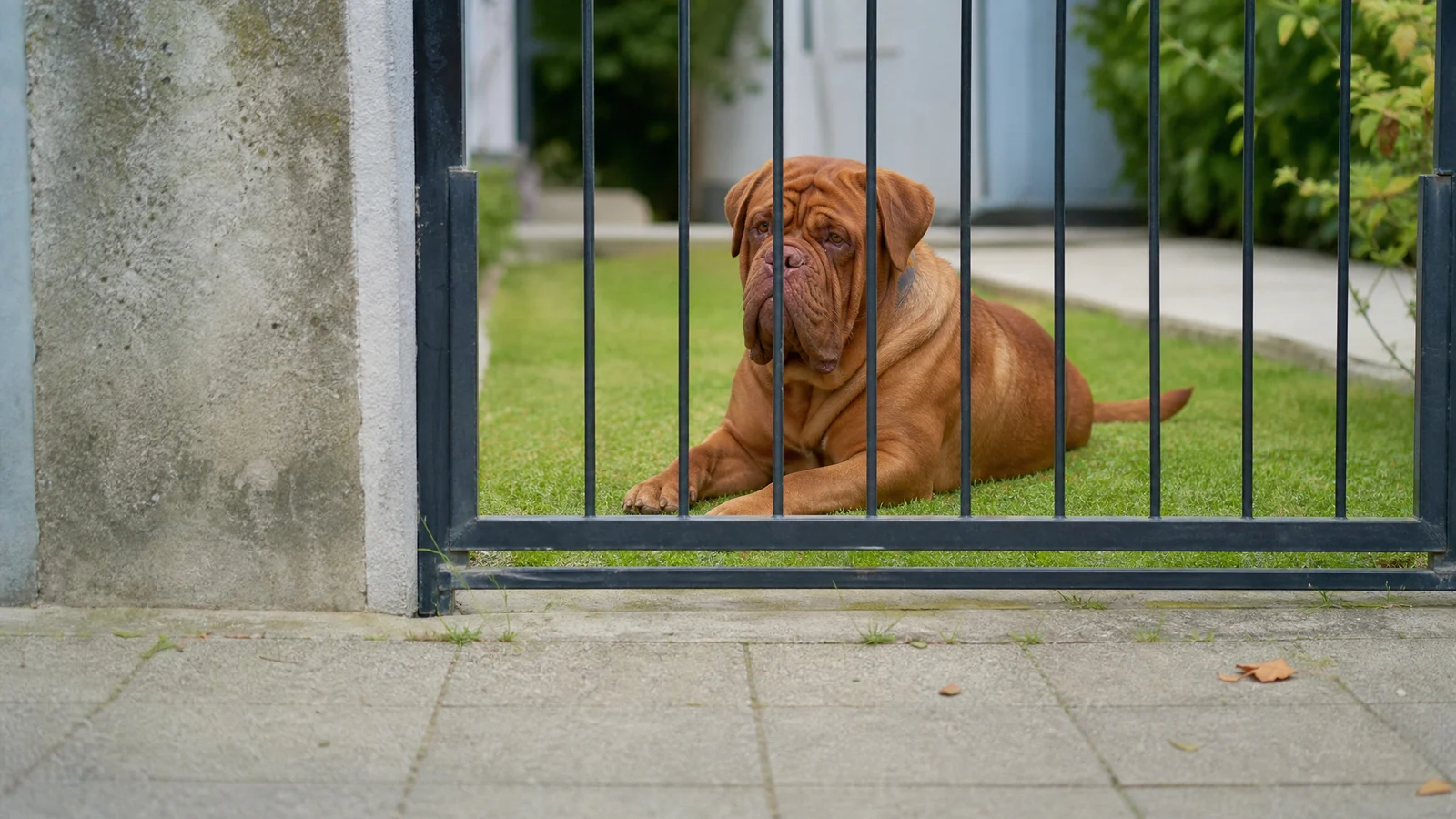
The standard describes a natural guardian, vigilant and courageous without being aggressive, and says careful breeding softened a formerly aggressive temperament. Common advice repeats that line and stops there.
Daily life is more specific. The Dogue de Bordeaux is loyal, affectionate with family, watchful and sometimes stubborn. On the AKC scale, the breed earns 3 of 5 for young children and 3 of 5 for other dogs, both "with supervision," plus 3 of 5 for openness to strangers. Males can reach 27 inches and 110 pounds, so a small lapse in manners becomes a big problem. Handled well, the breed gives you a steady watcher who settles on cue.
We'll walk you through the puppy months and early contact with children, then the teen stage with strangers, adult dogs and houseguests, then the senior years, and close with what to expect over a lifetime.
Is a Dogue de Bordeaux Aggressive?
Not by design. The breed standard says the Dogue de Bordeaux is gifted for guarding, which they assume with vigilance and great courage "but without aggressiveness." Breed standards also name the limits on both sides. An overly aggressive temperament and a timid one are both faults. Viciousness and marked shyness are disqualifications. The target sits between them: a dog who notices everything and stays steady.
The breed page ratings turn that target into a profile.
| Trait | Score | Scale label |
|---|---|---|
| Good with young children | 3 of 5 | With supervision |
| Good with other dogs | 3 of 5 | With supervision |
| Openness to strangers | 3 of 5 | Ambivalent |
| Watchdog and protective nature | 5 of 5 | Vigilant |
| Affectionate with family | 5 of 5 | Lovey-dovey |
Read it as a devoted, highly watchful dog who is neutral about outsiders. None of that is aggression. All of it can tip that way in a dog who is under-socialized, frightened or left unsupervised.
Trainability rates 4 of 5, so the ability to learn is there. The stubborn streak means you pay for cooperation, and short rewarded sessions beat long drills. We have worked with this breed for many years, and the first distinction we draw is between vigilance and the real thing.
- Vigilance looks like a dog who spots a visitor, looks, gives one alert bark at most, checks in with you and relaxes once you greet the person.
- Aggression looks like a rigid body, a fixed stare, lunging or snapping, and a dog who ignores both treats and your voice.
- A growl or a freeze is information, not defiance. Make space first, then work out what worried them.
Dogue de Bordeaux Puppy Foundations
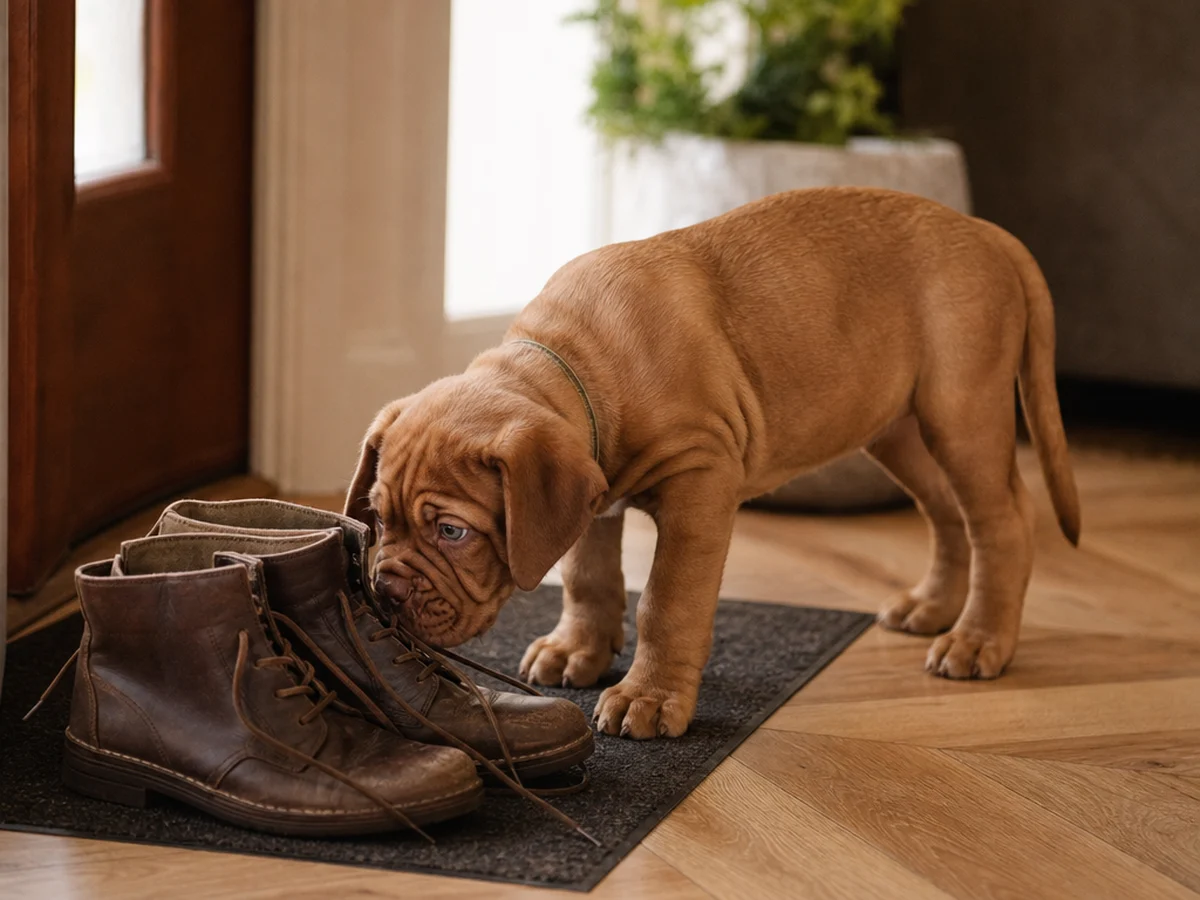
The first months set the pattern for everything after. Puppies of proper temperament are sweet and sensitive, so one big scare can linger. This breed needs early socialization and training, and neither is optional. Keep every exposure small, calm and paid in food. Three areas carry most of the weight: handling, visitors and new places.
Handling
Run a hand over the paws, ears, jowls, base of the tail and collar area every day, and pay with a treat after each touch. The goal is an adult who accepts a nail trim, an exam and a stranger's hand at the clinic. That adult will weigh at least 110 pounds if male and at least 99 if female, so cooperation cannot be negotiated later. Jowl handling also lays the groundwork for Dogue towel training.
Stop while the puppy is still loose and curious. Wriggling and nibbling mean you ran long.
Visitors
Ask guests to sit down and ignore the puppy, and let the puppy decide when to approach. A guest who drops a treat beside their own shoe does better than one who reaches over the head. Give the puppy a mat or pen to retreat to, and never carry or pull them toward a person.
Invite many different people over in the early months, with different voices, hats and bags. Keep each visit short and quiet. A puppy who meets only family learns that strangers are rare and strange, and a watchful breed fills that gap with suspicion.
New Places
Start with a quiet sidewalk, a parked car with a view of traffic and unfamiliar floor surfaces. Stand far enough back that the puppy stays curious. Say your marker word at the moment of calm looking, then hand over a treat. Add busier settings only when the puppy stays loose, and keep outings brief.
Common advice says a puppy should meet as many dogs as possible, as fast as possible. We disagree for this breed. A crowded dog park gives you no say over who rushes in, and one bad meeting can color how a very large adult feels about other dogs. A few calm, known adult dogs teach more than a free-for-all.
Kids and the Growing Puppy
The standard calls the breed excellent with children, while the rating says supervise. Both hold. Intent is usually gentle, and size and clumsiness are the hazards. A puppy who tumbles over a toddler today becomes a dog who can flatten one later, and the French Mastiff is capable of great speed over short distances. Plan for accidents first and you prevent most of the trouble that could grow into aggression.
Supervision
Keep an adult within arm's reach whenever a child and dog share space. Use a gate or pen so the dog has a retreat children cannot enter. Teach a rewarded go-away cue, so the dog learns that walking off is always allowed and never feels trapped enough to growl or snap.
Introduce a toddler in small steps:
- Settle the dog on a mat with an adult beside them, and keep the toddler held at a distance.
- Feed treats while the toddler is merely visible, then move closer over several days.
- Let the toddler, with an adult's hand over theirs, drop a treat near the dog.
- Add one gentle stroke along the shoulder, then stop and watch whether the dog leans in or walks away.
- Finish while everyone is relaxed and send the dog to their spot.
Rough Play
Playfulness rates a moderate 3 of 5, yet moderate play from a very large dog can still knock a child down. Skip wrestling, chase games and tug with kids. When play climbs, stop it. A short time-out on the mat resets the room, and a handful of treats scattered on the floor redirects an excited dog without a scene.
Teaching Kids to Read Signals
Children can learn the early signs of discomfort: yawning, lip licking, a turned head, a stiff body, eyes showing white at the edges and quietly leaving the room. One rule outranks the rest. If the dog walks away, let them go.
Add the basics. Leave a dog alone who is eating, chewing or sleeping. No hugging around the neck, no climbing on the dog and no grabbing ears or jowls. Neighborhood kids who run and scream are hard on any dog, so handle those moments by adding distance.
Teen Months and Stranger Aggression
Adolescence is when wariness of strangers can show up. The breed rates ambivalent on strangers and a full 5 of 5 on vigilance, so caution has room to grow. Not every dog goes through it. The risk is that early caution gets waved off as guardian pride and then hardens. Marked shyness is a disqualifying fault, so address worry early with reward-based practice.
Greetings
Let the dog choose. A stranger stands sideways, skips the staring and tosses a treat off to one side. On walks, stay far enough from a person that your dog can notice them and still eat. Pay for each calm look at the person, then pay again when your dog turns to you.
Shrink the distance across many sessions, not within one. If your dog stiffens, stares or tries to leave, you moved too fast. Back off and make the task easier. Reward-based training still has structure, routine and guidelines. It simply teaches them without fear, intimidation or pain.
Guests
The doorbell is where vigilance gets daily practice. Send the dog to a mat or behind a gate before the door opens. Let the guest come in and sit, then release the dog once the room is quiet, and pay for calm on the mat. For more on how this breed takes a stance at the entry, read why they guard the door.
Your target is one alert, then a look toward you. That is vigilance with good manners.
Reading Body Language
Early signs let you act before a problem grows. They run from easy to urgent:
- A relaxed face, a wagging rear and a curved body mean friendly interest. Reward it and carry on.
- A still body, forward ears and a single bark mean an alert. Tell them the person is fine and pay for the settle.
- A hard stare, a closed mouth and stiff legs mean rising tension. Add distance and ask for an easy cue.
- A growl, a lifted lip or a lunge is a warning. Calmly make space, then contact a reward-based professional.
Adult Dogue de Bordeaux Aggression
Adult males can reach 27 inches at the withers and weigh at least 110 pounds. Females weigh at least 99. Every lapse carries more weight at that size. Mental stimulation needs rate 4 of 5, and a bored, watchful dog invents jobs such as patrolling windows. Other dogs, belongings and warning signs decide whether vigilance stays healthy.
Other Dogs
The rating says supervision. Some people claim big breeds mellow and sort out their own differences. We would not count on that. Dogs do not owe each other friendship, and staged face-offs never help.
For a visiting dog, use this order:
- Meet on neutral ground and walk the dogs in parallel at a comfortable distance.
- Narrow the distance only while both dogs stay relaxed.
- Allow a brief greeting on slack leashes, then call both away and reward.
- Bring the guest dog into the yard before the house, with food, chews and toys put away.
- Give each dog their own mat, and separate them when you cannot watch.
Guests and Belongings
Adults can guard objects as well as space. If your dog stiffens near a chew or bowl, do not reach in. Trade for a better treat and give them room. A sniffing walk or a food puzzle often does more for a bored watcher than any lecture.
With human guests, keep the entry routine from the teen months: mat first, door second, release last.
Warning Signs
Behavior crosses from vigilant to a problem when your dog lunges, snaps or bites, guards items from family members, cannot settle after the trigger has gone, or leaves you feeling unsafe. Call a qualified reward-based trainer or a veterinary behavior professional promptly.
Method matters here. A 2020 study looked at 92 companion dogs and found that dogs trained at reward-based schools showed lower cortisol and fewer stress signals afterward than dogs from schools that leaned on harsher methods. A dog with less stress is easier to read and easier to live with.
Senior Years and Aggression Risk
Vigilance changes shape as a Dogue de Bordeaux ages. Hearing and eyesight may dull, and a dog who once surveyed the yard with confidence may startle at a sound or a shape they cannot make out. At this size, a startled senior can bark or snap before recognizing a friend, so late-life aggression is more often fear than attitude. Approach from the front, say their name softly and let them sniff before you touch.
Keep routines steady. Adaptability rates 4 of 5, yet change still costs an older dog more. Introduce guests and visiting dogs with the same distance and treat habits you used before.
Sudden grumpiness, a new reluctance to be touched or fresh reactivity can point to discomfort. Keep regular vet visits on the calendar and raise these changes there instead of treating them as a character flaw. Ask children to stay calm and gentle around a stiff, tired dog.
Vigilance Without Aggression for Life
Long term, a well-socialized Dogue de Bordeaux is a calm, watchful adult. They notice the stranger at the door, give a brief alert, check in with you and settle. That matches the standard's picture of a dog who is calm and balanced, with a high stimulus threshold.
That steadiness is maintained, not guaranteed. The table shows where the effort goes at each stage.
| Stage | Main job |
|---|---|
| Puppy | Pair people, places and handling with food |
| Teen | Keep greetings easy and distance generous |
| Adult | Supervise dogs, prevent boredom, watch belongings |
| Senior | Go slowly, check health, keep routines steady |
Pay for calm around children, reward good manners with visiting dogs and keep stranger greetings simple. Bring in a reward-based professional early if anything worries you.
Expect a lifetime of small, steady deposits. The breed's loyalty, affection and watchfulness are real, and with ongoing socializing they stay on the vigilant side of the line.
 BehaviorHelping a Reserved Dogue de Bordeaux Relax When Guests Arrive
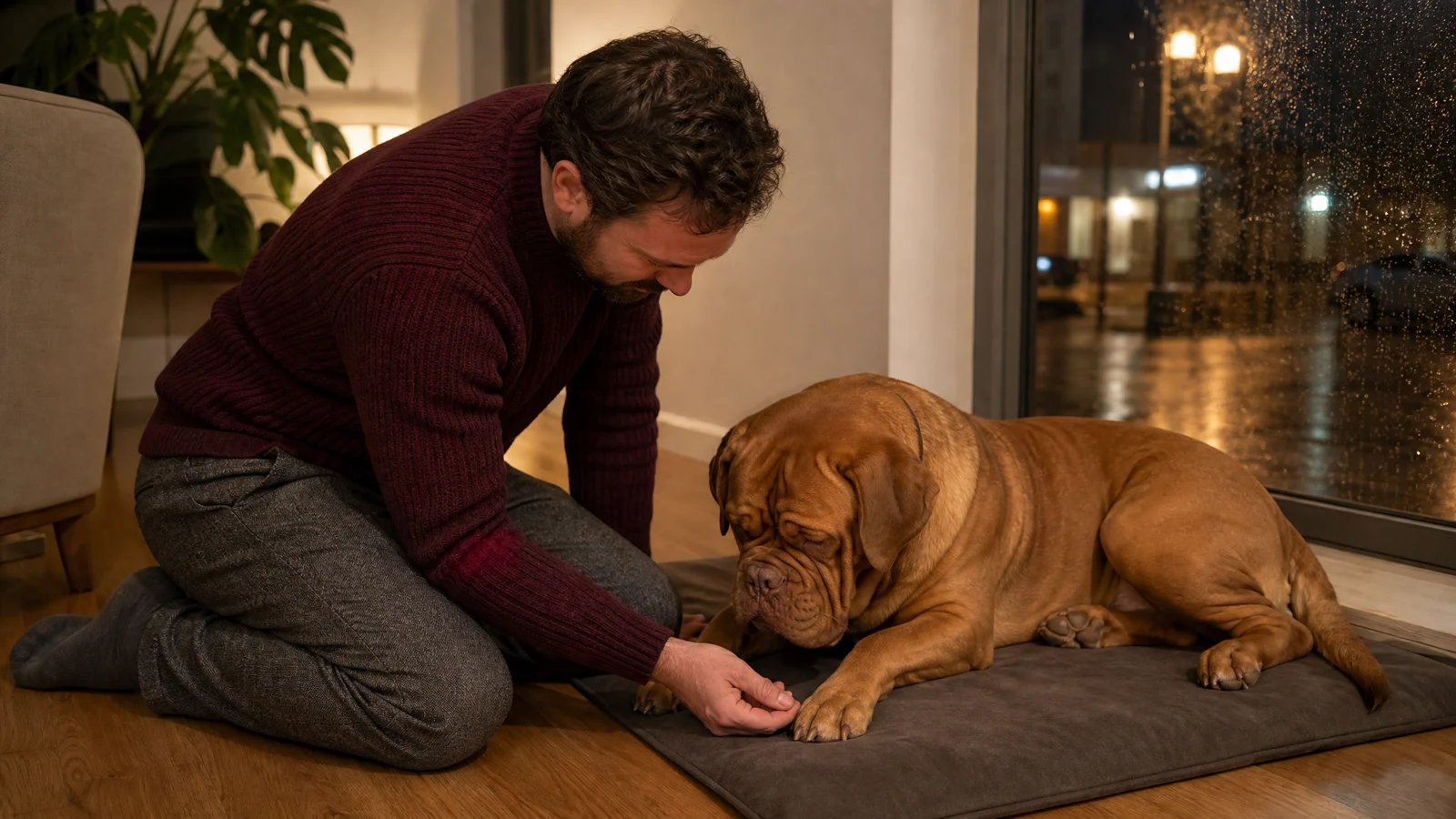 BehaviorDogue de Bordeaux Barking: Triggers and Rewarding Calm
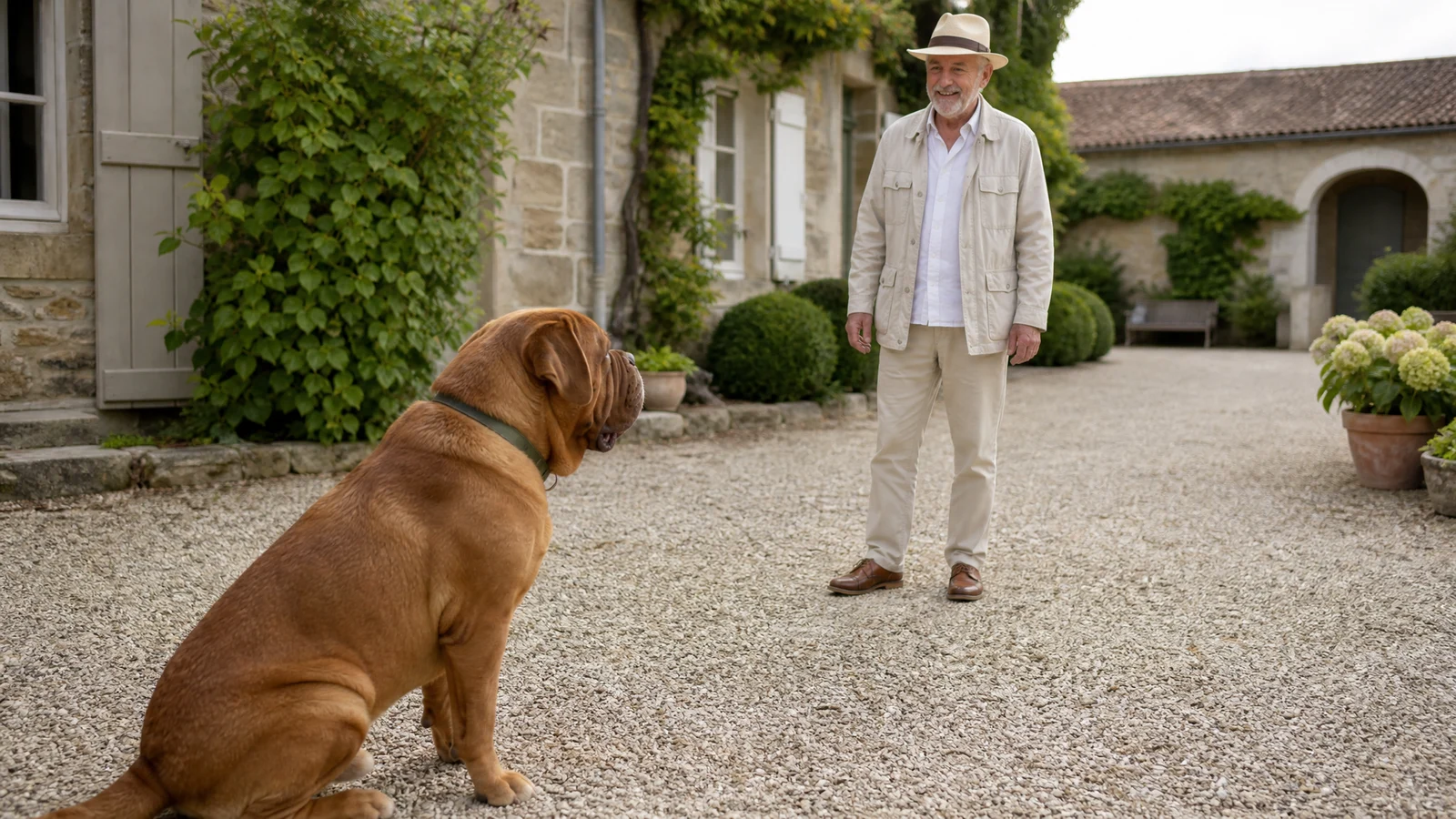 Training basicsPolite Greetings for a Dogue Who Outweighs Most Guests