
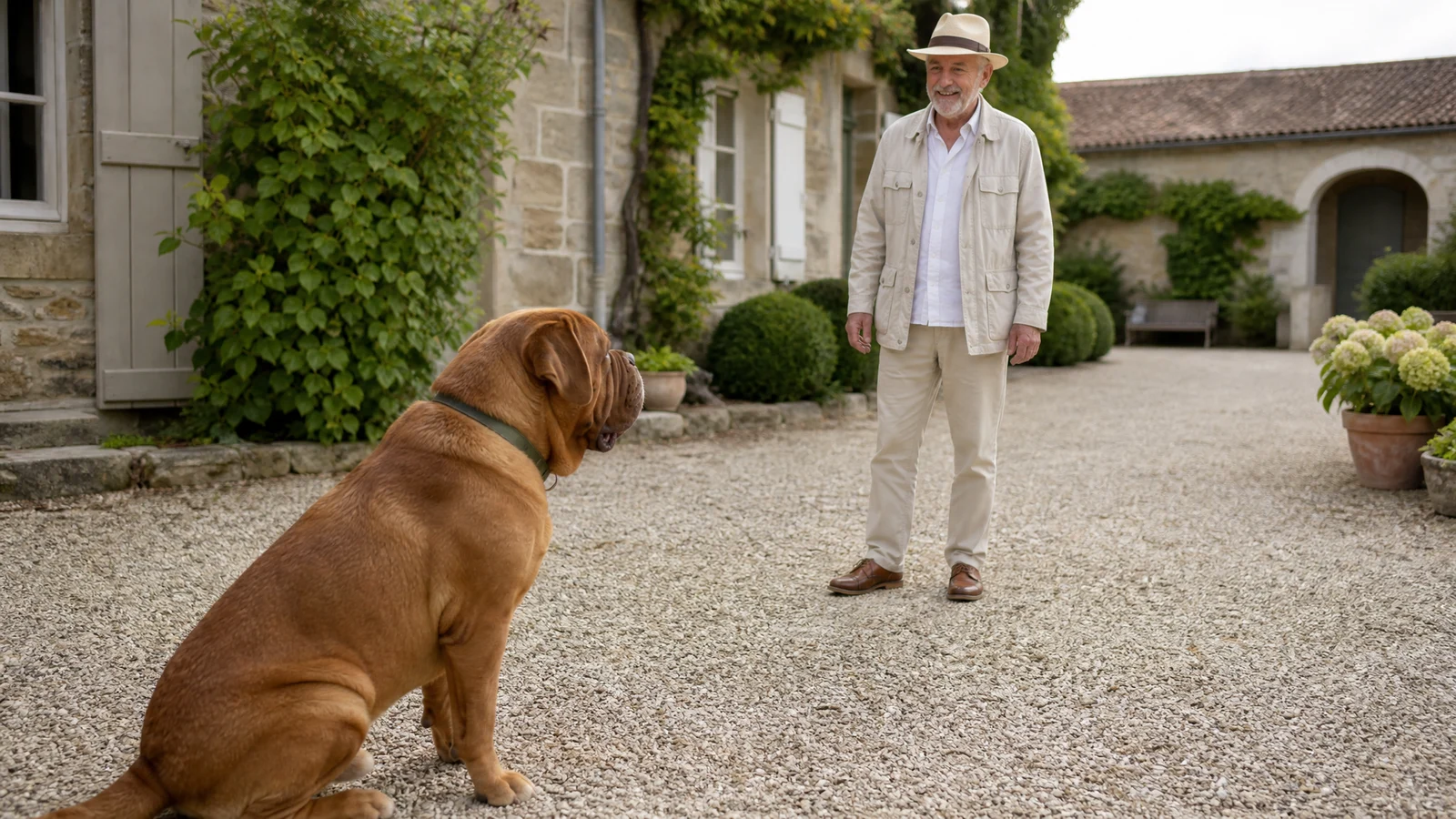
A friendly Dogue de Bordeaux can make a greeting difficult simply by putting a large body where a person was planning to stand. Enthusiasm does not remove the need for safe footing and usable space. Before asking the dog for better manners, arrange the adults so that nobody has to absorb a jump while trying to deliver a training lesson.
The plan below rehearses a brief approach with a willing helper, teaches what earns contact and then carries that arrangement to arrivals. The front doorway comes later because opening it, handling belongings and greeting a strong French Mastiff are several jobs at once. A planned greeting gives each adult one clear responsibility and lets the dog learn without the whole visit depending on immediate success.
Safe Greeting Practice for a Dogue de Bordeaux
Begin away from the front entrance, with a calm adult who understands the plan. The helper's job is to make their approach predictable, while the handler rewards the dog's useful choices. Select a place where both people can stop or move away without backing into furniture or leaving an open escape route.
Give the Handler a Workable Position
Use suitable, comfortably fitted equipment and a secure area. The handler should be able to deliver a reward while maintaining a safe connection to the dog. If the adult cannot manage the dog's strength in that setting, improve the arrangement or seek professional help before bringing someone closer.
Check your hands before practice begins. A leash, reward pouch and door handle can compete for attention, which is why the first lesson happens without the door. Keep rewards accessible so a successful pause does not disappear while you reorganize your grip.
Check the floor where the dog and both adults will stand. Loose rugs or a slippery surface can make a sudden movement harder to manage. Choose secure footing and clear away anything that could move under a paw or shoe, including toys left from an earlier game in the same room.
Choose a Helper Who Can Follow the Plan
The helper should be comfortable around the dog and willing to stop an approach immediately. Do not use a child, a person who could be knocked over easily or someone who wants to test whether the dog will behave. Those visitors deserve a separate safe arrangement while adults develop the skill.
Prepare a Clear Way to Finish
Decide where the dog and helper will go after each short greeting. A nearby resting area or another familiar activity can provide an understandable finish. Without that plan, the dog may keep following the person while everyone waits for the excitement to disappear.
Put these practical pieces in place before inviting the helper forward. They make it easier to deliver a consistent lesson rather than improvise during contact.
- Keep the approach and retreat routes clear of bags and furniture.
- Prepare rewards that the dog can receive comfortably near the floor.
- Agree on a signal for the helper to stop or move away.
- Choose a familiar place for the dog to relax after practice.
Dogs Trust greeting advice emphasizes preparation and rewarding paws on the ground. For a Dogue, this preparation also protects the person who would otherwise be expected to handle the dog's weight during every mistake.
Rehearse Greetings With a Predictable Helper
The dog needs to discover what makes the person approach and what behavior earns attention once they arrive. Begin at a distance where your Dogue can remain available to you. A helper who rushes all the way in removes the easier stages that would let the dog learn the pattern.
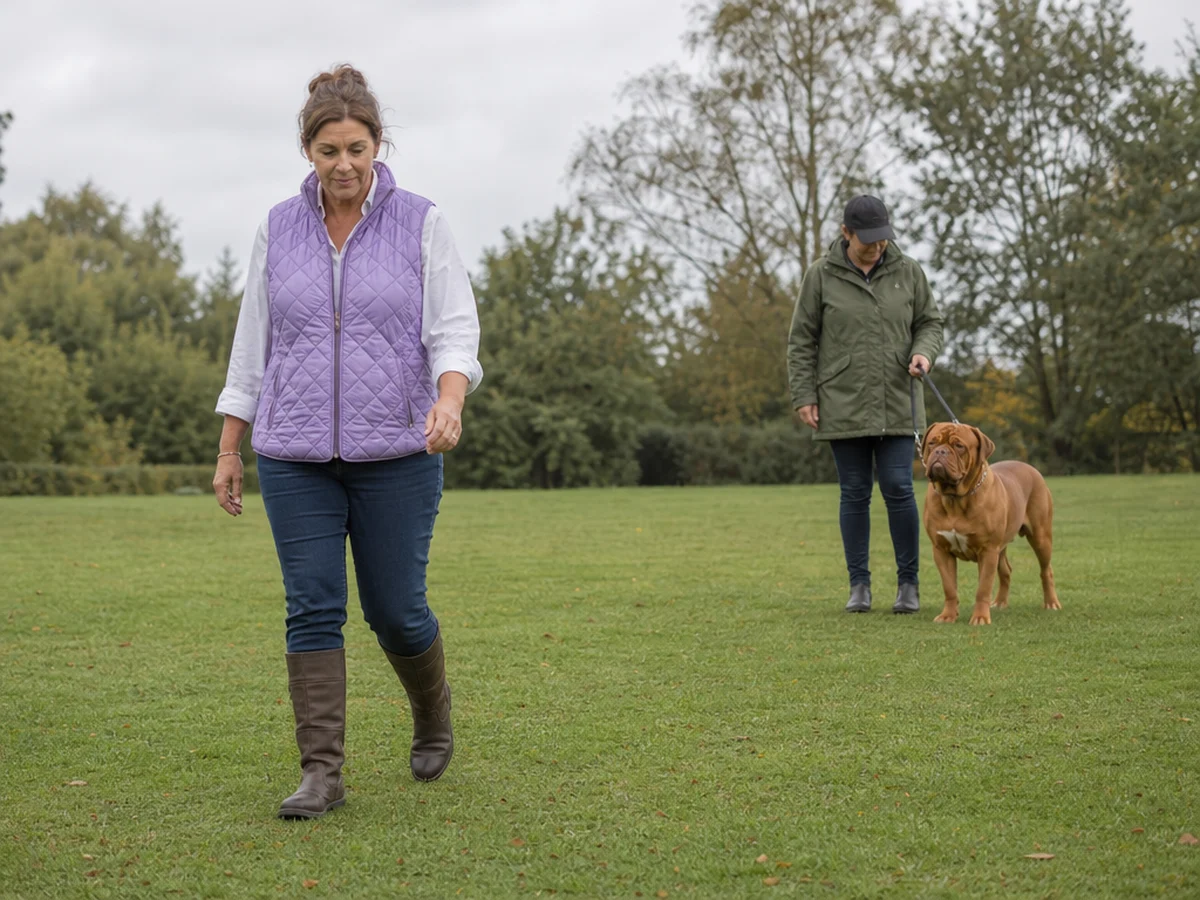
Reward Before the Person Reaches the Dog
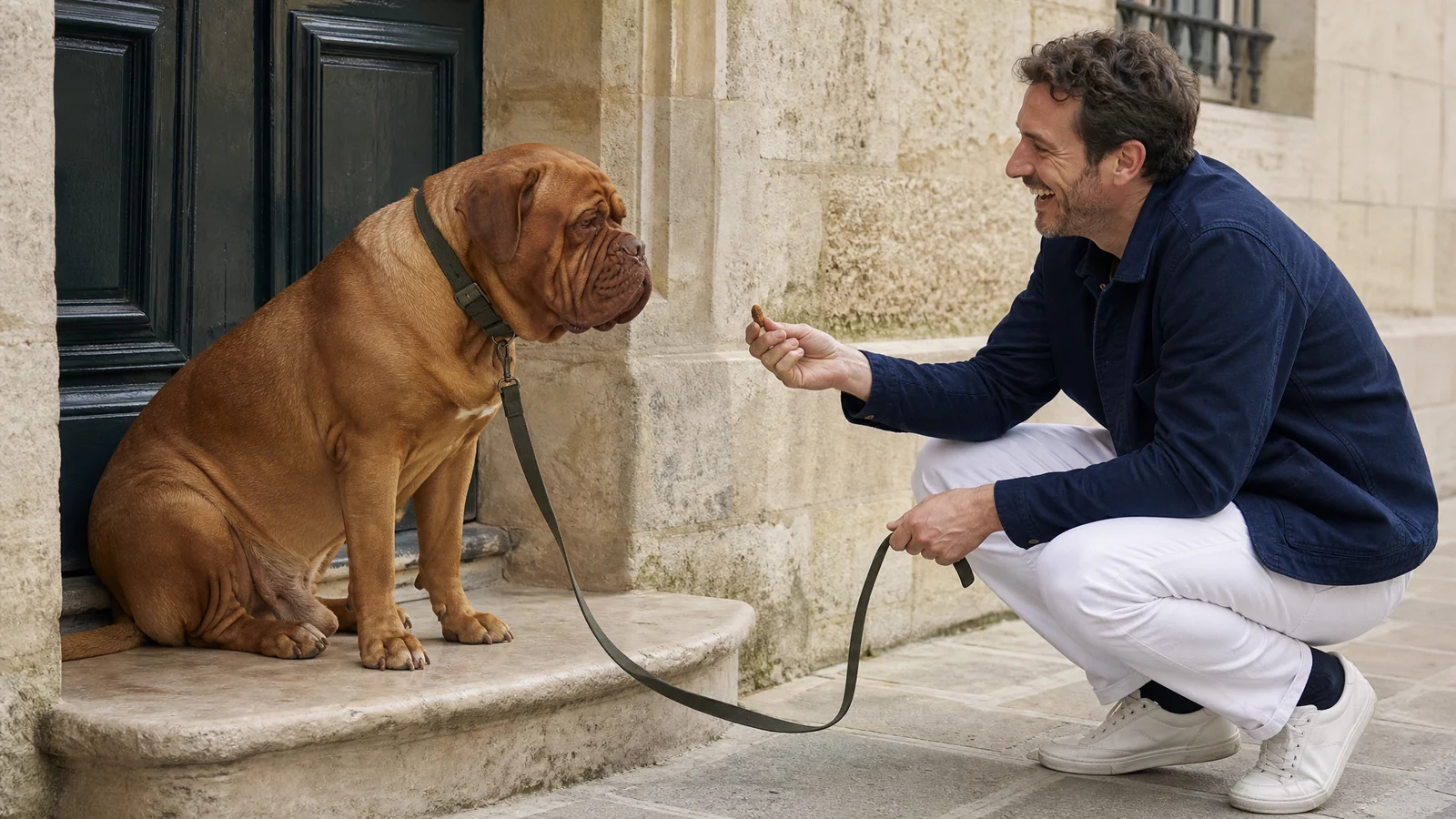
Have the helper take a modest step toward you while your dog keeps their paws grounded. Mark that response and offer a reward low enough to collect without reaching upward. Let the helper pause while the dog finishes the reward and remains comfortable.
Battersea's marker explanation shows why timing matters. A familiar signal can identify the grounded moment before the dog moves again. The reward then gives that moment a clear outcome, instead of arriving only after a jump has already happened.
Keep the approach short at first. The helper can leave again without touching the dog, and that can be a complete successful repetition. You are teaching that a person's movement is manageable before adding all the excitement of social contact.
Let Contact Stay Brief and Comfortable
When the dog can manage the approach, the helper may offer a brief calm greeting if the dog welcomes it. Keep hands away from a position that invites reaching up toward a face. The handler can reward grounded paws while the person remains still and predictable.
A comfortable sit is an option, but standing with all paws down can work too. Choose the position that the individual dog can maintain easily. Do not turn a greeting into repeated requests to sit when the dog is struggling with excitement or physical comfort.
End contact before the dog loses the useful pattern. The helper can withdraw their hands and step away as agreed, while you guide the dog toward the familiar next activity. This gives the greeting a finish that is more understandable than everyone suddenly talking over one another.
If the dog looks uncertain rather than eager, do not treat approaching people as a reward. Our reserved Dogue visitor guide uses space and observation without requiring contact. Polite greetings and comfort around strangers are related but separate questions.
Respond to a Jump by Simplifying
If the dog begins to launch upward, the helper should stop the approach and create space according to the plan. Maintain safety without turning the interruption into energetic interaction. Once the dog can reconnect, choose an easier starting distance for the next attempt.
Notice which movement changed the response. A hand reaching down, an excited voice or the person moving closer may have added more difficulty than intended. Reduce that part rather than repeating the entire approach in exactly the same way and hoping for a different result.
A brief note helps keep practice consistent. Record the distance and the helper's action that the dog managed, not simply whether the session was good or bad.
Transfer Dogue de Bordeaux Greetings to Arrivals
The doorway adds tasks for the adults and stronger expectations for the dog. Transfer the learned greeting in pieces, keeping a practical management arrangement available. An actual visit should not depend on a developing skill being perfect while the door is open and the guest is carrying things.
Let the Entrance Job Finish First
Have the dog in a familiar safe area while the visitor enters, closes the door and puts belongings down. One adult can manage that arrival while another stays with the dog if needed. The greeting practice begins only after the room is ready.
Tell the visitor what to do before the dog approaches. A guest should not have to remember new instructions while a large dog is already moving toward them. If the visitor cannot follow the arrangement, keep the dog comfortably separate instead.
Use the familiar helper rehearsal as the starting point. The dog's knowledge of one adult's calm approach does not automatically transfer to an unfamiliar person with different movement or a louder voice. Make the first version easier than the one that worked during practice.
Keep Household Arrivals Consistent
Family members returning home are practice opportunities too, but only when they can follow the same agreement. Put bags away and prepare before greeting the dog. An adult who invites jumping after work makes the visitor lesson less clear the next day.
Keep the arrangement simple enough for normal life. The following sequence gives adults a shared plan without requiring a long performance from the dog.
- Complete the entrance and secure the doorway.
- Prepare the dog and the person in their familiar positions.
- Offer a brief greeting while paws remain comfortably grounded.
- Finish the interaction and let the dog move into an ordinary activity.
Our Dogue de Bordeaux training foundations explains the wider role of clear rewards and household consistency. Here, agreement about the beginning and end of a greeting is more useful than expecting every adult to improvise the same response.
Public Greetings Are Optional for Your Dogue de Bordeaux
You do not have to stop for every person who wants to meet the dog. Choose space and an easy walking arrangement first, then consider whether a greeting is appropriate. A narrow sidewalk or an excited group may be unsuitable even when your Dogue usually enjoys people.
RSPCA training guidance supports short, manageable lessons. Apply that principle outside by allowing a brief successful exchange instead of turning a chance encounter into an extended test. Ordinary exploration can continue afterward without another greeting.
Use the setting and the participants to make the decision. These are reasons to keep moving or create space rather than begin practice.
- The person cannot follow your request to approach calmly.
- There is too little room for a comfortable exit.
- The dog is already excited, worried or unable to reconnect.
- The person could be injured easily by an accidental jump.
Continue regular veterinary visits and discuss reluctance to sit, changes in movement or unusual responses to touch. A dog who avoids a position may need assessment, not more repetitions. Qualified reward-based help is also appropriate when managing the dog's strength is becoming unsafe.
Keep a record of comfortable greetings as well as difficult ones. The successful person's movement, the available space and the length of contact tell you which conditions are worth repeating. Progress becomes easier to see when you compare the whole arrangement.
A Repeatable Greeting Agreement
Prepare the adults, reward grounded paws and give each greeting a clear finish. Those steps let a powerful Dogue learn without making another person absorb every mistake.
Keep contact brief enough to stay comfortable, and preserve the option to skip it. A dog who can pass someone calmly has a useful social skill even when no greeting happens.
Carry the same agreement from helpers to family and selected visitors. As the response becomes more dependable, expand only the part the dog can manage. Clear, repeated experiences make polite greetings an ordinary part of living together.
 Puppy trainingGuiding Your Dogue de Bordeaux Puppy's Mouth Onto Toys
 Exercise and jobsBalancing Play and Rest for a Growing Dogue de Bordeaux
 BehaviorDogue de Bordeaux Temperament: Motivating the Stubborn Ones