

A successful visit does not have to end with your Dogue de Bordeaux accepting a stranger's hand. It may end with the guest enjoying a conversation while the dog rests comfortably elsewhere. That is a useful result for a watchful, powerful companion, and it gives everyone a clearer goal than trying to make a reserved dog love every person who enters.
Below, we organize the visit around agreements between the adults, separate arrival routes and small changes in what the guest does. The dog gets space to observe without being drawn into contact they did not choose. You can then decide which parts of the arrangement to repeat, which need more distance and whether professional support would make future visits safer and easier.
Agree What Visitors Will Do Around Your Dogue de Bordeaux
Contact the guest before they arrive and describe the arrangement plainly. Asking someone to ignore the dog is more useful when you explain that it includes keeping their hands to themselves, avoiding direct approaches and letting you manage the dog's space. A well-meaning person should not have to invent a greeting at the doorway.
The UKC breed description presents the Dogue as vigilant without requiring aggressive behavior. That background helps explain why an arrival may matter to the dog. It does not tell you how comfortable this particular French Mastiff will be with a visitor moving through the house.
Choose a cooperative adult for planned practice. A crowded celebration, an urgent repair visit or an arrival involving excited children gives you less control over what happens next. Those occasions may call for comfortable separation throughout.
- Tell the guest where to enter, sit and put their belongings.
- Ask them to leave the dog's resting area and possessions alone.
- Agree that you will handle rewards and any movement of the dog.
- Explain that ending contact or keeping the dog separate is an ordinary part of the plan.
Our Dogue de Bordeaux guarding guide covers the broader household pattern. For this visit, keep the agreement narrow enough that both adults can follow it while having an ordinary conversation.
Consider the visitor's comfort as well as the dog's. Someone afraid of large dogs should not be asked to act as a training helper. Give that person a visit with secure separation, and arrange practice with another willing adult on a different occasion.
Prepare Separate Routes for Visitors and Your Dogue
The entrance combines noise, moving people and a temporarily open door. Separating those jobs gives your dog a chance to settle before any observation of the visitor begins. Choose an arrangement that prevents accidental contact without leaving the dog trapped beside the busiest part of the arrival.
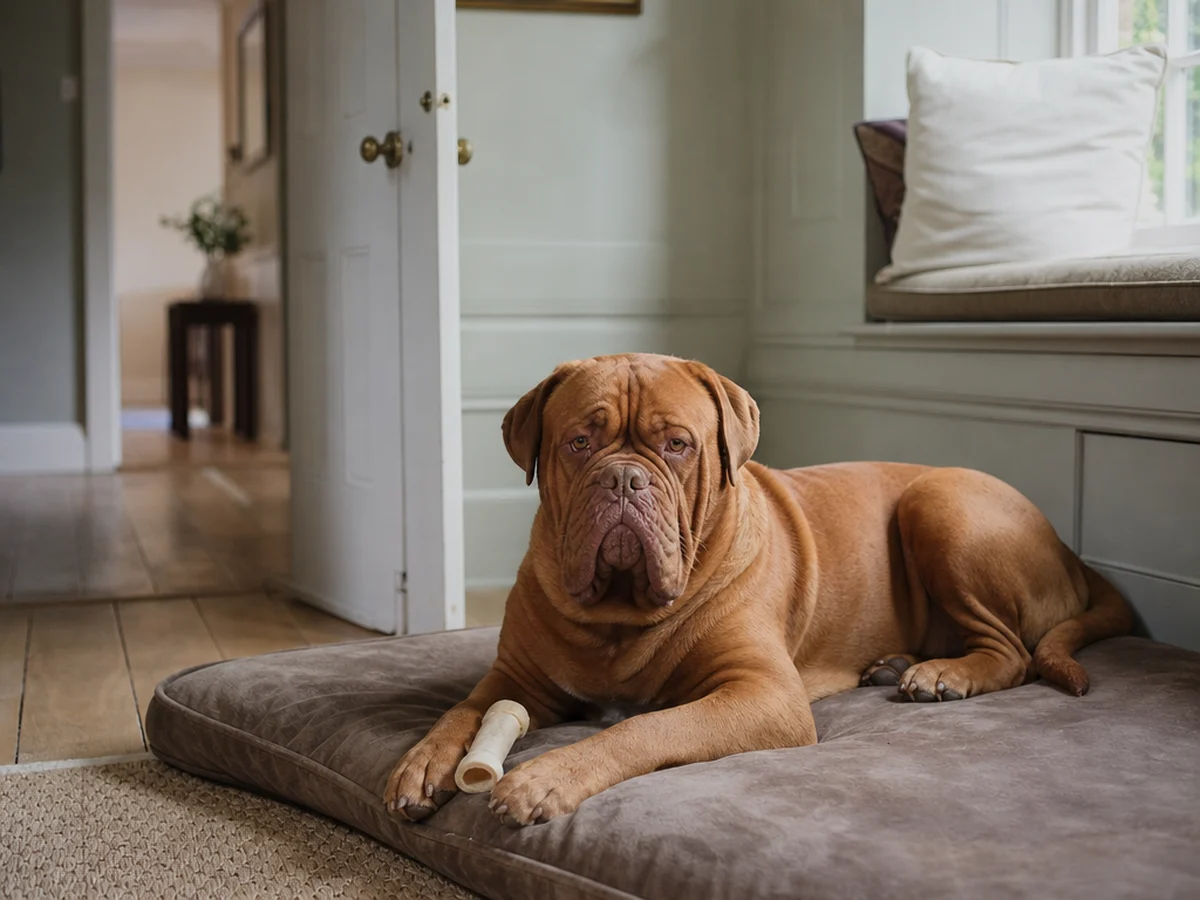
The Guest's Route Through the House
Clear the route from the entrance to the seating area. Bags, coats and a person bending to remove shoes can create several changes at once. Let the guest finish those tasks before considering whether the dog is ready to notice them from a comfortable distance.
Place the visitor's chair where getting up will not block the dog's retreat. A narrow passage between the chair and the resting area can make a harmless trip across the room feel much more significant. Furniture placement is worth changing before practice begins.
The Dog's Comfortable Alternative
Use a familiar room or secure barrier arrangement that already works during quiet periods. A new enclosure introduced only when strangers appear may add another difficulty. The dog should have enough room to move, rest and turn away from the visitor rather than remain pressed against a boundary.
A barrier helps only when it creates useful separation. If your Dogue becomes more agitated while watching through it, increase visual separation or choose another space. Do not keep the dog at the barrier simply because that was the arrangement you intended to use.
Have an adult remain with the dog if being separated from everyone adds distress. The host and helper can divide responsibilities, with one welcoming the guest and the other maintaining the familiar resting routine. Practice that division before an important visit.
Let a Seated Visit Remain Uneventful
Begin with less happening, not with the guest trying harder to win the dog over. A person seated at a useful distance is easier to observe than someone approaching, talking directly to the dog and reaching out. The dog may look briefly, turn away or continue an ordinary activity without any greeting taking place.
Battersea's distance guidance explains why the amount of space matters to a worried dog's ability to cope. There is no universal distance that makes a visitor comfortable. Watch whether your Dogue can disengage instead of choosing a position solely because the room permits it.
Reward easy observation from the dog's existing position. Deliver the reward where they already feel comfortable rather than using food to draw them closer to the stranger. A dog who approaches for food may discover afterward that they are nearer than they wanted to be.
Look at the whole response before offering another opportunity. Taking food is useful information, but it is not a complete measure of comfort. Notice whether the dog resumes normal movement and rests, or remains fixed on the guest between rewards.
- A brief look followed by turning away gives you a manageable moment to reward.
- Repeated checking, a rigid posture or difficulty settling means the arrangement needs more help.
- Moving away should remain possible without the visitor following or calling the dog back.
Allow a quiet visit to stay quiet. You do not need to add touch or reduce distance simply because the dog has been silent for a while. Repeating an easy experience can be the most useful outcome available that day.
Keep food and valued toys out of the visitor's reach unless they are part of a carefully managed arrangement. A guest leaning toward a possession adds a different challenge from simply sitting nearby. Let the dog enjoy suitable activities without people handling the things they are using.
Introduce Visitor Movement in Manageable Pieces
A guest who sits comfortably may become more interesting when they stand, walk or reach for a coat. Treat each change as new information for the dog. Preparing the next movement lets you preserve space and reward an easy response before the visit becomes too busy to manage.
Before the Person Stands
Ask the guest to let you know before getting up during planned practice. You can then move the dog farther away or use the familiar separate area. This is especially helpful when the only route to the kitchen passes close to the resting place.
When the dog is comfortable, a small shift in the seated person's position may be enough practice. Reward relaxed observation and allow a pause afterward. Standing fully is a later possibility, not a compulsory next repetition.
When the Person Crosses the Room
Keep the walking route predictable and away from the dog. An adult can guide the guest without guiding them toward the resting space. If the dog follows closely or blocks movement, separate the routes again and seek help developing a safer arrangement.
Do not ask the visitor to continue walking through a worried response. That turns the dog into the person responsible for tolerating an increasingly difficult event. Use the management you prepared and let ordinary movement happen without the dog needing to supervise it.
When Contact Becomes Possible
Approach by the dog does not automatically invite touching. They may be gathering information before returning to a comfortable distance. The guest can remain still and let the dog leave, with no hand extended to turn investigation into a greeting.
If you are uncertain about the dog's signals, leave physical contact out of the visit. Dogs Trust visitor guidance emphasizes support for dogs who are worried about people entering their home. Ask a qualified professional who uses rewards to assess whether contact is appropriate.
When the Guest Leaves
Departures involve another cluster of movement: standing, collecting belongings and opening the door. Return to the same separate routes used on arrival. A calm conversation does not prove that the dog is comfortable with every part of leaving.
Keep the exit straightforward. Once the guest is gone, let the dog return to an ordinary familiar activity without another greeting exercise. Their recovery helps you judge how demanding the whole visit was.
For longer company, plan ordinary care breaks away from the guest. Bathroom needs and a quieter rest should not depend on the dog remaining sociable. An adult can help the dog use a familiar route while the guest stays in the seating area.
Review Visitors Before Arranging Another Meeting
Record the arrangement that worked, including where the dog rested and which movements required more space. This makes the next decision specific. It also helps another adult repeat a successful visit without assuming the guest's identity alone explains the result.
Review the event after everyone has settled. Useful questions concern comfort and recovery, not how much contact you managed to achieve.
- Could the dog turn away and resume something ordinary?
- Did movement change the response more than the seated conversation?
- Was the separate area genuinely comfortable for the dog?
- Did the dog settle after the visit, or stay watchful for a long time?
Keep regular veterinary visits and discuss sudden changes in tolerance, rest or handling. A change around familiar visitors can deserve assessment rather than a more difficult practice session. Describe what happened without staging another uncomfortable meeting to demonstrate it.
Our Dogue de Bordeaux socializing guide places introductions in a wider context. For a dog showing threatening behavior or a history of unsafe contact, arrange professional support before attempting closer visitor practice.
Repeat the arrangement with the same helper when that is useful. A new person brings different movement, sound and appearance, even when the room stays identical. Keep those changes separate where possible so you can recognize which parts of the visit are becoming easier.
Comfortable Hospitality With a Dogue de Bordeaux
Keep the guest's instructions simple and the dog's options clear. Separate busy arrivals, reward comfortable observation and prepare changes in movement before they happen. Your Dogue does not need to become the center of the visit for the visit to go well. A repeatable arrangement that protects everyone's space is a worthwhile household skill.
 BehaviorDogue de Bordeaux Barking: Triggers and Rewarding Calm
 Training basicsPolite Greetings for a Dogue Who Outweighs Most Guests
 Puppy trainingGuiding Your Dogue de Bordeaux Puppy's Mouth Onto Toys