

A teenage Dogue de Bordeaux can receive several different answers to the same action. One adult rewards waiting by the door, another opens it while the dog pushes forward, and a third repeats a cue until everyone becomes frustrated. A larger body makes that confusion more noticeable, but it does not make the lesson clearer to the dog.
Adolescence is a useful time to coordinate the people doing the teaching. Familiar responses may become less reliable around excitement or distraction, and a dog who looks nearly grown still needs manageable practice. Strength and maturity do not arrive as one finished package.
The approach below brings household adults together around a small, repeatable lesson. From there, it carries puppy training into different hands and settings while leaving room for rest, social comfort and the uneven progress that learning can involve.
A Shared Puppy Training Agreement for Your Dogue de Bordeaux
Choose one daily action that would make life easier, such as moving onto a mat while an adult prepares the leash. Define the action visibly. All paws reaching the mat is an observable starting point, whereas being respectful leaves each person free to reward or correct a different thing.
The RSPCA adolescent guidance explains that behavior described as stubbornness can reflect difficulty controlling impulses. Treat the situation as a teaching problem. Your French Mastiff needs to discover which action works even when another interesting option is available, without a physical contest over who gets their way.
- Choose one cue that every participating adult will use.
- Describe the smallest successful version of the action.
- Decide where the reward will arrive and what happens afterward.
- Agree how to make the task easier when the dog cannot respond.
Put a brief reminder beside the leash station. Ask adults to demonstrate the agreed lesson to each other before the dog has to cope with their different movements.
Children should not be responsible for enforcing rules around a powerful adolescent. Adults can manage access and supervise suitable interactions while children participate only in safe, supported activities. Household consistency means clear adult responsibility, not giving every family member the same handling task.
Predictable Rewards in Adolescent Puppy Training
A response that earned food yesterday should not become an unpaid test simply because the dog performed it once. Keep rewards available while the lesson is developing. The PDSA adolescent advice favors patience and reward-based teaching when responsiveness becomes uneven.

Match the reward to the setting without turning every hesitation into a bidding contest. Prepare suitable food before starting, and use a familiar quiet room if ordinary rewards have little value beside a busy entrance. Making the surroundings easier often teaches more than presenting increasingly exciting food after several failed requests.
Mark the useful action as it happens, then deliver the promised reward. Battersea's marker guidance explains how a click or consistent marker identifies the behavior being rewarded. If you use one, teach its meaning and keep the timing similar across adults.
Notice what follows the reward, too. A Dogue who reaches the mat and immediately launches toward the opening door may need the adult to pause before that next event. Reward a brief comfortable stay, then give a clear release when the route is ready. Build that pause gradually instead of expecting a long wait from the outset.
One Dogue de Bordeaux Lesson Across Different Adults
Changing the person can change the lesson. Body position, voice and reward delivery may all differ even when the cue sounds identical. Start with an easy response your Dogue understands with one adult, then introduce another person's participation without adding a busy location at the same time.
Watch the Familiar Version First
Have the usual trainer demonstrate a short, successful repetition. The second adult should notice the moment of the cue, the dog's movement and the place the reward arrives. Watching these details is more useful than copying only the spoken word.
Use the site's Dogue training foundations to keep cues and rewards understandable. If the familiar version already requires repeated prompts or physical steering, simplify it before transferring responsibility. A confused demonstration gives the second adult little reliable information to reproduce.
Let the Second Adult Begin Easily
Keep the same room and equipment while the second person takes over. Ask for the smallest learned version, even if the first trainer has been practicing a longer stay. Pay promptly for success and end after a few comfortable attempts rather than continuing until enthusiasm disappears.
The first adult can remain quietly nearby if that helps, but should avoid adding extra cues. Two voices asking for the same action can turn a straightforward lesson into competing instructions. If the dog looks between people without responding, pause and let one person make the next attempt simpler.
Reduce Help Without Removing Clarity
Once the second adult's version works smoothly, the original trainer can move farther away or attend to another quiet task. Keep the response easy during that change. The aim is for the cue and outcome to remain useful even when the familiar trainer is no longer directing the scene.
Record which part still needs help instead of labeling one person the only adult the dog respects. Perhaps the reward arrives late, the hand gesture differs or the other adult practices beside the open yard door. Those observations suggest specific adjustments without turning the dog's behavior into a judgment about the people involved.
Puppy Training in a Changed Setting
A familiar response in the kitchen may be much harder in the hallway. The dog may be anticipating a walk, watching a visitor or noticing movement outside. Carry the lesson to a quiet version of the new place and reward an easier response before expecting the same duration or distance.
Change one feature that matters to this task. You might keep the same adult and mat while moving to a quieter part of the entrance. Once that feels ordinary, introduce the second adult there. This gives you a useful comparison if the response changes, rather than combining a new person, place and distraction.
Management remains necessary during daily departures. Close a secure gate or use another comfortable arrangement while people carry bags through the door. Practice is most productive when the dog can succeed, and real household traffic does not always provide that opportunity.
If a transition repeatedly stalls, revisit our guide to Dogue de Bordeaux motivation. The destination and what happens there may matter as much as the cue. An adolescent who hesitates before a slippery doorway needs the situation examined, not an increasingly forceful demand to move.
Social Comfort for an Adolescent Dogue de Bordeaux
Keep watching how your dog responds to people and animals as circumstances change. Familiarity with one visitor does not mean every greeting will be comfortable. Allow space, avoid crowded introductions and reward attention that your Dogue can offer without being pulled into contact.
A social outing can consist of watching ordinary activity from a comfortable distance, then leaving while the dog still feels settled. There is no requirement to greet everyone. For a substantial guardian breed, thoughtful choices about access are more useful than trying to manufacture friendliness through repeated close encounters.
Tell caregivers which interactions are currently manageable. Someone who assumes the dog enjoys every approach may undo careful distance arrangements during a single walk. Describe visible limits, such as moving away when the dog becomes stiff or cannot disengage, rather than relying on a vague instruction to keep things calm.
Growling, lunging or a marked increase in worry calls for qualified help. Avoid correcting warning behavior or arranging more exposure to prove the dog should cope. Create safe distance and seek a reward-based professional who can assess the circumstances with you.
Daily Care Around Dogue de Bordeaux Puppy Training
Short lessons fit best inside a day that already meets ordinary needs. Preserve opportunities for sleep, comfortable movement, sniffing, bathroom breaks and quiet company. Adding more training to every restless moment can leave the dog with little chance to settle between demands.
- Practice when the dog can attend without being hungry, overheated or exhausted.
- Keep equipment ready so sessions do not begin with a long, exciting search.
- Allow a predictable finish and an appropriate next activity.
- Give caregivers permission to skip a lesson when the setup is unsuitable.
Include regular veterinary visits as your Dogue grows, and mention changes in movement, appetite, sleep or tolerance of touch. Sudden behavior changes deserve attention before being attributed to adolescence. A teenager's age does not rule out a comfort problem that makes an ordinary request harder.
Rest needs coordination as much as cues do. If one adult has just finished a walk or game, the next person should know that the dog may need quiet rather than another lesson. A simple handover prevents a well-intentioned household from filling every available break with activity.
A Shared Review of Puppy Training Progress
Review one practiced action together instead of grading the whole dog. Ask what happened with each adult and where the response remained easy. A small record can reveal whether the difficulty follows the location, the timing or a particular change in the lesson.
| Pattern in practice | Useful household adjustment |
|---|---|
| One adult gets a prompt response | Compare cue timing and reward placement |
| Everyone succeeds in the quiet room | Introduce a less distracting version of the next setting |
| The response fades late in sessions | Finish earlier and preserve rest |
| Comfort or behavior changes abruptly | Pause harder practice and contact the veterinarian |
Keep successful details stable while changing the weak point. Replacing the cue, reward and location together discards useful learning and makes the result harder to understand. Adults can adjust their own actions without asking the adolescent to relearn the entire household routine.
Patient Puppy Training Through Dogue de Bordeaux Adolescence
For the coming days, choose a familiar action and make the adults' responses more alike. Demonstrate it, reward it clearly and carry it into one manageable change of person or place. Let the dog's response determine whether that change is ready to become part of everyday life.
Progress can include fewer repeated cues, easier handovers and a dog who settles after the lesson. Keep those gains visible when another day feels uneven. A growing Dogue benefits from people who can offer the same understandable answer while remaining flexible about how much help is needed.
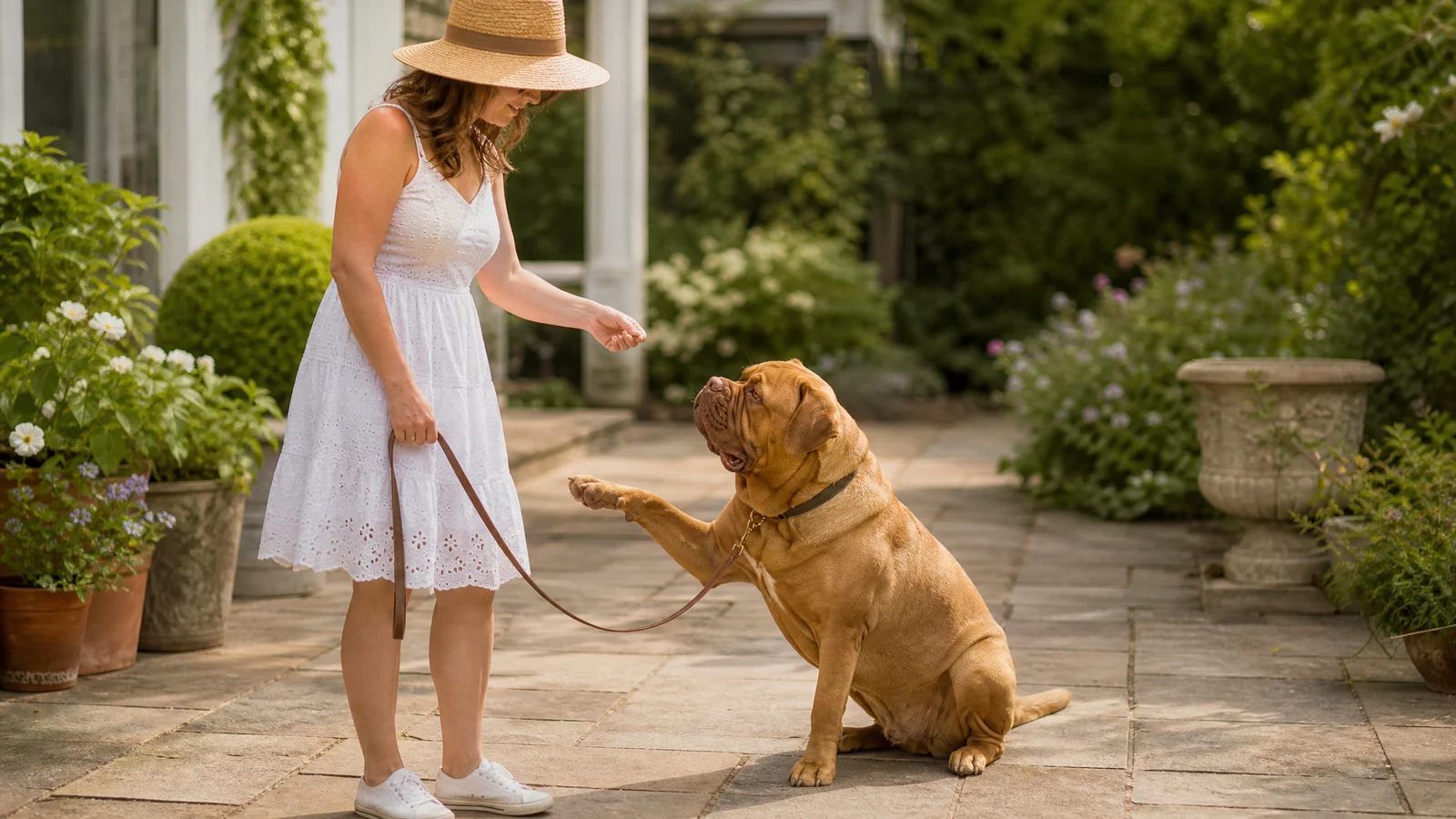 Training basicsAre Dogue de Bordeaux Easy to Train? Sweet but Stubborn
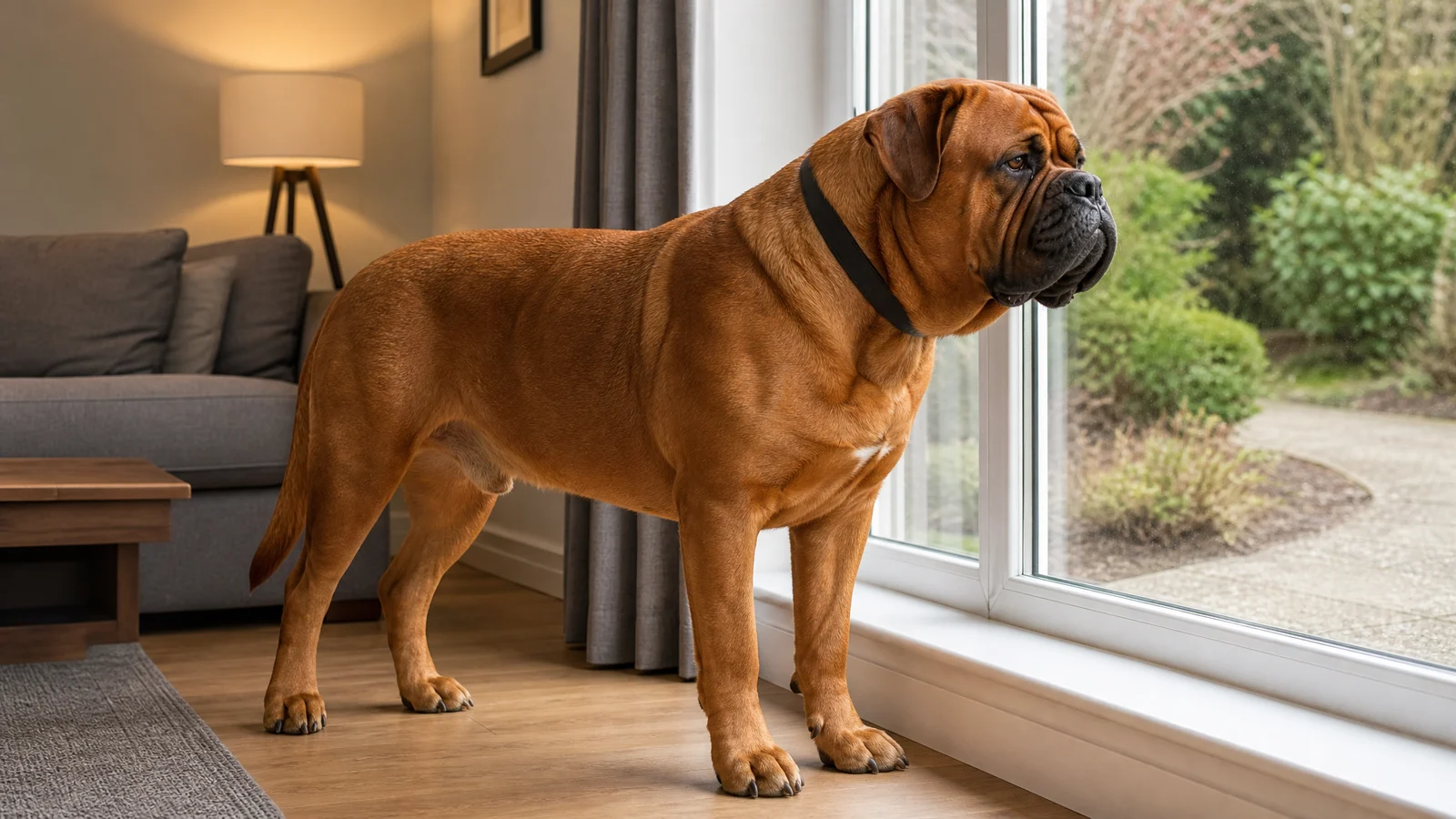 BehaviorWhy Does My Dogue de Bordeaux Guard the Home?
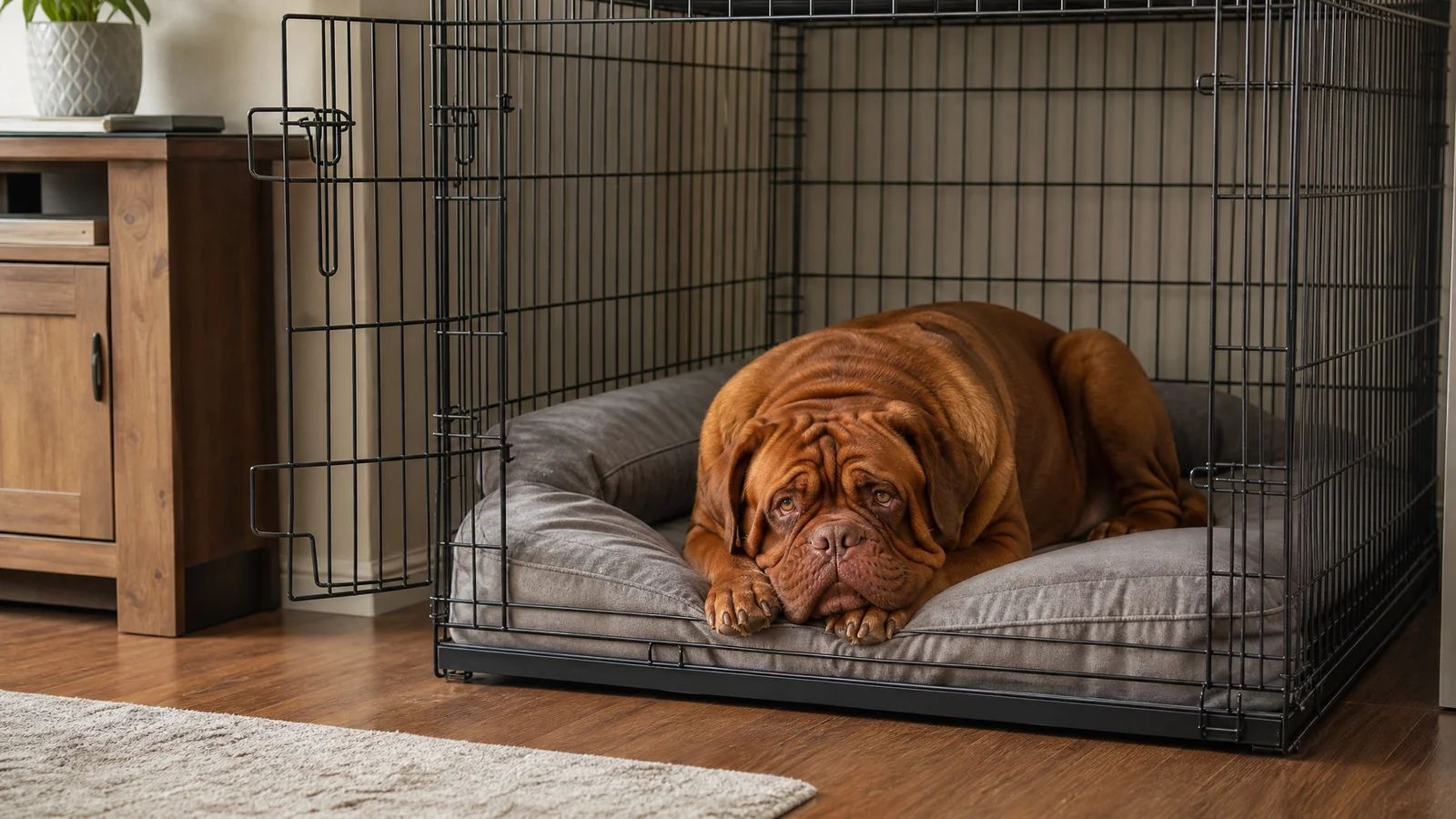 Training basicsTeaching Your Dogue de Bordeaux to Relax Alone in a Crate