
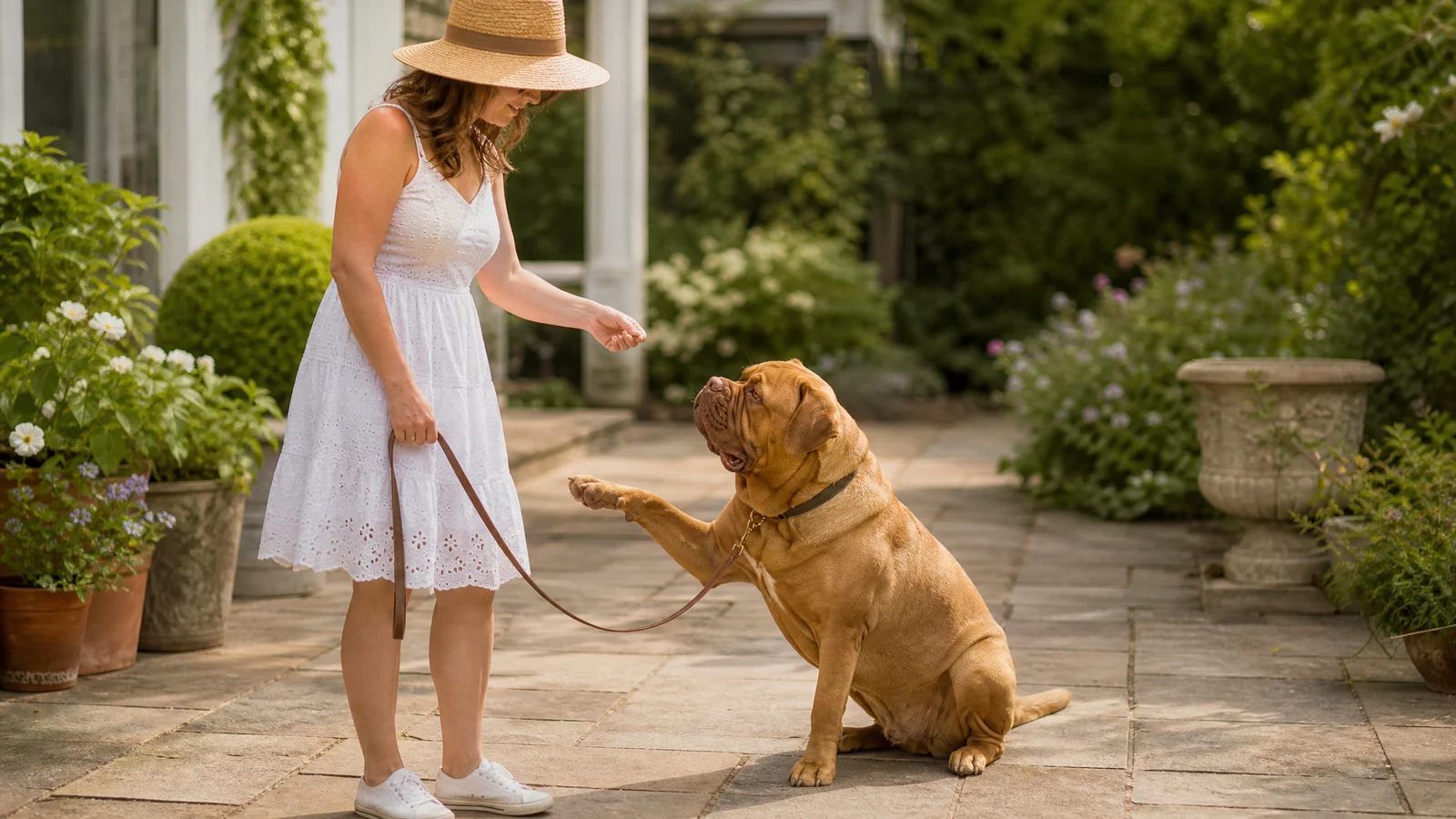
Are Dogues de Bordeaux easy to train? They can learn quickly, but “easy” hides the part that matters. A sensitive, powerful dog may understand a cue and still need better motivation, a clearer setting, or more practice before they can use it around visitors and distractions. Learning speed is only one part of living with the result.
This article tests the common claims behind the question. We will separate trainability from automatic compliance, look at sensitivity and watchfulness, choose rewards that fit the individual, and identify progress worth trusting. We will also show why a missed cue is information rather than a character verdict, and how practice changes across settings. The answer is encouraging, but it comes with conditions.
Easy Dogue de Bordeaux Training Needs a Qualification
The breed's trainability rating is high, and the AKC breed profile describes a properly tempered Dogue as sweet and sensitive. Those traits can support close cooperation. They do not mean every repetition will be fast or that the dog will ignore the environment to satisfy a cue.
Trainability is the capacity to learn and work with a person. Reliability is the result of teaching that skill across places, distractions, and emotional states. A Dogue may learn “mat” in the kitchen with little effort, then need careful practice before the same cue works when the doorbell sounds.
Ease also depends on what you are teaching. A hand target in a quiet room may appear quickly, while calm behavior around an arrival asks the dog to disengage from something significant. Comparing those lessons as if they test the same ability creates an unfair label.
Fast Learning Includes Accidental Lessons
A capable learner notices what earns access. If leaning against a person always starts petting, leaning becomes strong. If pulling reaches every interesting smell, tension gains a history of success. Training means arranging outcomes so the choices you want are the ones that keep paying.
That is why household agreement matters more than stern delivery. Decide which behavior opens a door, begins a greeting, or releases the dog to sniff. Consistent outcomes give a thoughtful French Mastiff a puzzle they can solve.
Keep a cue from becoming a negotiation by saying it once in a setup where success is likely. If the dog cannot respond, help with distance or a simpler picture rather than repeating the word. The cue stays meaningful, and the next attempt becomes easier to understand.
Sensitivity Does Not Make Training Fragile
Sensitivity means the dog notices tone, movement, pressure, and changes in the room. It is not a defect, and it does not require walking on eggshells. It asks the trainer to make feedback precise and to lower difficulty when the dog becomes confused or worried.
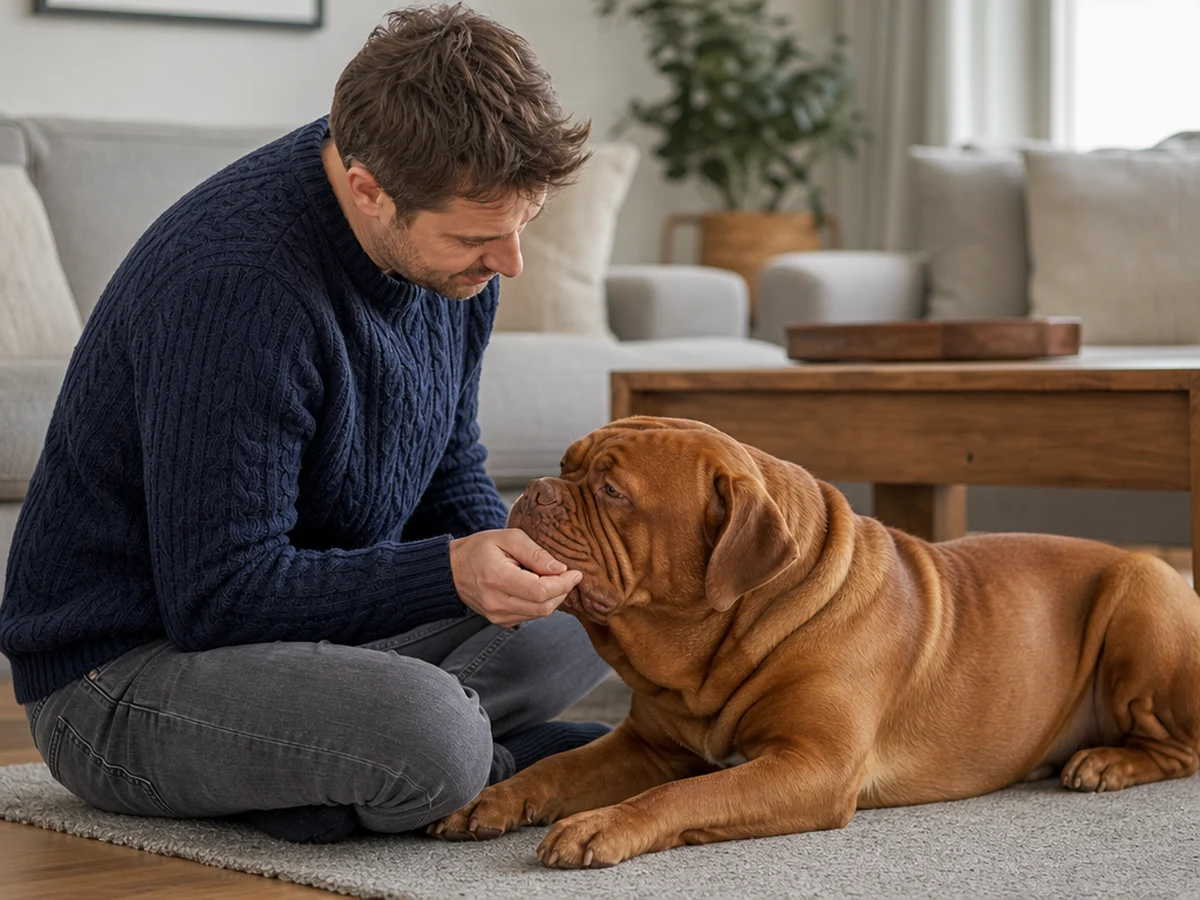
The linked AVSAB statement supports rewards throughout learning and behavior support. It also explains that this kind of teaching can include structure and clear guidelines. For this breed, clarity without intimidation is both humane and practical.
Sensitivity can become an advantage when communication is clean. A dog who notices small changes may respond beautifully to a quiet marker, a shifted hand, or a prepared mat. The same awareness means careless pressure can distract from the actual skill.
A Marker Gives the Dog Useful Information
A marker word or click identifies the exact behavior that earned a reward. Battersea's clicker guide emphasizes precise marking followed by reinforcement. The device is optional, but the principle is valuable because a large dog benefits from feedback they can understand at a distance.
Start with an action the dog offers easily, such as looking toward you or touching a hand. Mark it, reward it, and pause. If the behavior weakens, improve timing or simplify the setting before assuming the dog has become stubborn.
Stubborn Dogue de Bordeaux Training Is Often a Setup Problem
“Stubborn” can describe several different pictures. The reward may be too weak, the floor may feel insecure, the repetition may be boring, or the dog may be watching something they consider important. One label cannot tell you which change will help.
Run a quick test. Ask for the skill in a quiet place with an excellent reward and no leash tension. If the dog succeeds there, the skill exists and the difficult context needs smaller steps. If they still look uncertain, return to teaching the behavior itself.
Then test the cue without showing the reward first. If the dog only responds after seeing food, the visible food may be part of the picture. Give the cue once, mark the correct response, and reach for payment afterward so the behavior, not the preview, predicts the reward.
- Improve value when the dog understands but chooses a competing activity, using food, play, sniffing, or access as the reward.
- Reduce distraction when the dog cannot orient back to you, then rebuild distance gradually instead of repeating the cue.
- Shorten the lesson when responses slow or the dog begins to wander, ending after a clean success rather than drilling.
- Check comfort and footing when a familiar movement changes, and discuss sudden reluctance with your veterinarian.
Regular veterinary checkups belong beside training because behavior and movement are connected. A sudden refusal to sit, climb, or turn should not be treated as a character debate. First make sure the dog is comfortable doing what the cue requires.
Watchful Temperament Is Context, Not a Training Job
The Dogue's history can make them attentive to arrivals and changes around home. The UKC breed standard describes the modern breed as vigilant and courageous without aggression. That history helps explain why a delivery may compete strongly with an ordinary cue.
Do not turn vigilance into an assignment. Teach a neutral routine instead: notice the sound, move to a mat, receive rewards, and remain behind a gate while the doorway is active. The useful skill is disengagement from an event, not greater investment in it.
Practice the routine with ordinary household sounds before using a real arrival. A soft knock recording or a family member touching the handle can create an easy version. When the pattern is familiar, the dog has something known to do while the real event unfolds.
Distance Makes Good Choices Possible
A Dogue who cannot eat or turn toward you near a visitor is too close for useful learning. Add space, block the view, or move to another room before practicing. Reward calm observation at the easier distance and let the dog opt out of contact.
This is where a broad judgment about “easy to train” matters less than practical handling. A very large dog deserves rehearsed routines before a busy moment arrives. Our complete Dogue training guide builds those routines from simple indoor skills.
Dogue de Bordeaux Training Rewards Change Value
A reward is defined by what the dog wants in that moment. Food is convenient and precise, but permission to sniff, greet a familiar person, or move through a doorway can also reinforce behavior. Praise may matter greatly at home and lose value beside an exciting smell.
Value can change during one session. A dog may work for ordinary food while warming up, then need a stronger payment when distance or distraction changes. If engagement drops, adjust the reward before adding repetition and calling the dog unmotivated.
The RSPCA reward guidance describes food, toys, and praise as possible reinforcers. Test them rather than ranking them in theory. If your Dogue finishes the reward and immediately offers the behavior again, you have useful evidence that the payment worked.
Calm Behavior Deserves Real Payment
People often notice energetic behavior because it demands a response, while a dog resting quietly receives nothing. Reverse that imbalance. Place a reward between the paws when your Dogue settles, or quietly release them to an enjoyable sniff after a patient pause.
Rewarding calm does not remove playfulness. It teaches the dog that low-key choices also open good outcomes. This is especially helpful for Dogue crate training, visitor routines, and life in a home where a large body must move thoughtfully.
Easy Training Still Requires Generalization
Dogs learn pictures. A cue may be clear when you stand in front of them with food in your hand and unclear when you sit, wear a coat, or ask outdoors. Generalization is the process of teaching that the same cue applies across those changing pictures.
Change one feature at a time and lower your expectation slightly when you do. Practice the mat while you sit instead of stand, then near a quiet open door, then with a household member moving past. Reward early success instead of waiting to see whether the dog fails.
Vary the person only after the cue is clear with the first teacher. Another voice, body position, and reward delivery can create a genuinely new picture for the dog. Let the second person begin in the easiest room and build from there.
Reliability Is Built, Not Revealed
A missed response is information about the current lesson. It does not reveal a hidden power struggle. Move closer, lower distraction, or refresh the behavior, then ask again when success is likely.
For a strong breed, this patient preparation is not optional softness. It produces behavior you can actually use. Repeated conflict may suppress communication, while rewarded practice gives the dog a familiar route through difficult moments.
Progress Worth Trusting in Dogue de Bordeaux Training
Progress appears in more than polished obedience. The dog begins offering useful behavior before the cue, recovers faster after distraction, and can work for ordinary rewards in familiar places. They also stay engaged when you make a lesson slightly harder because past confusion has not made training unsafe.
Look for softness as well as speed. A fast response paired with a tense body may show that the setting is still difficult, while a slower choice with relaxed movement can be meaningful progress. Reliable training should improve understanding, not merely produce hurried compliance.
Notice whether skills survive ordinary life changes too. A useful behavior can return after a missed day, transfer to another room, and remain available when the reward is less visible. Those signs say the dog understands the pattern rather than following one narrow rehearsal.
Ask a qualified reward-based professional for help when fear, intense reactivity, guarding of resources, or handling difficulty prevents safe practice. The balanced answer remains yes: Dogues de Bordeaux can be highly trainable. They do best when sensitivity is respected, rewards are meaningful, and consistency replaces pressure.
 BehaviorWhy Does My Dogue de Bordeaux Guard the Home?
 Training basicsTeaching Your Dogue de Bordeaux to Relax Alone in a Crate
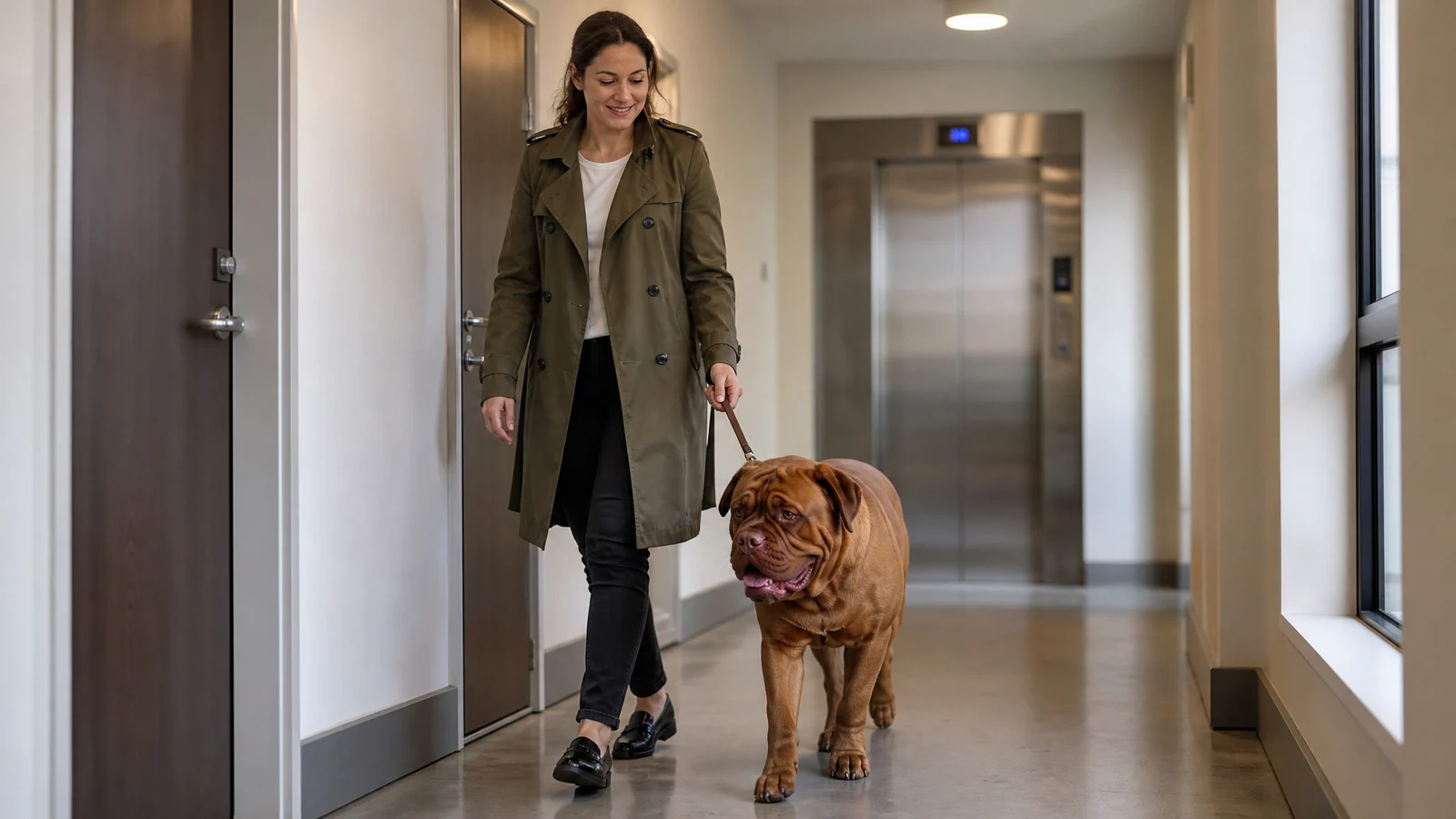 Training basicsCan a Dogue de Bordeaux Live in an Apartment?