
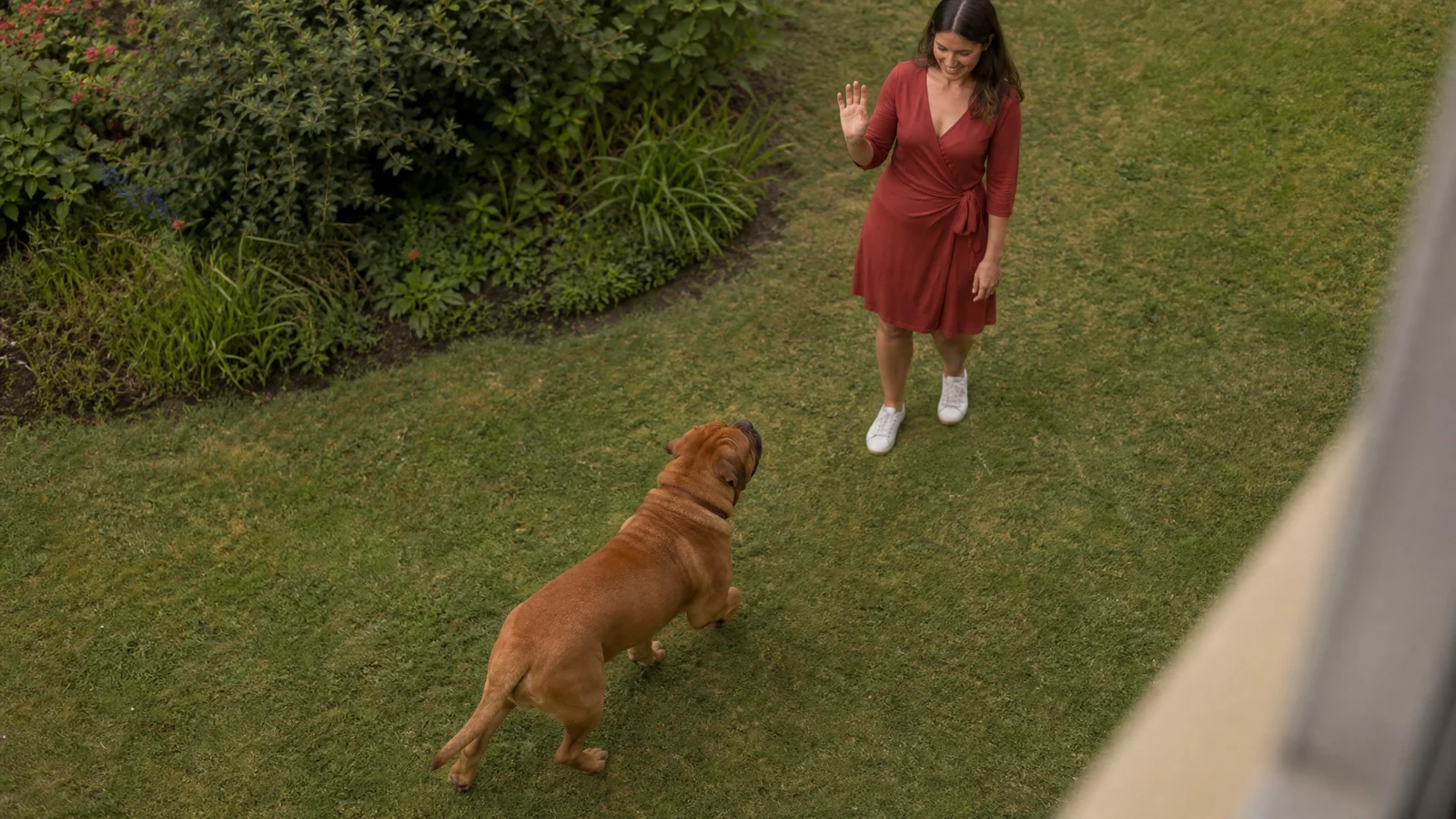
Training a Dogue de Bordeaux starts before you ask for a polished sit. The first lessons teach a very large future adult that paying attention, moving with you, and relaxing near everyday activity are worthwhile choices. Clear rewards and repeatable routines matter more than making a lesson look strict.
This guide follows the training job from preparation to real life. We will choose rewards, build communication, teach essential skills, carry them into public settings, and handle the breed's watchful history through calm management. We will also troubleshoot a stalled lesson without blaming the dog or losing the useful parts. Each stage gives the next one something solid to stand on.
Prepare Dogue de Bordeaux Training
Begin by deciding what you want the dog to do, not merely what you want to stop. “Stand on the mat while the door opens” gives you a behavior to teach and reward. “Do not crowd the door” leaves both of you waiting for a mistake.
Choose a marker such as a short word that always means a reward is coming. Practice when nothing difficult is happening. Say the marker, deliver food, and pause before repeating. Soon the sound becomes useful feedback because it identifies the exact choice that earned payment.
Rewards can include food, play, access to sniffing, or warm praise. The RSPCA training guide explains that rewarding a behavior makes it more likely to happen again. Match the reward to the setting, because dry food may work in the kitchen while a fascinating sidewalk needs something better.
Prepare reinforcement before asking for behavior. Rewards hidden in another room arrive too late to explain a small choice, while food already waving in front of the dog's nose can become part of the cue. Keep payment accessible but out of sight, then deliver it after the marker.
Choose a quiet ending before the lesson begins. A scatter of food, a drink, or rest on the mat can lower energy after active practice. That transition helps training fit the household day and prevents every session from ending at peak excitement.
Set the Room for Success
Training gets easier when the environment prevents rehearsals you do not want. Put a mat where the family gathers, keep rewards in closed containers nearby, and use gates to create space when visitors arrive. Management protects learning while the skill is still young.
A quiet room is the right starting point for a new cue. Distraction is a separate training variable, not proof that the dog understands. Add sound, distance, and movement one at a time so you can reward success before confusion takes over.
Teach the Dogue de Bordeaux a Shared Language
Your marker tells the dog which action worked, while a release word tells them when a position or pause has ended. Those two signals make lessons fair. Without a release, a dog may guess whether sit means a brief touch to the floor or staying there until you move.
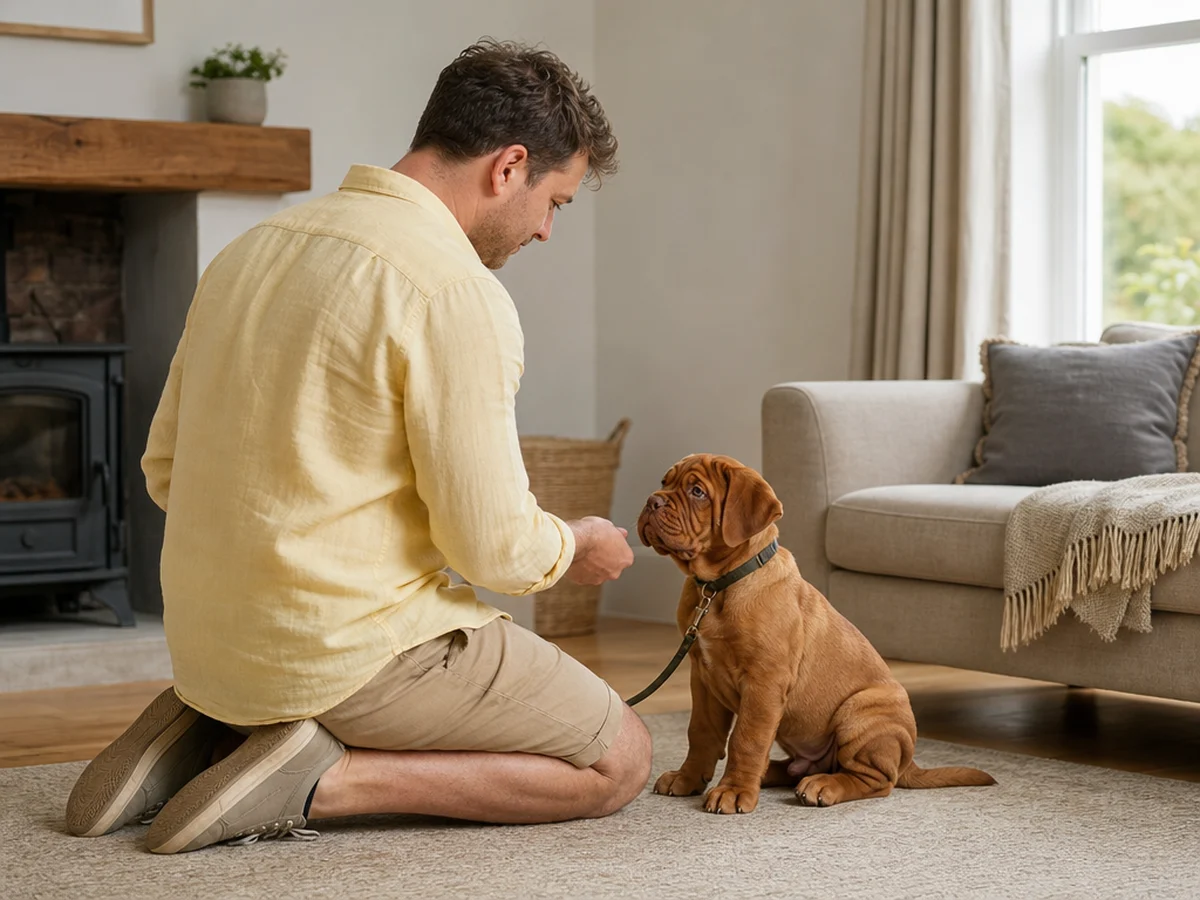
Keep cue words consistent across the household. People may use different voices, but the same word should predict the same action. Agree on where the mat sits, whether four paws on the floor earns greetings, and what word opens a door or ends a wait.
Build Attention Without Demanding a Stare
Reward your Dogue for orienting toward you, especially after they notice something in the environment. Attention is not constant eye contact. It is the ability to check back, receive information, and return to the world without being dragged away from it.
Say the dog's name once, mark the turn toward you, and reward. If nothing happens, make the next repetition easier by reducing distance or distraction. Repeating the name until it becomes background noise teaches the opposite of what you intended.
Core Dogue de Bordeaux Training Skills
Essential skills should solve daily problems for a strong, affectionate dog. A recall brings them toward you, a hand target guides movement, a mat creates a resting place, and a drop cue trades an object for something worthwhile. These skills are useful because they reduce conflict.
- Teach a hand target by presenting an open palm close to the dog's nose, marking any gentle touch, and rewarding beside your leg.
- Build recall between two people indoors, rewarding the turn and arrival before adding distance or an interesting environment.
- Shape mat work by paying one paw, then more of the body, then quiet resting while you remain nearby.
- Teach trades with low-value objects first, offering a better reward and returning safe items often enough that giving things up stays easy.
Do not chain these into a long drill. Work on a small piece, pause, and notice whether the dog is still volunteering. A sensitive French Mastiff can disengage when the lesson becomes repetitive, while a short successful round leaves the path open for the next session.
Practice positions on different secure surfaces once the movement is fluent. A sit on carpet may feel unlike a sit on grass, and a down beside the couch may not transfer immediately to a class. Pay the first good efforts generously whenever the physical picture changes.
Loose Movement Comes Before Distance
Leash skill begins with a few balanced steps, not a long route. Reward near your side, allow planned sniffing, and turn before tension builds. Our Dogue leash training guide develops that skill for an adult dog's strength.
Practice entrances and exits as their own lesson. A calm pause at a door prevents the first seconds of the walk from becoming a launch. Open the door a little, reward staying with you, then release when the leash remains loose.
Move Dogue de Bordeaux Training Into Daily Life
A cue learned in the living room is not automatically available near a delivery, another dog, or a noisy street. Carry skills outward in layers. Change one part of the picture while keeping the rest familiar, then reward a simpler version of the behavior.
Socialization follows the same logic. The AVMA socialization guidance recommends rewarding positive or neutral engagement and allowing a puppy to withdraw when uncomfortable. Exposure should create safe choices, not force contact.
Visitors Need a Rehearsed Pattern
Before a guest arrives, place the mat away from the doorway and prepare rewards. Practice the door sound at a low level, mark movement toward the mat, and release after calm behavior. On a real visit, a gate can preserve distance while the familiar sequence begins.
The breed's historical vigilance explains why arrivals deserve planning, but it is context rather than a training assignment. The UKC breed standard describes a natural guardian who is vigilant without aggression. Modern training should reinforce calm observation and disengagement, not intensify suspicion.
Public Practice Stays Below the Struggle Point
Choose a place where your Dogue can notice the environment and still eat, sniff, and respond. Mark the glance and the return toward you before a lunge or bark develops. Useful distance leaves room for calm choices and an uncomplicated exit.
If the dog cannot recover, leave calmly and plan an easier setup next time. Repeated exposure at an overwhelming distance does not become socialization through persistence. It becomes practice at being overwhelmed.
Training a Dogue de Bordeaux Through Change
Training needs shift as the dog grows. A puppy needs foundations, safe exploration, and frequent rest. An adolescent may understand a cue yet struggle to use it around novelty. An adult benefits from maintenance that keeps ordinary manners rewarding rather than assumed.
Puppy Training Builds the Map
Puppies learn where to rest, where to eliminate, how hands predict good things, and which sounds are part of home life. Carry them or use a clean blanket for early observation when local disease risk limits ground access. Your veterinarian can advise when public walking and dog contact are appropriate.
Battersea's puppy guidance describes early ways to see the world, including being carried or resting on a clean blanket. Pair those views with food and easy retreat, and ask your veterinarian when ground access and dog contact fit local conditions.
Adolescent Training Restores Clarity
Adolescence can make familiar behavior less reliable in exciting settings. Return to shorter distances, better rewards, and simpler repetitions rather than treating the change as defiance. The skill is still there, but the surrounding picture may now compete much harder.
Household consistency matters most during this stage. If jumping sometimes starts play and sometimes ends attention, the dog receives a mixed lesson. Decide what earns access, then make the desired alternative easy to offer.
Rebuild a Stalled Dogue de Bordeaux Training Lesson
A stalled skill usually points to clarity, value, environment, or comfort. Ask whether the cue has one meaning, whether the reward matters here, whether the distraction jumped too quickly, and whether the dog can move comfortably. Changing the setup is useful information, not lowering standards.
Also examine the order of events. If you reach for a treat before the dog acts, the food may have become a prompt. If you mark after the dog has already stood up, the marker may be teaching the release. Slow observation can correct both problems without increasing pressure.
Video can reveal late markers, repeated cues, or a leash that tightens before the dog has a chance to choose. Record only your own practice in a safe setting, then watch the sequence without blaming either participant. Look for the first moment the lesson became unclear.
Professional Help Should Stay Reward Based
Seek qualified help when fear, intense reactivity, or handling difficulty prevents safe practice. Ask a trainer to explain exactly what they will teach, how the dog earns reinforcement, and how they adjust when the dog struggles. You should be able to observe and understand the plan.
Keep regular veterinary checkups as part of training maintenance. A sudden change in willingness, movement, sleep, or tolerance deserves a conversation with your veterinarian before you assume the dog has chosen to ignore well-known skills.
Keep Dogue de Bordeaux Training Useful
Maintenance can disappear into daily life. Ask for a hand target before attaching the leash, pay a mat settle during dinner, and reward a check-in when a person passes outside. Skills stay strong because they continue to produce useful outcomes.
For focused next steps, explore Dogue crate training, potty training, and the breed's trainability profile. The complete plan is not a finish line. It is a shared language that remains clear as your Dogue's life changes.
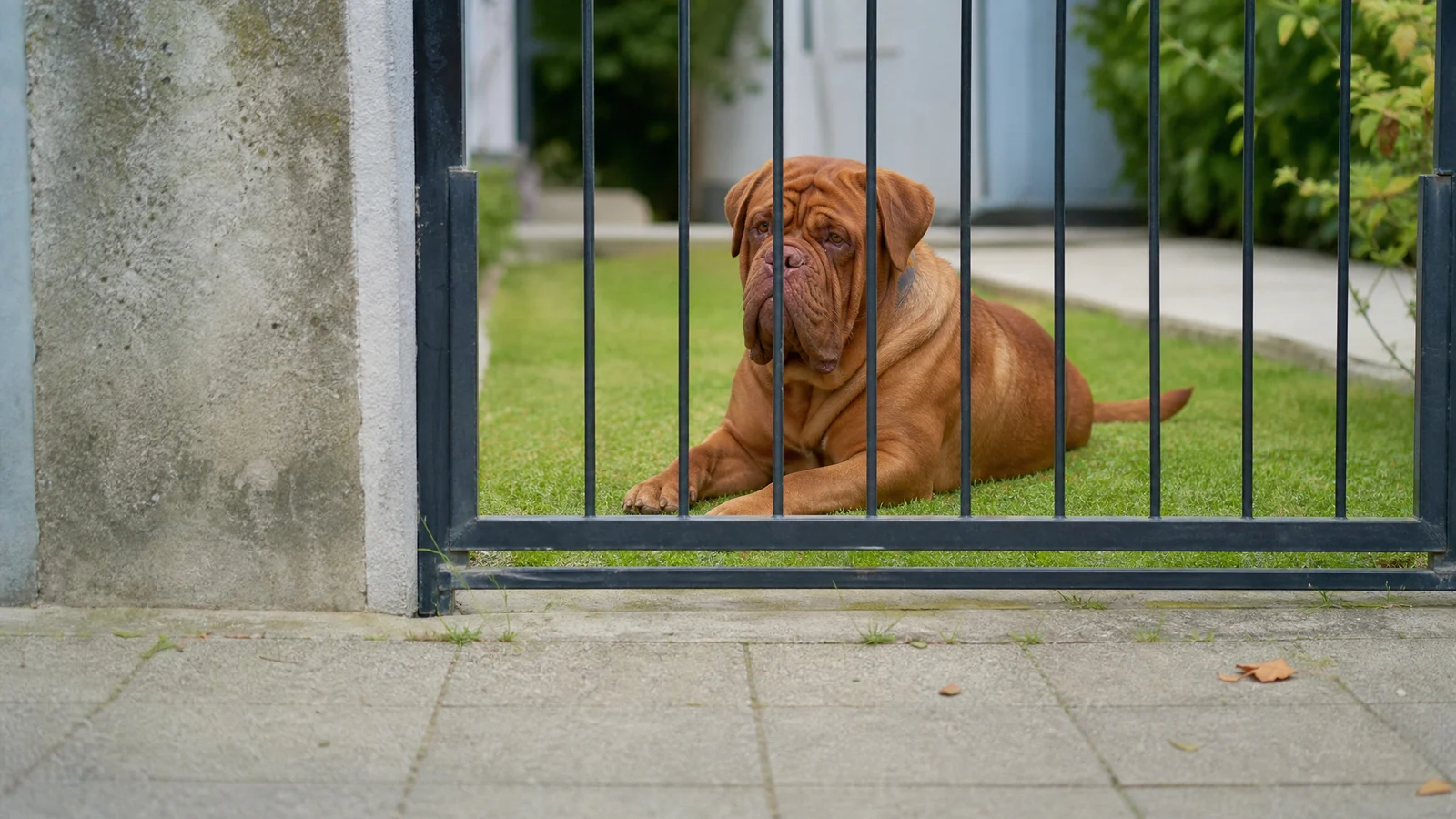 BehaviorAre Dogue de Bordeaux Aggressive or Just Vigilant?
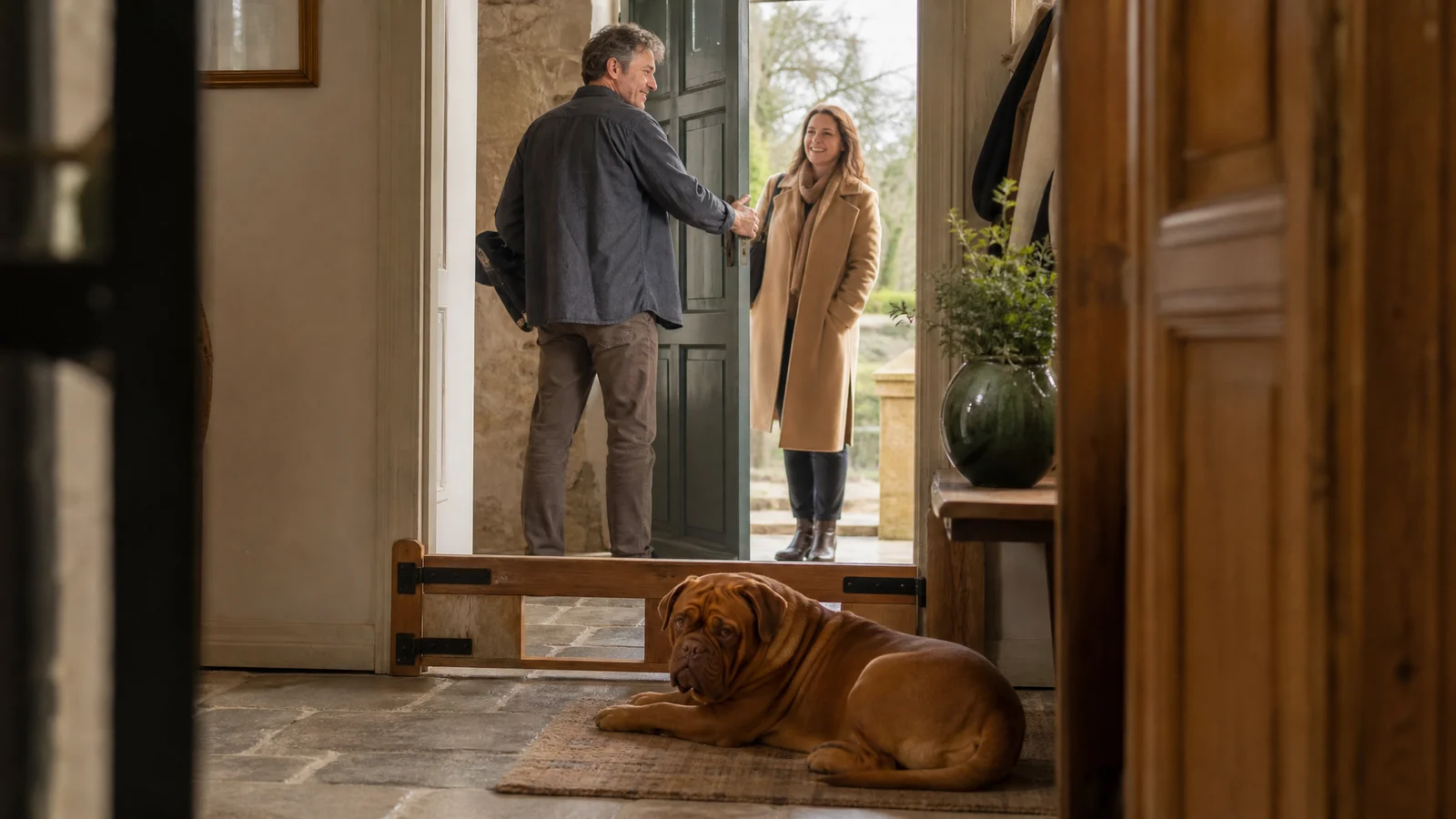 BehaviorHelping a Reserved Dogue de Bordeaux Relax When Guests Arrive
 BehaviorDogue de Bordeaux Barking: Triggers and Rewarding Calm