
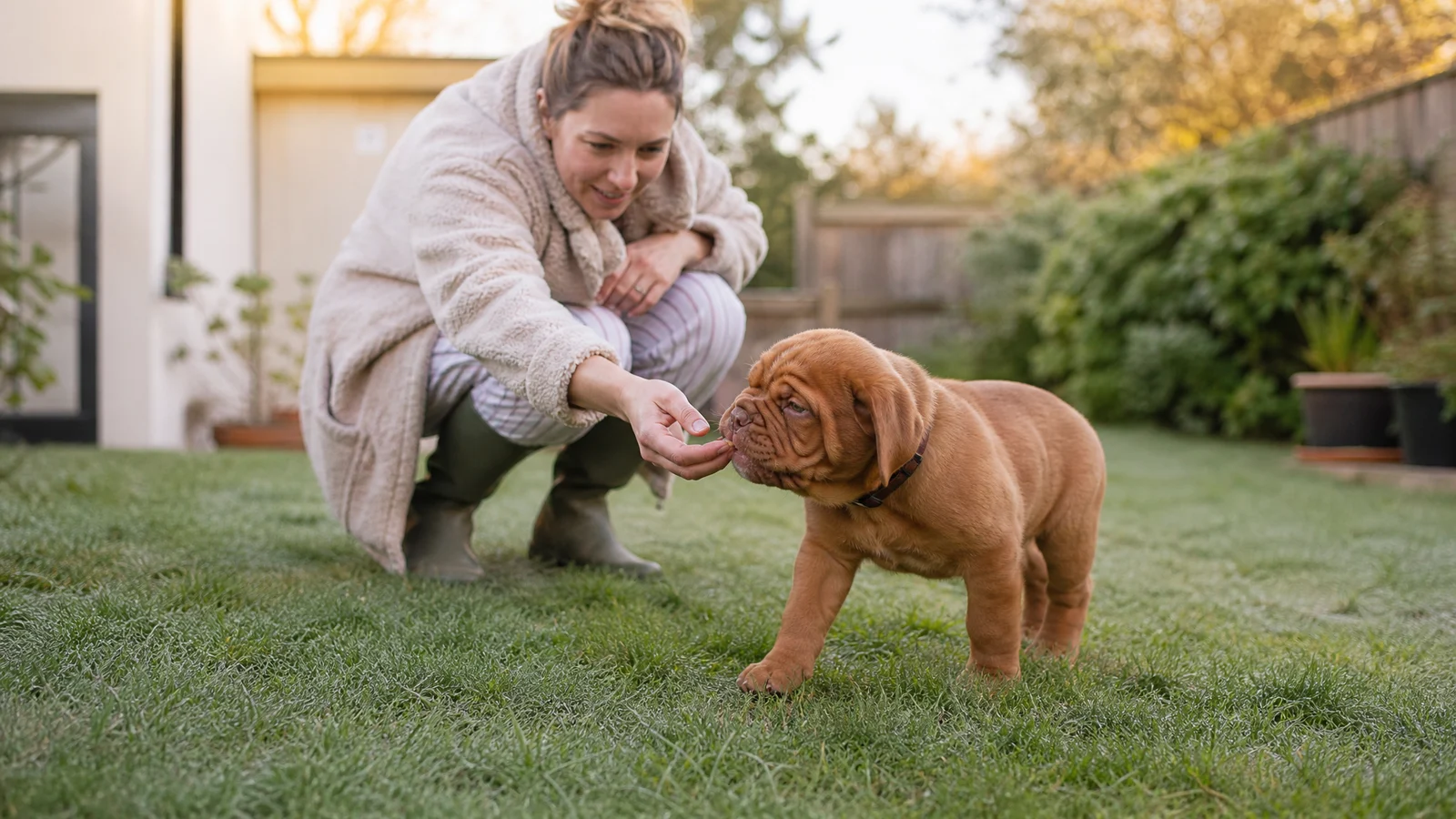
To potty train a Dogue de Bordeaux puppy, make the route predictable, supervise closely indoors, and reward at the outdoor spot as soon as the puppy finishes. The method is simple, but consistency matters because today's small learner will become a dog whose size makes missed signals much harder to manage. Clear habits save confusion for both of you.
This guide follows one clearly hypothetical day, from waking through bedtime. We will use household transitions instead of an unsupported clock formula, show where gates and crates fit, handle accidents calmly, and expand freedom only after the puppy demonstrates reliability. The same loop can then travel to new rooms, new doors, and short changes in routine.
Prepare the Dogue de Bordeaux Potty Route
In our hypothetical home, the puppy sleeps near the bedroom and uses one exit to reach one bathroom spot. Before the day begins, the person places the leash by that exit, chooses a cue, and clears the route. Preparation matters because searching for shoes gives a waking puppy time to make another choice.
Humane World guidance recommends taking the puppy on leash to a consistent outdoor place and pairing elimination with a cue. Keep the words quiet while the puppy is going, then reward after they finish so the food does not interrupt the job.
The spot should be easy to reach in poor weather and distinct from the area used for energetic play. Stand calmly and allow sniffing without turning the trip into a yard tour. When the puppy finishes, mark the moment, deliver a reward outdoors, and offer a little supervised exploration.
Agree on one cue and one route before the puppy arrives. Several phrases and several yard corners create extra details for a new learner to sort out. A shared household sequence makes the successful pattern easier to recognize.
Prepare for rain and darkness before they arrive. A covered path, visible reward container, and working outdoor light can keep the routine intact when people are tempted to rush. The puppy learns from the sequence you actually repeat, not the plan reserved for pleasant weather.
The Route Carries the Lesson
Use the same door and destination while the habit is new. Repetition helps the puppy connect waking sensations, the path, the cue, and the reward. Once that chain is strong, you can teach additional exits or travel setups without making the first lesson vague.
A large puppy may be awkward on slick floors, so add secure footing where they turn or wait. Do not pull them toward the door. Invite movement with your body, reward following, and keep the leash loose enough for a natural walk.
Morning Potty Training Begins Before Breakfast
The hypothetical puppy wakes and goes outside immediately, before greeting the whole household or wandering through rooms. After success and a reward, they return for breakfast under supervision. Eating creates another useful transition, so the route outside follows again when the meal and a brief calm pause are over.
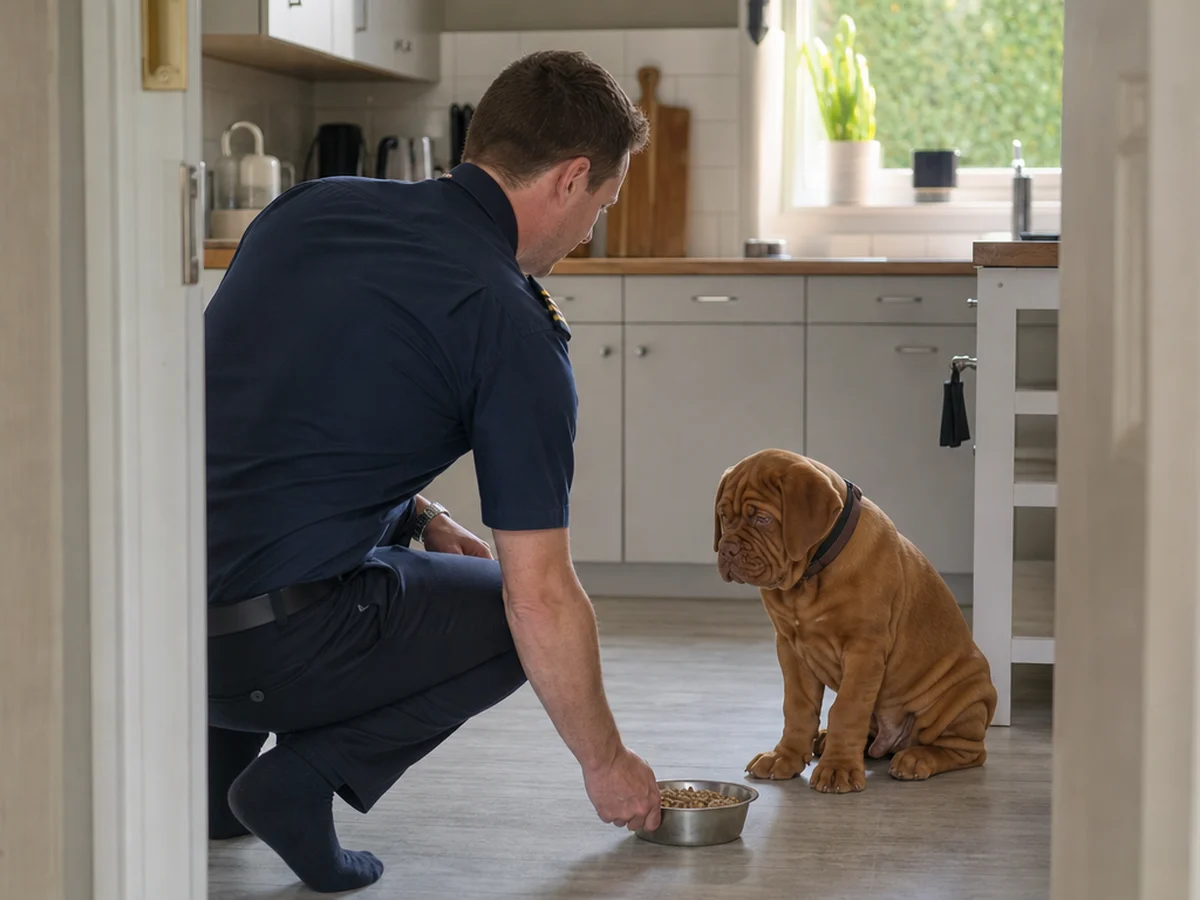
This event-led pattern is easier to remember than guessing from the clock. Waking, eating, active play, drinking, and a change of location are all reasons to offer an outdoor opportunity. The puppy's behavior still decides whether the next trip needs to happen sooner.
- Watch for abrupt sniffing, circling, drifting away from play, or moving toward a previously used indoor area.
- Interrupt your own task and guide the puppy outside without scolding, rushing, or turning the leash into a struggle.
- Wait quietly at the chosen spot, then reward completion before deciding whether outdoor play will follow.
- Return to close supervision if nothing happens, because an unproductive trip does not remove the need.
Battersea's house-training guide emphasizes routine before reliability and recommends close opportunities at the beginning. Instead of promising that every puppy follows one interval, use transitions and signals to make your plan responsive.
Midday Potty Training Uses Household Zones
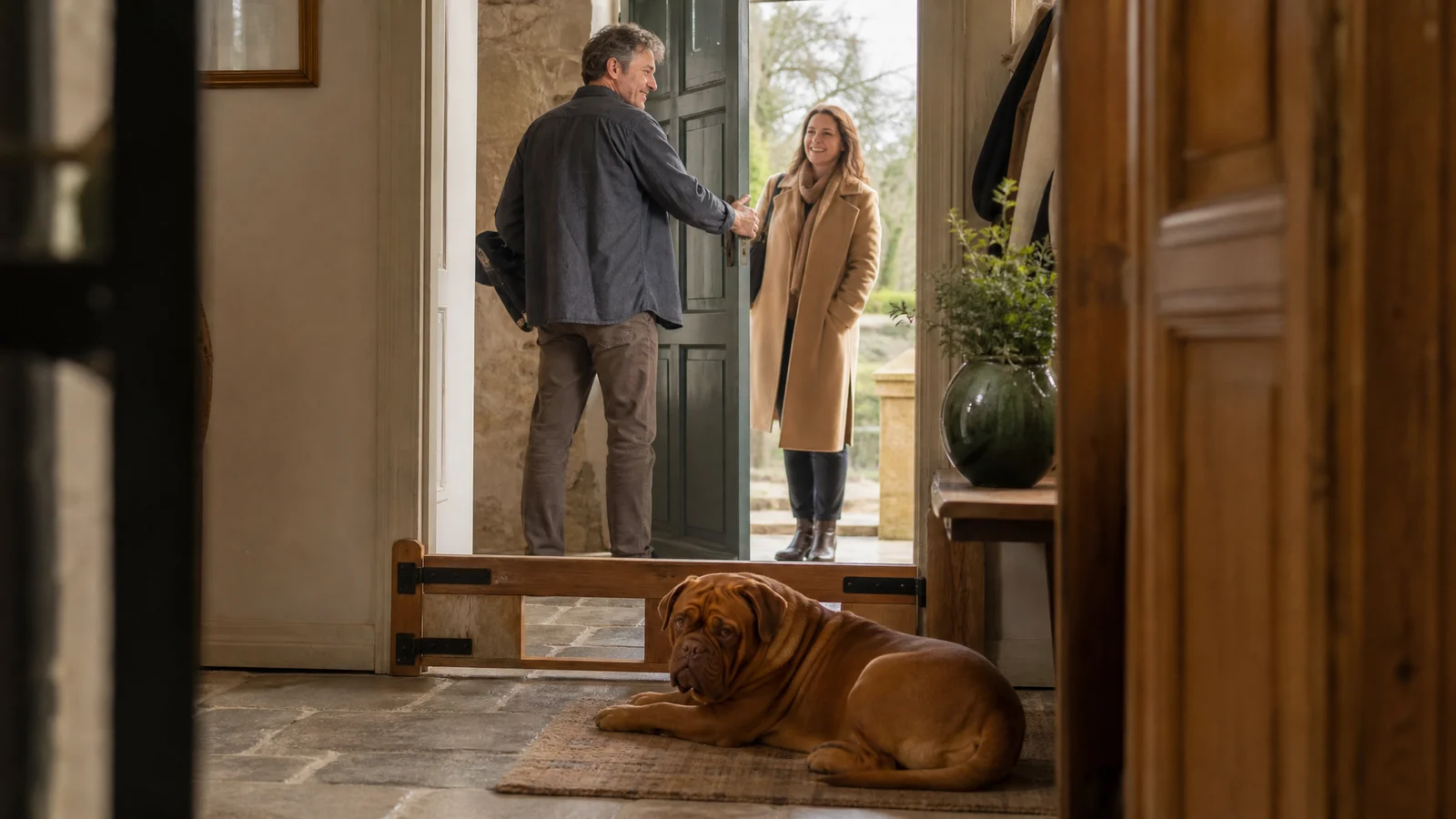
Later in the hypothetical day, the puppy is awake near a person, not roaming the whole home. A gate keeps them in the room where supervision is active. Their bed, water, and a few safe activities are visible, while closed doors remove hallways and spare rooms from the decision.
Freedom should match demonstrated skill. A puppy who stays clean in one supervised area has not necessarily learned that every rug in the house follows the same rule. Dogues are adaptable learners, but a larger map still needs to be taught.
| Transition | Immediate action | Indoor plan afterward |
|---|---|---|
| Waking from sleep | Go directly to the outdoor spot | Supervise after success |
| Finishing food or water | Prepare a prompt outdoor trip | Return to the active household zone |
| Ending energetic play | Lower excitement and go outside | Offer calm activity or rest |
| Entering a new room | Visit the spot before exploration | Keep the new area small |
The table gives each transition one job. It does not promise a guaranteed holding time, and it should not delay a trip when the puppy signals earlier. The person remains responsible for noticing the dog in front of them.
Write the transitions on a shared note if several people supervise the puppy. Record the last successful trip and the event that followed it, not a prediction of the next deadline. That keeps the household coordinated without turning a living learner into a timer.
A Gate Preserves Useful Information
When the puppy stays near you, you can see the first change in sniffing or movement. When they disappear behind furniture, you only discover the outcome. Zoning temporarily makes communication visible while the habit develops.
Crates Support Potty Training Between Active Periods
In the afternoon, the hypothetical puppy is ready to sleep. A comfortably sized crate or small safe area can support rest when it has already been introduced with rewards. It should not be used to test how long the puppy can hold a full bladder or to replace outdoor opportunities.
Our Dogue crate training plan treats entry, the door, and alone time as separate skills. For potty work, the useful role is modest: the crate helps create a clear resting period, and the puppy goes outside promptly after waking.
Rest and Confinement Are Not the Same
A tired puppy may sleep well in an open pen or gated room and struggle behind a closed crate door. Choose the arrangement that supports calm while keeping supervision possible. Potty training does not improve when the puppy is distressed by the management tool.
Build crate comfort apart from urgent bathroom needs. Feed there, reward voluntary entry, and practice brief door movement when the puppy has already eliminated. That keeps the crate from predicting a long wait when they need to go.
Accidents Redirect Dogue de Bordeaux Potty Training
In the hypothetical evening, the puppy begins to squat indoors. The person interrupts gently, guides them outside, and rewards if they finish there. If the accident is already complete, the person simply cleans it and changes the next setup.
Do not scold after the fact or bring the puppy back to inspect the area. They cannot connect that reaction to an earlier body function in the way you intend. Punishment can make elimination near people feel unsafe, which encourages hiding instead of communication.
Read the Miss as a Planning Note
Ask which transition preceded the accident and whether supervision had loosened. The next day may need a faster trip after play, a smaller indoor zone, or rewards ready at the door. Change one part of the system instead of treating the puppy as unreliable in every context.
Clean the area thoroughly with a product intended for pet messes and keep the puppy elsewhere while you work. The practical goal is to remove the scent cue without creating a tense scene around normal learning.
Sudden Changes Belong With the Vet
Frequent urination, straining, discomfort, or a sudden loss of established reliability warrants veterinary attention. The Merck Veterinary Manual lists frequent, difficult, and inappropriate urination among bladder infection signs. Regular vet checkups should remain part of puppy care.
Training adjustments cannot resolve a physical cause. Share when the change began and what you observe, then follow your veterinarian's guidance. Once comfort is addressed, return to an easier version of the familiar routine.
Evening Potty Training Rewards the Full Sequence
As the hypothetical household settles, the puppy goes out after active play and again before sleep. The person still rewards outdoors rather than assuming the puppy should now work for free. Reinforcement keeps the location and sequence valuable while the habit is becoming reliable.
Food is convenient, but access can also reinforce the routine. A puppy who eliminates promptly may earn a calm sniff around the yard or a return to family activity. Keeping a little outdoor time after success prevents the bathroom act from always ending the outing.
Reward-based structure is compatible with clear limits. The AVSAB training statement pairs humane teaching with routines and clear expectations. Your consistent route and indoor zones provide that structure without adding fear.
Expand Dogue de Bordeaux Potty Training Room by Room
After repeated clean days in the active zone, add a small amount of supervised space following an outdoor success. Keep the session brief and return to the familiar area before attention drifts. If an accident appears, shrink the map again without drama.
The same room-by-room logic supports broader daily Dogue training. A puppy learns one clear picture, succeeds there, and then meets a controlled variation. Freedom grows from demonstrated understanding rather than age alone.
Teach new doors as new routes. Walk the path on leash, visit the usual outdoor spot, and reward there. Travel and schedule changes may temporarily reduce reliability, so bring the known cue, reward, and supervision pattern into the new setting.
- Add one room only after the puppy has shown reliable behavior in the current supervised area.
- Offer outdoor success before exploration so a new rug does not become the first bathroom option.
- Keep doors closed and gates in place when no person can actively watch the puppy's movement.
- Return to the smaller map after a setback, then expand again when the routine is clear.
Tomorrow's Dogue de Bordeaux Potty Loop
Before the next wake-up, prepare the exit with a leash and outdoor rewards. Guide the puppy straight to the familiar spot, say the cue quietly, pay completion there, and return to one supervised indoor zone. That single clean loop contains the entire lesson.
Repeat it around waking, meals, play, and changes of location, while letting the puppy's signals refine the timing. Good potty training is not a race toward unsupervised freedom. It is a history of clear routes and rewarded success that the growing French Mastiff can carry into adulthood.
 Training basicsDogue de Bordeaux Training: A Reward-Based Plan
 BehaviorAre Dogue de Bordeaux Aggressive or Just Vigilant?
 BehaviorHelping a Reserved Dogue de Bordeaux Relax When Guests Arrive