
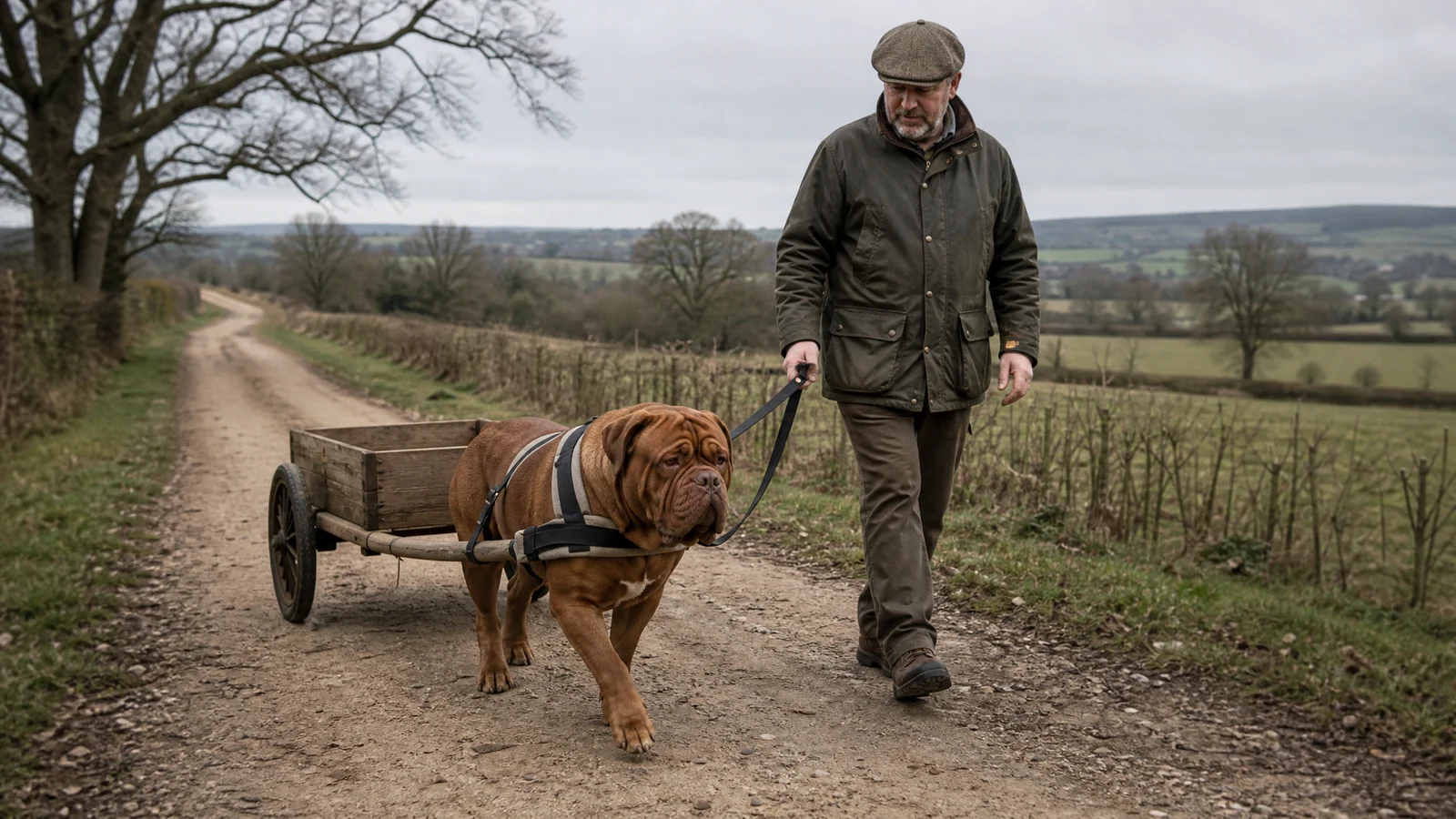
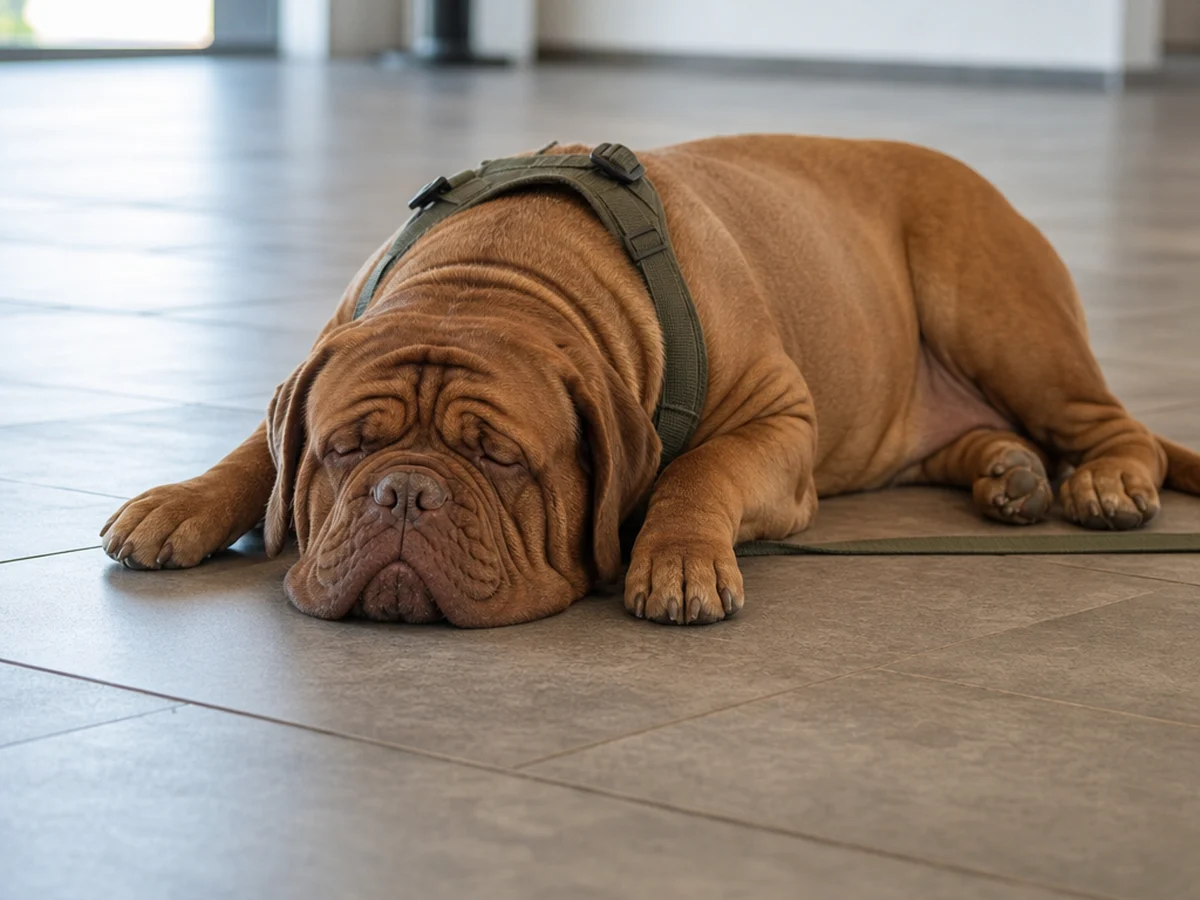
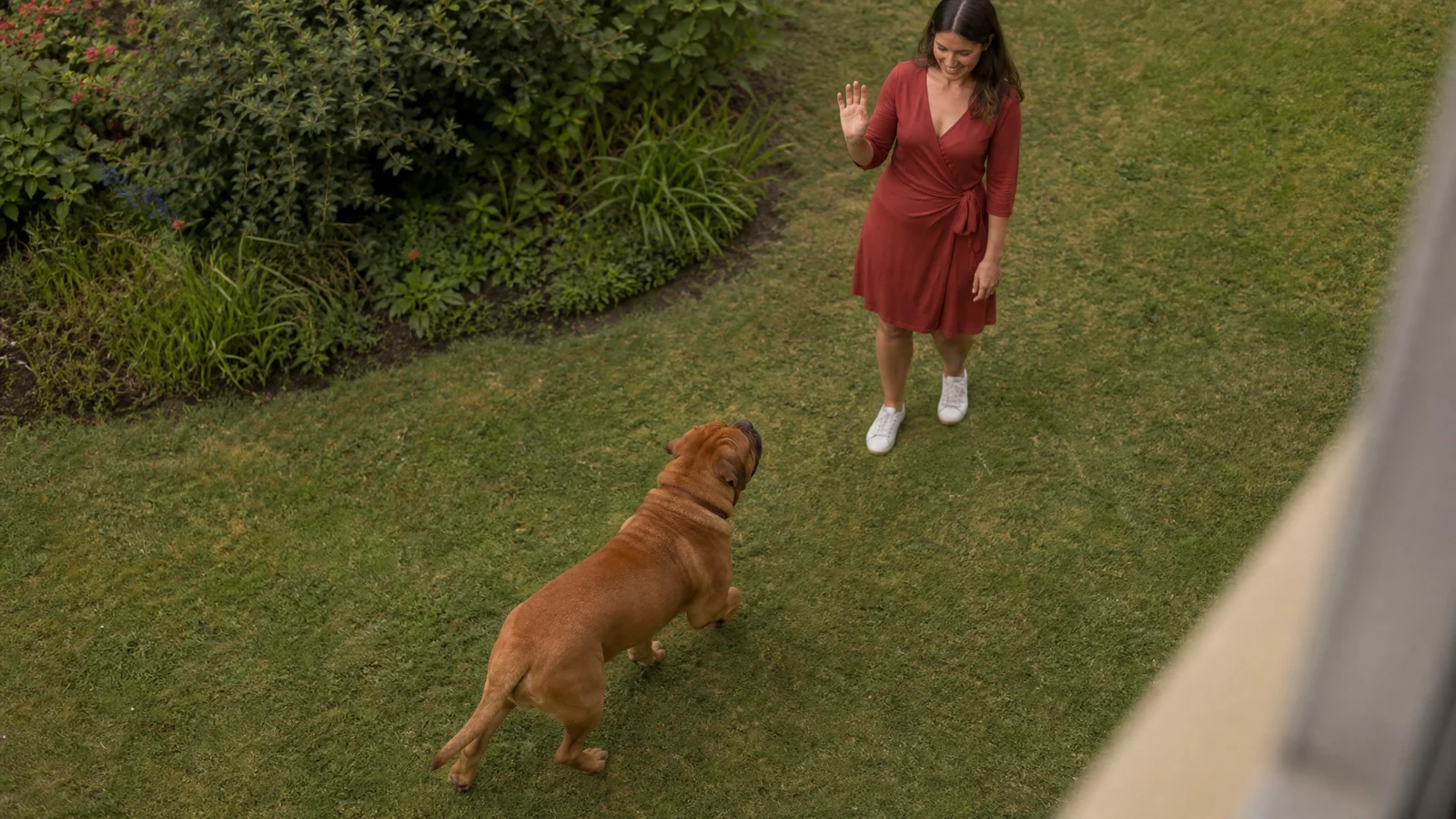
Two Dogue de Bordeaux households can look nothing alike. In one, the dog has a regular job. They lean into a cart harness with jowls swinging, work a rally course with eyes locked on you, then flop onto cool tile and snore. In the other, the dog has no outlet, drifts from room to room, leans on you pointedly, and has rearranged the cushions by evening.
The breed's ratings explain the gap. Energy sits at a moderate 3 of 5, yet mental stimulation needs reach 4 of 5, so boredom rather than missing miles is what makes a French Mastiff restless and pushy. Read on for how to size up your dog's needs, which dog sports suit this heavy build, how to handle heat and footing, and the one phone call that starts it all.
Start With the Dogue de Bordeaux's Energy and Brain
Before you pick any sport, take a good look at your own dog. Mental stimulation rates 4 of 5, where the top of the scale describes a dog that wants real work to do, while energy rates only 3 of 5. Together, those numbers say a French Mastiff does not need a marathoner's mileage. They do need something to think about.
The breed standard backs up that shape. It describes a free, supple gait with the trot as the preferred gait, plus great speed over short distances. That is a dog built for powerful bursts and steady, purposeful movement, not hours of roaming.
History points the same way. By the late 1700s, Dogues guarded the vast estates of the nobility, and after the French Revolution they found work as livestock drovers. Both jobs asked for strength, steadiness and a clear head. Today the breed lives mostly as a family companion and house guardian, so the work that once filled their days has to come from you.
An underfed brain tends to show itself in the evening:
- Pacing from room to room even after a decent walk.
- Nudging, pawing or leaning on you again and again for attention.
- Carrying off shoes or cushions that were left alone for months.
A dog who has spent their mind in a short, well-paid session usually does the opposite. They exhale, claim the coolest floor in the house, and snore with their jowls puddled around them. Trainability rates 4 of 5, so lessons land quickly when they pay off.
Our guide to daily Dogue exercise and brain games fills in the rest of the day. For this first decision, keep walks at a comfortable length and add one structured sport to the week instead of stretching the walks. That is your choice here.
Which Kind of Dog Sport Fits Your Dogue de Bordeaux?
The AKC says the breed will enjoy cart pulling, rally, obedience and agility. Those sports fall into families with very different demands, and sorting them against this dog's build and temperament narrows the field fast. The table lines up the families you are likely to meet.
| Sport family | What it asks of the dog | Fit for this breed |
|---|---|---|
| Pulling (cart work) | Power, a steady walk or trot, a willing attitude | Strong. It spends the muscle the body was built with. |
| Obedience-style (rally, obedience) | Close attention, changing exercises, calm movement | Strong. Low impact, and it feeds the thinking half. |
| Speed (agility) | Bursts, jumps, tight turns | Partial. Fun in a modified form, with care for the joints. |
| Scent (nose work) | Sniffing, searching, patience | A good extra for easy days. |
Affection with family rates 5 of 5 for this breed, so anything that keeps you side by side pays them twice. That favors pulling and rally over sports where you wait at the sidelines.
Nose work is open to almost any dog, including seniors and those with physical limits, and it gives busy dogs practice at focusing. For a Dogue it makes a gentle side dish rather than the main meal.
Nobody has to compete for a Dogue's sport life to count. The parent club welcomes all dogs, whether for conformation, working, agility, or family companionship, and a quiet weekend hobby with a harness and a pocketful of treats is a perfectly good one.
Your choice at this stage: narrow the list to one or two candidates. For most Dogues, pulling and rally make the best pair, with agility as an optional extra.
Cart Pulling as a Dog Sport for a Heavy Build
Of all the options, cart pulling reads most like the breed's own résumé. The standard calls the Dogue very powerful and very muscular, and pulling at a steady walk or trot spends that strength exactly as the body was designed to spend it. There is real pleasure in the creak of the cart and the even rhythm of big paws on a quiet path.
Start slower than feels necessary. The aim is a dog who believes the harness predicts good things.
- Let your dog sniff a well-fitted pulling harness and earn a treat for touching it, then for wearing it around the house during meals and play.
- Teach a forward cue and a stop cue with a marker word, paying for each correct response on flat ground with no cart attached.
- Introduce the empty cart on its own. Scatter treats around it while it sits still, then let your dog watch it roll slowly.
- Hitch up with a helper, walk a few steps on level ground, and reward heavily.
- Add weight only in tiny increments, and only after your vet agrees your dog's joints and body condition are ready.
- End each outing while your dog is still eager to go on.
Keep the cart cue well apart from everyday leash walking. Dogs often learn young that pulling gets them forward, and a Dogue with a harness on their shoulders can easily blur the two jobs. Use different gear and a different cue for the cart, so "go" means pull and "with me" means walk beside you.
Common advice says a big dog needs long miles to burn off energy. For this moderate-energy breed, a short, purposeful pull tires mind and muscle far more healthily than distance does. Measure success by quality: a smooth path, a calm start, a treat at the turnaround and an easy stroll home.
Your choice here: if the build and the steady trot appeal, begin with the harness this week and keep every load light.
Rally and Obedience as Dog Sports for Thinking Work
Rally and obedience ask for attention instead of power. In rally, you and your dog travel through a series of stations, and each station card tells you what to ask next, whether a turn, a halt or a sit. You can talk to your dog the whole way. Formal obedience is quieter and more precise. Both are low impact, which suits a heavy dog very well.
Some trainers insist obedience means drilling sit and down until they are flawless. For a thoughtful breed with high mental needs, that backfires, because repetition bores and a bored dog simply disengages. Rally's changing sequence keeps the puzzle fresh, and your dog stays close beside you, which this affectionate breed adores.
You can build a first route at home with almost nothing:
- Reward your dog for looking at you and for settling at your side.
- Teach sit, down and stand as separate skills, each well paid, before chaining them.
- Lure a turn toward you with a treat, then fade the lure into a hand signal.
- Cut paper signs, lay out a loop in the living room, and shuffle the order each day.
Reward the first good attempt, then raise the bar a little instead of drilling to perfection. Finish with something easy that your dog loves.
Dogs tend to do best in a class when their early lessons feel like games, with quick rewards and plenty of success. The trot is the breed's preferred gait, and it suits a route where accuracy counts for more than speed.
Your choice here: make rally the base, either as your home practice or as the first formal class you book. Obedience skills then come along inside it.
Is Agility Safe for a Dogue de Bordeaux's Joints?
Agility tempts people most, because the standard credits the breed with great speed over short distances. The same standard describes a massive, powerfully built body, and joints feel every pound of it on landing. Speed and bulk pull in opposite directions, so your job is to protect the joints while letting your dog enjoy the dash.
Treat agility as a menu rather than a package. A modified version might include:
- The tunnel, which lets a French Mastiff stretch into a happy dash close to the ground with little impact.
- The pause table, a natural fit for a dog who loves to settle, with a calm down paid generously.
- Bars laid flat on the ground, which teach rhythm and footwork without a hard landing.
- Very low jumps only, and only once your vet agrees.
Skip high jumps, steep contact obstacles and tight weave poles. They twist and slam a long, heavy body, and no ribbon is worth that. Keep runs brief, pay well at every obstacle, and keep regular vet visits on the calendar so someone who knows your dog's frame can say when the joints are ready for more.
A growing youngster should wait. Teach foundation games now, and hold back jumping, hard turns and heavy pulling until growth is finished and your vet says go.
A relaxed fun run suits this breed better than chasing a fast time. Cheer for the tunnel zoomies and the proud pause on the table.
Your choice here: take the modified, low-jump version if your adult dog is sound and your vet is comfortable, and skip agility entirely if they hesitate.
Heat, Footing, and Gear for Dog Sports
A sport is only as safe as the conditions around it. For a heavy, short-coated dog like the Dogue, temperature, session length, footing and fit matter most. Set them before your first class and every later outing gets easier.
Cool Weather and Short Sessions
Train in the early morning or after sunset, and move indoors when the weather turns warm. Work in brief rounds with a rest between them, then offer a drink in the shade.
Heavy panting, slowing down or lagging behind you means the session is over, even if your dog still looks willing. Eager dogs rarely volunteer to quit, so you have to be the one watching. Ask your vet which signs of overheating to look for in your own dog.
Open and close with a calm walk, and keep a towel handy. Drooling rates 5 of 5 for the breed, and a happy Dogue after a round is a damp, delighted one.
Footing and Fit
Big dogs slip. A rubber mat gives you a safe practice spot at home, and it doubles as a place to settle afterward. Choose grippy ground for outings and avoid polished floors, wet grass and loose gravel. Our guide to teaching Dogue house manners shows how to reward that calm settling indoors.
- Pick a harness that fits snugly without rubbing or restricting the shoulders, and recheck the fit as your dog's condition changes.
- Look over paws and skin folds after every outing and mention anything unusual to your vet.
- Treat limping, reluctance to move or unusual tiredness as a reason to call the vet rather than a reason to push on.
Your choice here: write your rules down before the first class. Cool, grippy, well fitted and brief covers nearly everything. Moderate energy is no flaw. It is permission to do less and do it well.
Book One Beginner Class for Your Dogue de Bordeaux
Plans only count once they become appointments. By now you have judged your dog's energy and brain, narrowed the field to a sport or two, and set the conditions that keep them safe. What remains is a real instructor and a real date.
A good beginner class welcomes questions and treats a dog's needs as information. Before you sign up, ask the instructor:
- Do you teach with treats, praise and play, and can a dog rest whenever they need to?
- Can we watch a session first, without our dog, to see how the instructors work with the animals?
- Is there room for a large, heavy dog to move comfortably, and is the floor non-slip?
- Can the room be kept cool, or does the class meet at a cooler time of day?
A Dogue who adores you wants to work with you, and the right room makes that obvious from the first treat.
Today's single step: call a local trainer or club and book one beginner class in the sport you chose. Pick rally if the thinking half of your dog needs feeding, or cart pulling if the strength is what delights you. Mention that you share your home with a Dogue de Bordeaux, ask your questions, and put a date on the calendar. One real appointment turns a good plan into a dog who finally has a job.
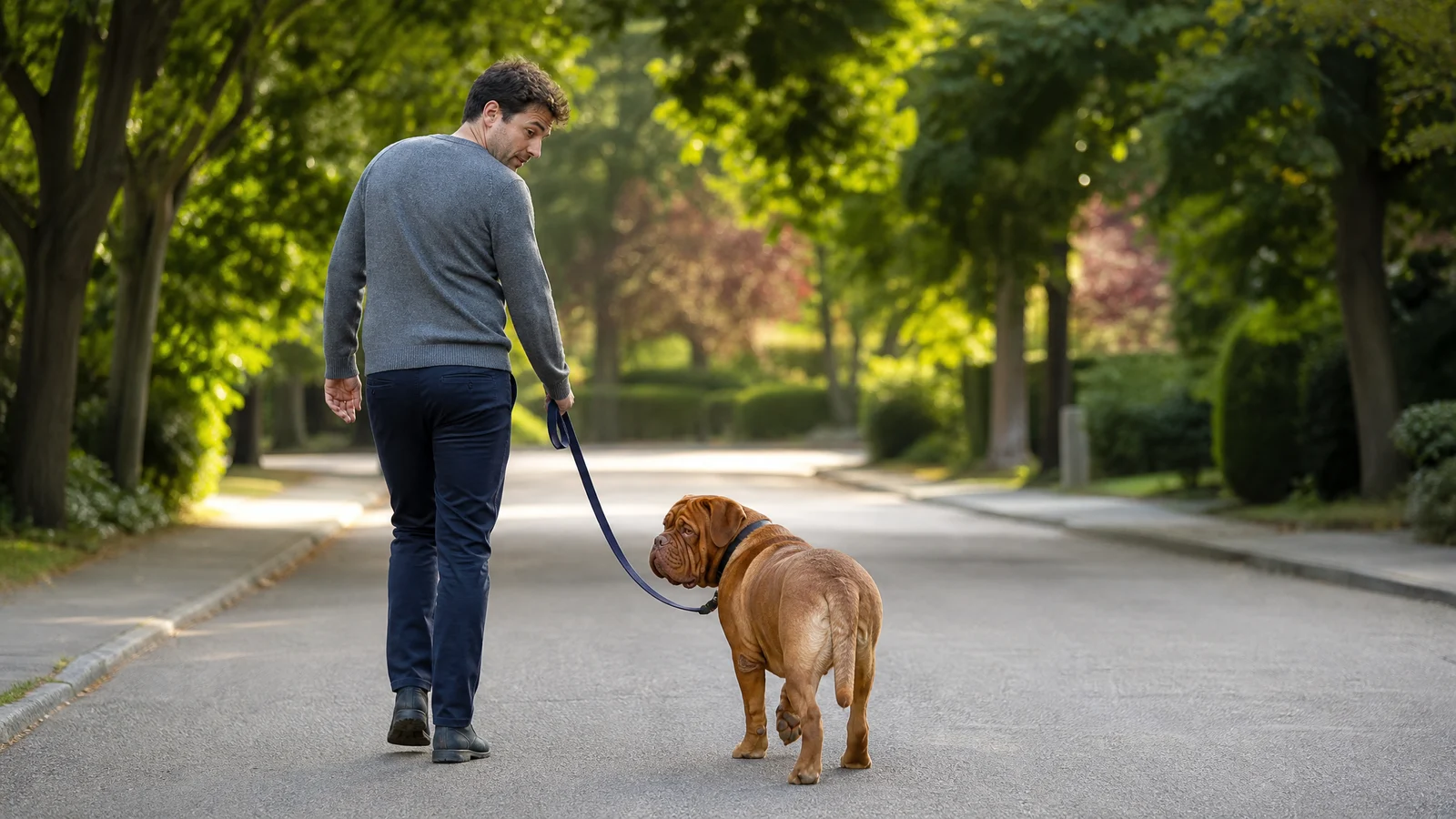 Exercise and jobsDogue de Bordeaux Exercise Requirements: Body and Brain
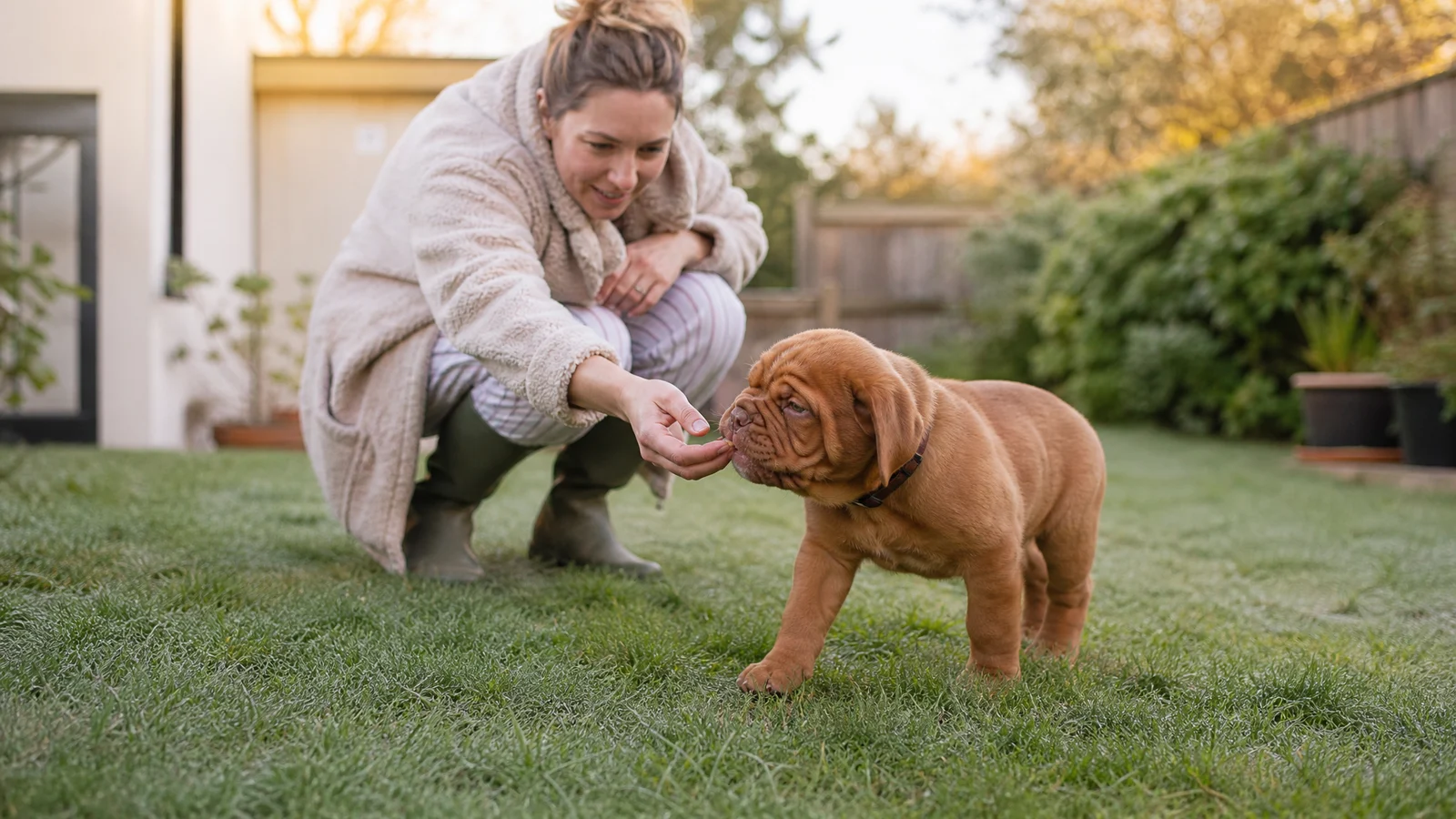 Training basicsA Dogue de Bordeaux Puppy Bathroom Routine That Sticks
 Training basicsDogue de Bordeaux Training: A Reward-Based Plan