Relentless mileage is the wrong exercise target for a Dogue de Bordeaux. Their body is powerful, their energy is moderate, and their mind still needs a reason to participate. The useful question is not how far you can make a French Mastiff travel. It is how movement, thinking, and recovery fit together without leaving the dog frantic or depleted.
This guide builds that balance from the breed's movement outward. We will map physical exercise, brain games, weather decisions, and signs that the plan needs adjusting. You will also see how to use the hour after activity as feedback. The result is a daily rhythm you can repeat, not a heroic outing you have to recover from tomorrow.
How the Dogue de Bordeaux Uses Exercise
The Dogue de Bordeaux is a heavy molossoid whose preferred gait is a trot. The official breed standard also notes speed over short distances. Those details point toward comfortable, purposeful movement with brief bursts, not repetitive hard running or a contest to cover ground.
Moderate energy does not mean no exercise. It means quality matters more than a large total. A walk with changing smells, a few rewarded cues, and time to move at an easy pace asks more of the whole dog than marching the same loop while preventing every sniff.
History adds context without dictating a modern workout. Dogues once did demanding work such as moving livestock, so strength and steadiness belong in the breed's story. Today, that background is best honored through controlled movement and cooperative games, never by trying to recreate confrontational work.
The Exercise Budget Has Three Parts
Think of the day as a budget shared by body, brain, and recovery. Spending everything on fast movement can produce a tired body with an alert mind. Spending everything on food puzzles can leave a capable adult underused. Rest is not empty time because it lets arousal settle before the next activity.
| Part of the budget | What it can include | What you are watching |
|---|---|---|
| Body | Comfortable walks, free movement, brief play | Easy gait and willing participation |
| Brain | Searching, cue practice, puzzle feeding | Focus without mounting frustration |
| Recovery | Water, a cool resting place, quiet time | Breathing and behavior returning to normal |
The table is a planning tool, not a formula. An adult who had an exciting visitor may need a quieter search game and more rest. A calm day may have room for a longer sniffing walk. We prefer to adjust the parts rather than declare that every Dogue needs the same schedule.
Balance can also shift within one outing. A slow sniffing start may become a few brisk stretches before the dog returns to exploring. Let the purpose change with the dog's response instead of deciding that every minute must count as exercise in the same way.
The budget should leave room for ordinary life. A dog who still has to navigate dinner, visitors, and evening sounds may not benefit from arriving home at the edge of exhaustion. Preserve enough capacity for calm choices after the leash comes off.
Movement Should Stay Conversational
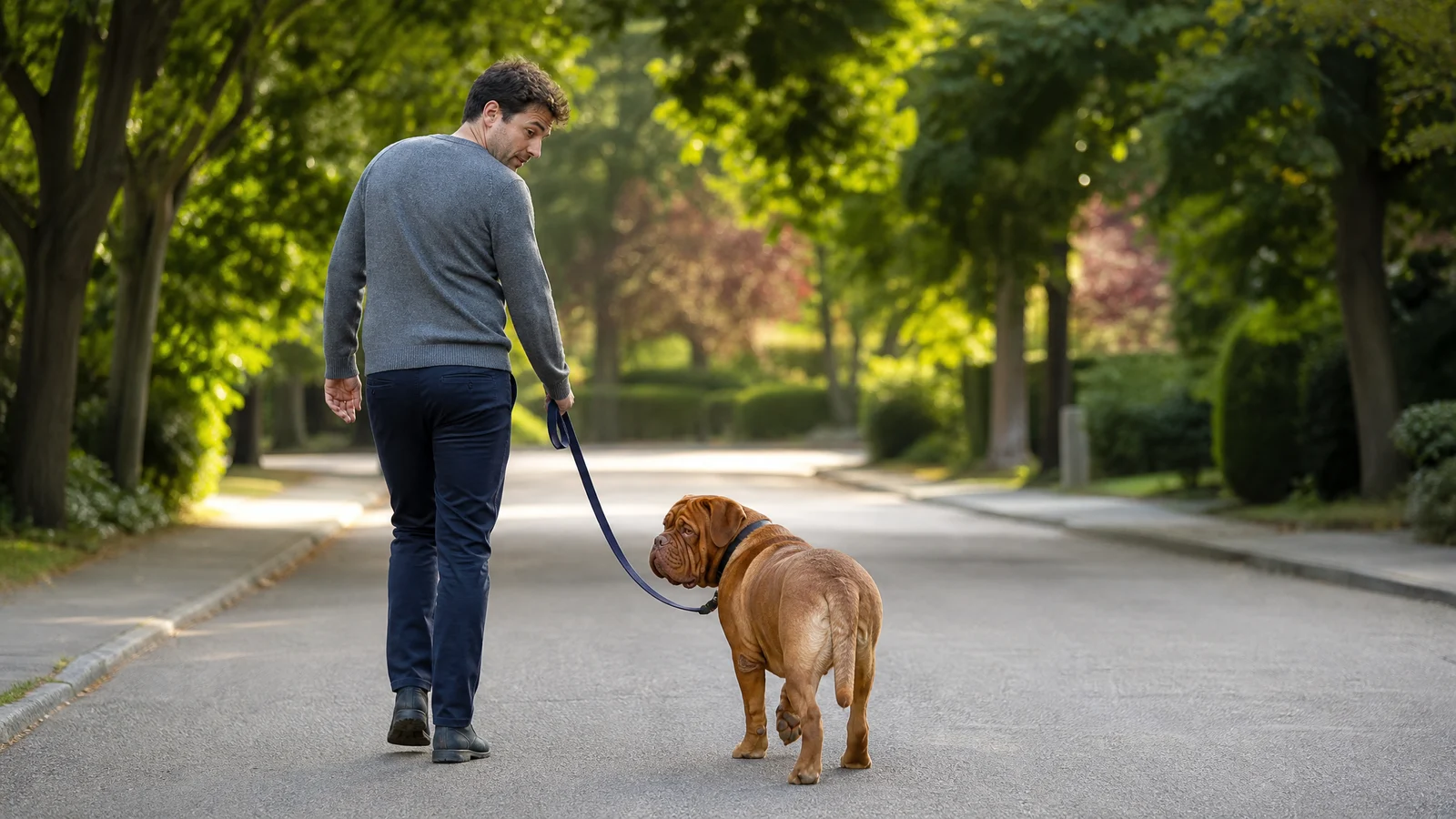
During ordinary exercise, your dog should be able to notice you, take a reward, and change direction without struggling. If their stride loses its easy rhythm or they repeatedly fall behind, the session has already answered your question. Turn toward home and make the next outing easier.
A fenced yard can support the plan, but access to space is not the same as guided activity. Walking together gives you chances to reward check-ins and calm choices. It also lets you notice changes in movement that are easy to miss when a dog is roaming alone.
Surfaces matter as much as distance for a heavy dog. Choose routes with reliable footing and room for broad turns, then vary terrain gently rather than seeking steep or slippery challenges. Comfortable movement should look fluent from the first steps to the return home.
Equipment should support the same easy picture. Use a well-fitted harness or collar that does not alter the dog's natural stride, and check the fit as body condition changes. The leash is a safety connection, not a way to pull a tired dog through the final part of a route.
Recovery Completes the Session
Finish while your Dogue can still move comfortably and think clearly. Offer water and a cool place, then allow quiet rather than immediately starting another exciting game. A regular vet relationship belongs in this plan because routine checkups help you discuss movement that fits your individual dog's age and condition.
Brain Games Count as Daily Exercise
Mental work is not a substitute for all movement, but it can change how satisfying the day feels. The breed's mental stimulation rating is higher than their energy rating, so a short thinking task can fill a gap that another lap around the block does not address.
Good brain games have an exit as well as a challenge. Begin at a level where the dog can succeed, make the answer slightly less obvious, and stop while they are still solving rather than pawing wildly or walking away. Difficulty should create concentration, not helplessness.
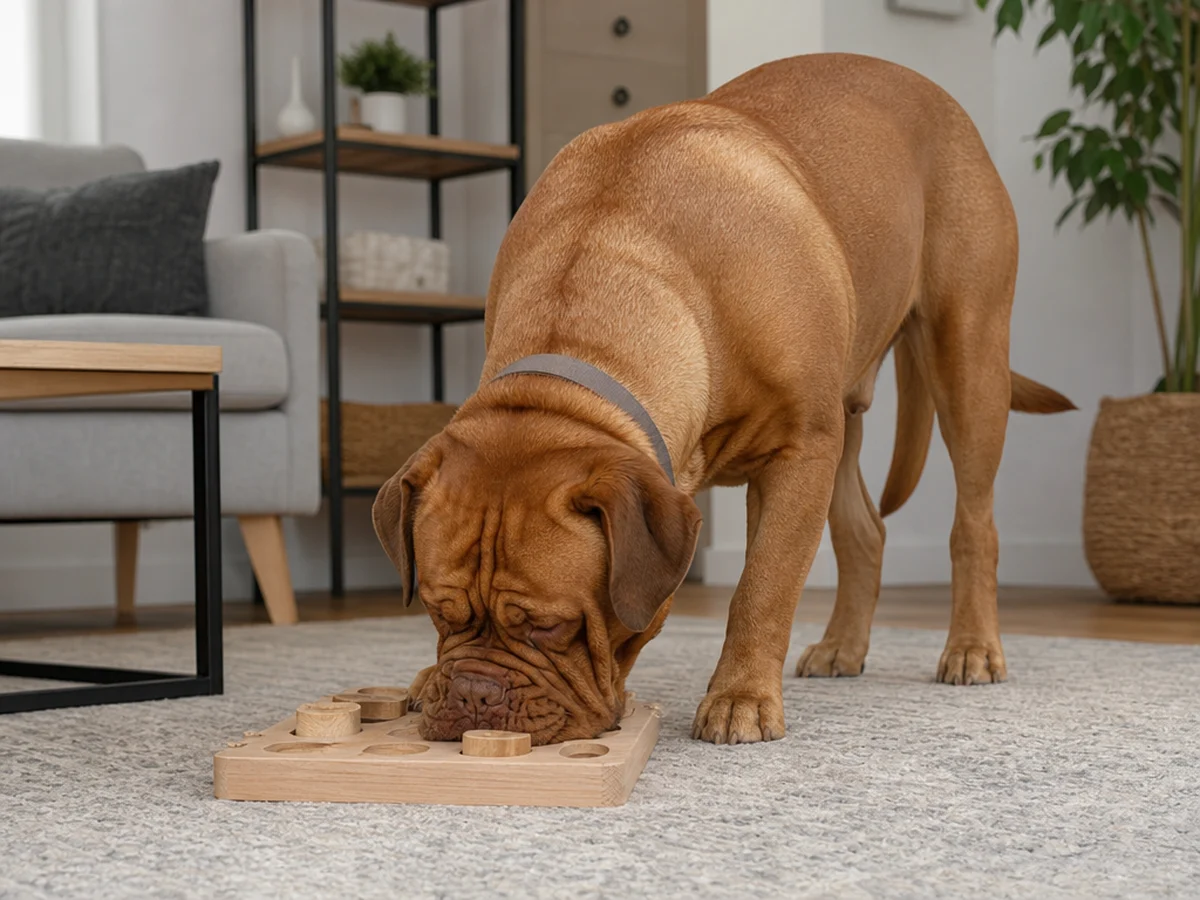
The easiest place to begin is with part of a normal meal. The ASPCA enrichment guide treats mealtime as an opportunity for mental activity. Scatter food in a safe area, fold pieces into a towel, or use a puzzle your dog can operate without forcing or chewing unsafe parts.
- Hide a few pieces of food in open boxes, then change which box holds the reward after your dog understands the game.
- Reward a nose touch to your palm, then use that simple behavior to guide turns, positions, and calm movement around the house.
- Place a favorite toy in an easy location and encourage a search, making the hiding place harder only while your dog stays confident.
- Practice settling on a mat after a brief search so excitement has a clear path back down to rest.
Beginner nose work starts with a favorite reward hidden in simple containers. That makes it useful for a large dog because you control the floor space and difficulty. Let the Dogue solve the scent problem rather than pointing out every answer.
Exercise Changes With Weather and Life Stage
A single routine cannot fit every season or every age. Growing puppies need exploration and skill practice without repetitive impact. Adults can carry more of the physical plan, while older dogs may benefit from familiar routes, secure footing, and more recovery between efforts.
Puppy Exercise Builds Coordination
A Dogue puppy is building a large adult frame, so puppy exercise should emphasize surfaces, body awareness, and calm exposure. Let them explore at their pace, reward voluntary attention, and avoid turning walks into forced distance. Play can end before the puppy becomes clumsy or wildly overstimulated.
Training belongs inside these outings. The PDSA exercise guidance includes training as everyday mental activity that can reinforce useful cues and reduce boredom. A few rewarded steps beside you can matter more than extending the route.
Adult Exercise Carries the Main Load
A healthy adult can enjoy steady walks, low-impact games, and suitable Dogue sports. The best mix depends on what leaves them pleasantly settled afterward. Add one variable at a time so you know whether distance, pace, terrain, or novelty changed the response.
Warm Days Shrink the Physical Budget
Heat changes the plan before you leave home. Choose the coolest practical part of the day, favor shade and easy footing, and replace hard play with indoor searches when conditions feel oppressive. Carry water on longer outings and turn back at the first meaningful slowdown.
Do not use enthusiasm as proof that conditions are safe. A willing dog can continue past the point where the session is useful. Your responsibility is to notice pace, breathing, coordination, and recovery, then stop while the experience is still comfortable.
When Exercise Creates More Arousal
More activity is not always the answer to pacing, grabbing objects, or demanding attention. Those behaviors can appear when a dog is bored, but they can also follow a day with too much novelty and too little sleep. Look at what happened before adding another energetic game.
If your Dogue becomes louder, rougher, or less able to follow familiar cues as activity continues, shift from output to regulation. Lower the difficulty, scatter food for a calm search, or guide them to a familiar resting place. The goal is not to exhaust resistance out of a powerful dog.
Look at sleep and household events before changing the exercise plan. Construction noise, guests, travel, or a disrupted resting place can leave a dog carrying more arousal than usual. On those days, familiar low-key activity may be more useful than a novel adventure.
Read the Hour After Exercise
A useful session tends to produce an easy transition. The dog drinks, settles, and can respond to ordinary household events without staying on edge. A plan may be too intense when the dog remains restless, cannot settle, or seems stiff and reluctant when they rise later.
Keep the observation simple. Note the activity, the dog's response during it, and what the next part of the day looked like. Patterns across several ordinary days are more helpful than judging the entire plan by one unusually busy afternoon.
Use Structure Without Pressure
Reward-based structure gives exercise a beginning, middle, and end. The AVSAB training statement explains that rewards can work with routines and clear guidelines. Ask for an easy check-in before opening the door, pay good choices outside, and finish with a practiced settle.
This approach should make home life easier, not create an athlete who expects escalating entertainment. When the sequence is predictable, your French Mastiff can learn that movement ends in rest. Calm behavior after exercise is part of the plan rather than an outcome left to chance.
Dogue de Bordeaux Exercise Budget for the Next Two Weeks
Use the first part of the reset to observe rather than chase a target. Keep walks comfortable, add one easy scent or food puzzle, and write down how readily your dog settles afterward. Change only one part of the budget on a given day so the response stays readable.
Keep the notes plain enough to use. Record the type of movement, the thinking game, and whether recovery looked easy, unsettled, or unusually slow. You are not building a performance chart. You are learning which combinations leave this individual Dogue comfortable and content.
During the second part, keep the combination that produced the calmest recovery and add a little variety through route, surface, or game. If comfort or movement changes, scale back and speak with your veterinarian. The durable plan is the one your Dogue can enjoy today and repeat tomorrow.
 Training basicsA Dogue de Bordeaux Puppy Bathroom Routine That Sticks
 Training basicsDogue de Bordeaux Training: A Reward-Based Plan
 BehaviorAre Dogue de Bordeaux Aggressive or Just Vigilant?