
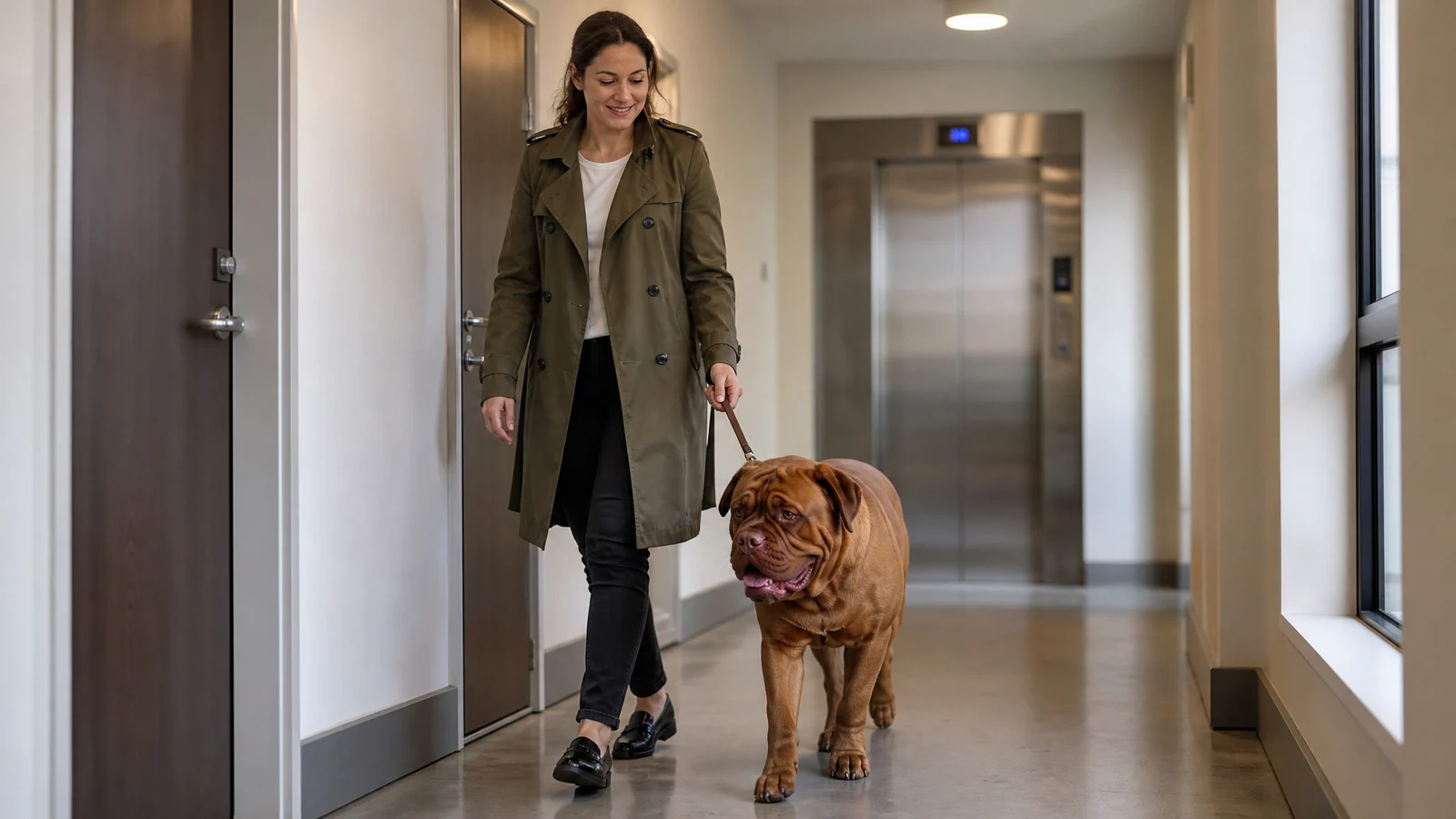
A Dogue de Bordeaux puppy needs many months of steady growth to reach the 110 pounds expected of an adult male, and apartment manners are built in layers over those same months. The easy stretch comes afterward, once the habits are reliable and the hallway no longer feels like a puzzle to your dog.
So the real question is when, not whether. This guide covers apartment training for the breed, from the daily rhythm of walks, rest and alone time to the hallway and elevator moments your neighbors notice. We have trained this breed for many years, and the pattern holds: timing and routine matter far more than square footage.
Done well, you get a calm, affectionate roommate. Done badly, you get a very large dog who is bored, noisy or anxious in a small space.
Dogue de Bordeaux Apartment Training Basics
A tail that clears a coffee table, a head that rests on the kitchen counter, and a body that fills the gap between the sofa and the wall: that is the first week with a grown French Mastiff. The breed is massive and powerfully built, and the UKC breed standard expects males in good condition to weigh at least 110 pounds. Space matters less than most people expect, but a plan for the space matters a great deal.
The common advice that giant dogs need a big yard misses how this breed behaves indoors. They rate only moderate for energy, they want to be near their people, and a small apartment with an attentive owner suits them better than a large yard they use alone. What an apartment demands is organization. Keep walkways clear, put traction on slick floors, and agree on household rules so everyone asks for the same behavior.
Plan for the practical costs as well. Drooling sits at the very top of the breed's scale, shedding is high even though the short coat needs little grooming, and a heavy dog is hard on thin floors. Check your building's size and breed rules before you commit. Schedule regular veterinary visits too, since a fast-growing puppy benefits from a professional eye on their development.
Daily Training Routine for Apartment Life
A workable day for this breed looks more like a rhythm than a timetable: a purposeful outing, a long stretch of rest, a short burst of mental work, then rest again. The dog is calm by nature, so the aim is not to exhaust them. The aim is to make quiet the default and to give the brain a small job, so boredom does not find its own outlet on your furniture.
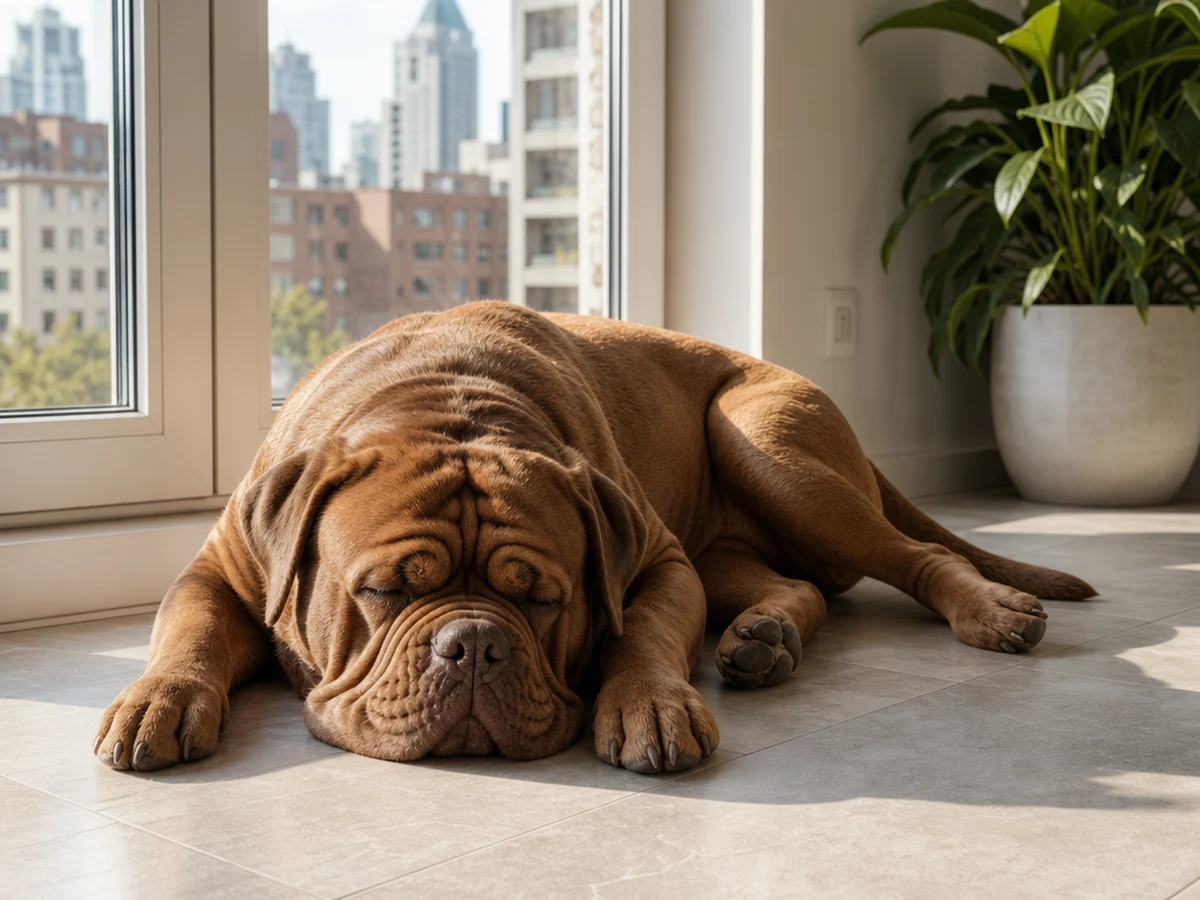
Here is a day that fits an apartment, and you can shift the timing to suit your household:
- Start with a toilet outing and an unhurried walk. Calm praise is enough for toileting, because treats can backfire when some dogs begin offering pretend squats to earn them.
- Serve breakfast from a puzzle bowl or scatter it on a snuffle mat, which turns a meal into mental work.
- Send your dog to their mat for a long rest while you get on with your morning, and reward them for lying there without being asked.
- Run a short alone-time session, then return before your dog gets worried.
- Take an afternoon outing with plenty of sniffing, a few training repetitions and a relaxed pace.
- Finish the evening with a walk, a short mat session while you eat or watch television, and a last toilet trip before bed.
Building Alone Time
This breed rates at the top of the scale for affection, which is exactly why alone time deserves early teaching. Begin with absences so short your dog barely registers them, such as stepping into the hallway and coming straight back, and lengthen them gradually over many days.
Leave a chew or a stuffed toy, keep departures and arrivals unremarkable, and reward calm when you return. Skipping the gradual steps teaches a devoted dog that your leaving is a crisis.
Watch the early minutes closely. Distress about being alone shows around your departures, starting within a few to 30 minutes. If barking, destruction or house soiling comes with drooling or agitation while you get ready to leave, that points to separation anxiety rather than missing manners, and it needs a gentler, slower plan than ordinary training.
Keeping Neighbor Noise Down
Barking sits in the middle of the scale for the breed, so expect occasional noise rather than constant noise. Place the mat away from the front door, run a fan or white noise near shared walls, and reward quiet moments generously. When your dog barks at a sound in the hallway, thank them, call them to the mat and reward the settle. They learn that noticing is fine and settling is what pays.
Your Dogue de Bordeaux's Energy Level
On paper, this breed looks like a mismatch for a small home. In practice, the ratings explain why it works. Energy scores 3 of 5 and adaptability 4 of 5, and the written standard describes a dog who is calm and balanced with a high stimulus threshold. That is what an apartment needs: a big dog who does not have to run to be content and who adjusts well to a steady routine.
Energy That Is Moderate, Not Absent
Moderate is not none. The standard notes that the breed is capable of great speed over short distances, and mental stimulation needs rate 4 of 5. Meeting both means short, purposeful outings, sniffing walks, simple games and brief training sessions rather than long, hard exercise. Keep activity gentle for a growing puppy and easy in hot weather, and let your dog cool off in the coolest room afterward.
Size in Small Rooms
Males can reach 27 inches at the shoulder, and the body is longer than it is tall, so there is a lot of dog to turn around in a narrow hallway. Give them a bed they can stretch out on fully, set it along a wall instead of in a traffic path, and lay non-slip rugs on slick floors. Teach a cue such as "back up" early, so you can move a large body out of a doorway politely.
A High Stimulus Threshold
A high stimulus threshold means many everyday noises will not bother your dog, a real gift in a building full of slamming doors and footsteps. It also means that when something does get through, the reaction is serious.
The breed rates 5 of 5 for watchfulness, so a stranger at the door or an unfamiliar voice in the corridor may be treated as a significant event. You do not need to encourage that instinct. Reward calm noticing, give your dog a place to go, and keep the household relaxed about visitors.
Training Indoor Manners
The early weeks of manners in a new apartment are a series of small, ordinary moments: the delivery person, the jingle of the leash, the wait before the front door opens. Each is a chance to reward the version of the behavior you want. Trainability rates 4 of 5, yet the breed can be stubborn and responds best to consistent, positive training from puppyhood, so short, rewarding sessions beat long drills.
Settling on a Mat
A mat is the most useful single skill in an apartment, because it gives a large dog a clear place to be when you cannot manage them. Teach it in small steps:
- Reward any contact with the mat at first, even a single paw, and mark the moment with a word like "yes" so your dog knows what earned the treat.
- Reward lying down on the mat, then deliver treats while they stay there, spacing them further apart over time.
- Add a release word so your dog learns when the mat session is over, and practice in different rooms.
- Build duration while you move around, then while you open a cupboard or sit at the table, rewarding calm all the way through.
Door Greetings
Because the breed is watchful, a knock or a doorbell is the moment most likely to become a standoff. Instead of letting your dog reach the door first, teach them that the bell means going to the mat. Practice with a helper, reward the settle, and let visitors in only once your dog is calm, with the leash on for the first meeting. Calm, boring greetings give a vigilant dog nothing to be vigilant about.
Leash Basics
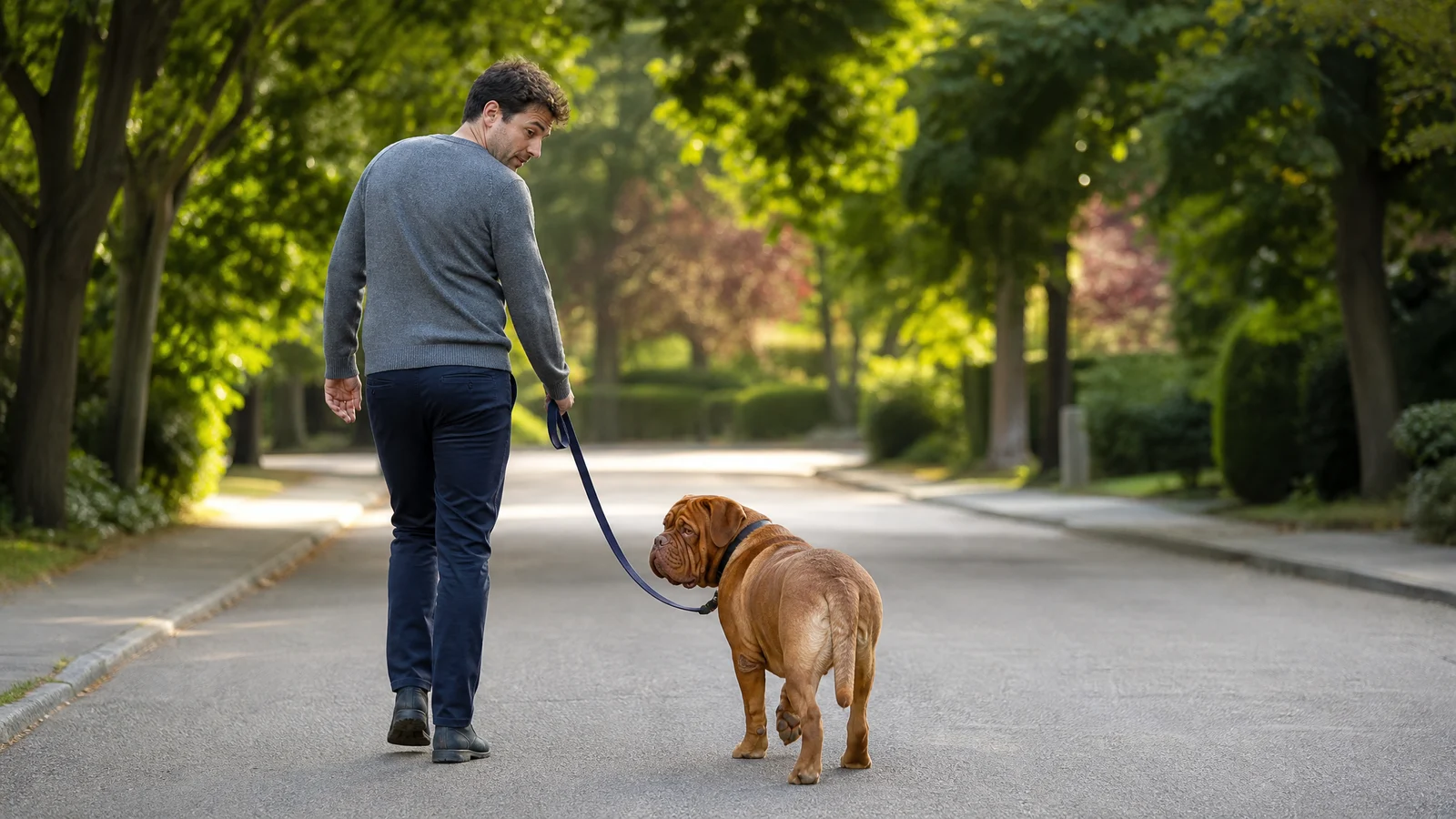
A pulling dog of this size is a safety problem in a shared building, so loose-leash walking is a core skill. Start inside, where distractions are few, and reward your dog for staying beside you with the leash slack. Move to the hallway, then outside, raising the difficulty gradually and rewarding generously. If your dog gets too excited, pause, wait for calm and begin again.
Hallway and Elevator Training
The shared spaces of a building are where your training is on display. A narrow corridor with a closed door at each end, a neighbor coming around a corner, an elevator that opens onto a stranger: each puts a very large dog close to people who may be nervous. The goal is predictable, calm behavior, and the way to get there is to rehearse each moment until it is dull.
Here is a routine to use from your own front door:
- Ask for a sit or stand at the threshold before you open the door, and reward your dog for waiting.
- Step out first, check the corridor, then release your dog with a cue, keeping the leash short and slack.
- If someone approaches, stop, turn your dog slightly away and reward them for ignoring the person as they pass.
- At the elevator, let other passengers exit, then enter first and ask your dog to sit or stand beside you, facing the door.
- If the elevator is crowded or a neighbor looks uneasy, take the next one. Giving a nervous person room is good manners, and it keeps your dog's day calm.
Stairs deserve their own plan. A heavy puppy is hard to carry, so ask your veterinarian how much stair use suits your growing puppy. For adults, go slowly, keep the leash slack and use a quick reward at each landing so the stairwell stays a calm place.
Treat neighbors with a little diplomacy. Introduce friendly ones on your terms, at a distance at first, with a treat for calm behavior. Do not push your dog into meetings, since the breed is only ambivalent toward strangers and sensitive to tension. A building that sees a polite giant every day adjusts quickly.
Dogue de Bordeaux Apartment Questions
Three questions tend to follow once the apartment routine is running, and each has a fuller answer elsewhere on the site:
- Why does your dog stand firm at the door when someone knocks? Read about why they guard the door.
- What can your dog do besides walk? See cart pulling, rally or agility for jobs that suit the breed.
- Will this breed be easy to train in a small space? Find out how trainable Dogues are.
The verdict is simple. A French Mastiff who is trained, exercised sensibly and taught to be comfortable alone can do very well in an apartment, because the breed's calm, devoted nature is exactly what a small home rewards.
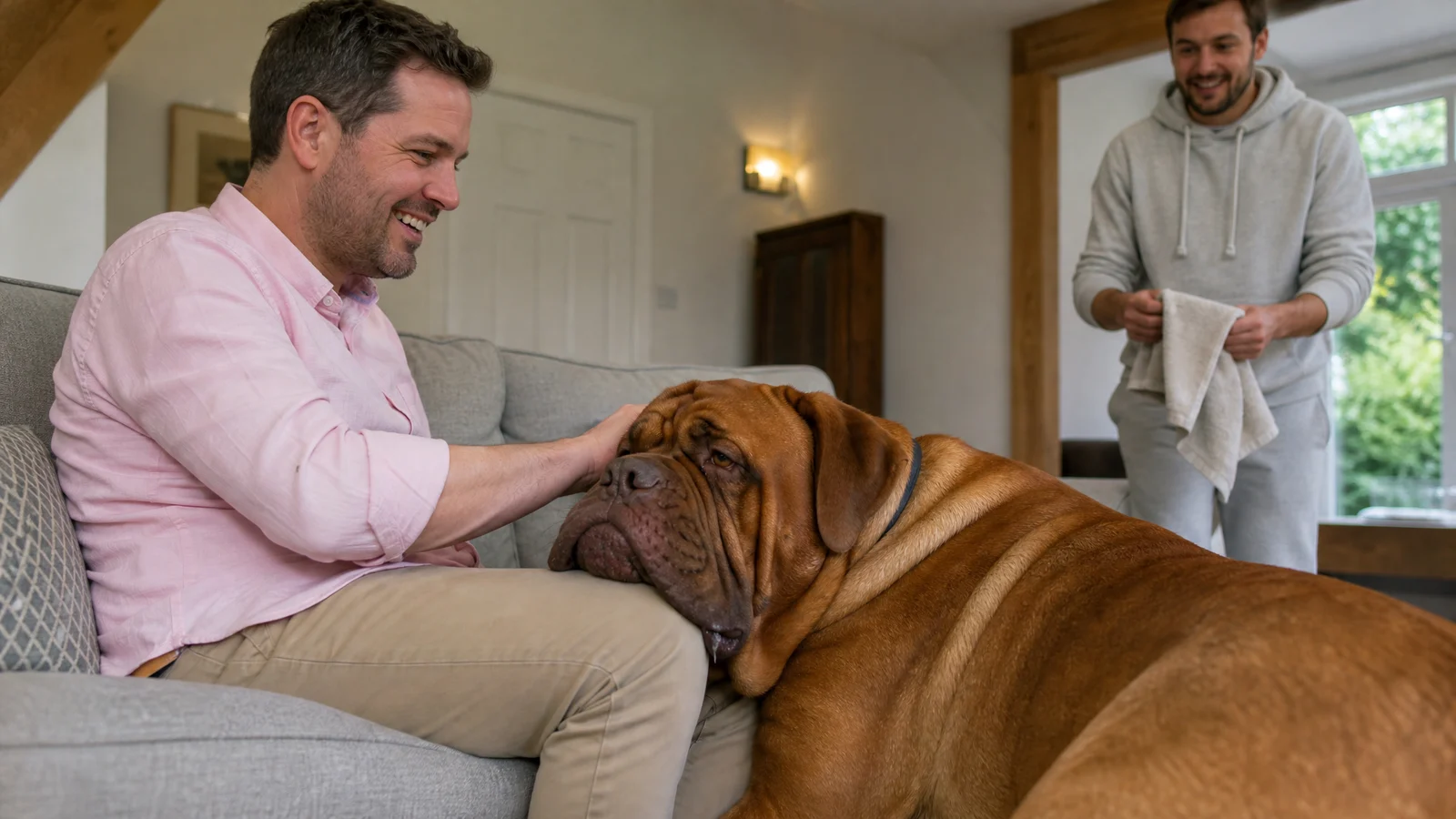 CareExcessive Drooling? Teach Your Dogue de Bordeaux the Towel
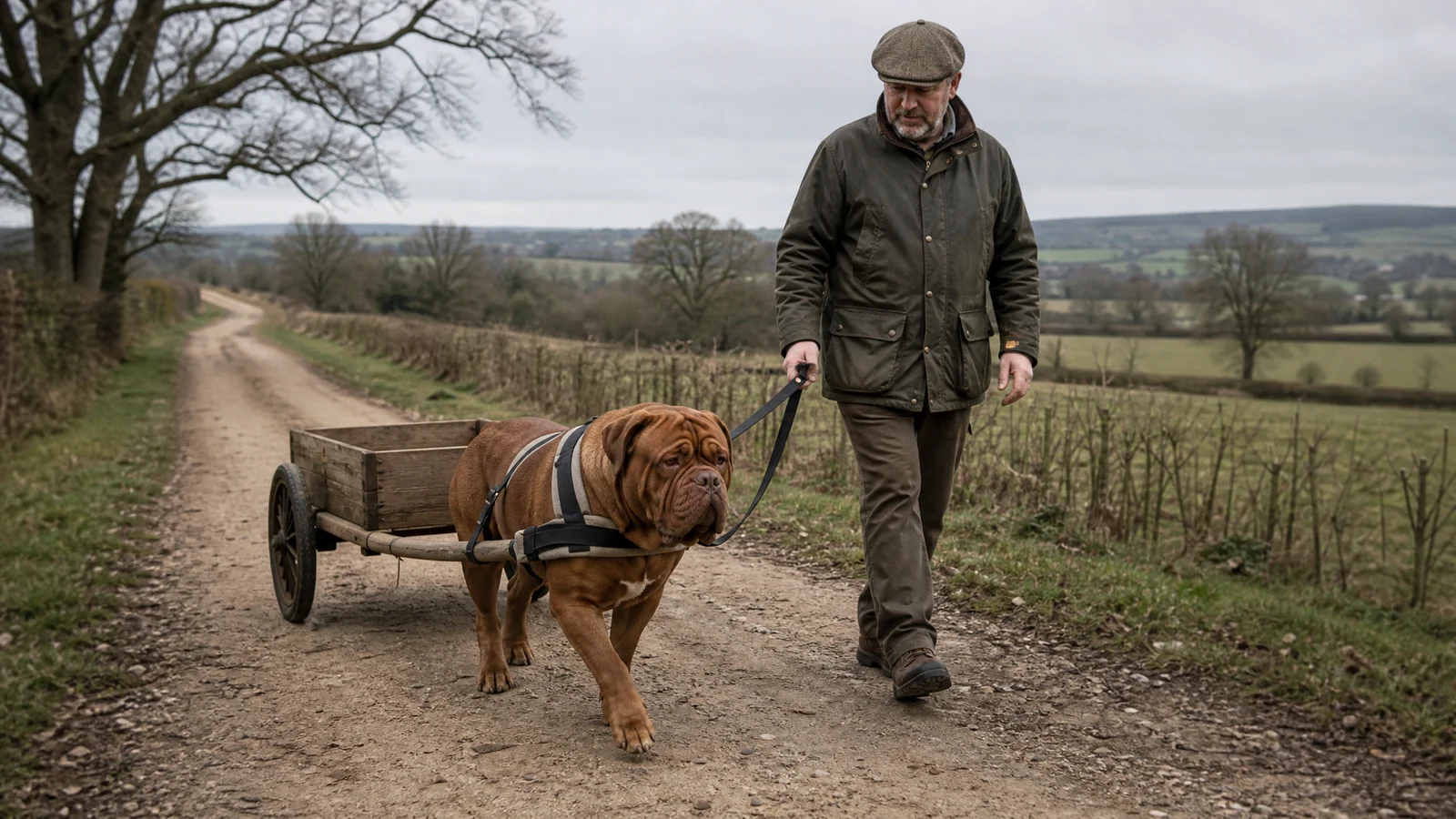 Exercise and jobsCart Pulling, Rally or Agility: Which Jobs Suit a Dogue de Bordeaux?
 Exercise and jobsDogue de Bordeaux Exercise Requirements: Body and Brain