
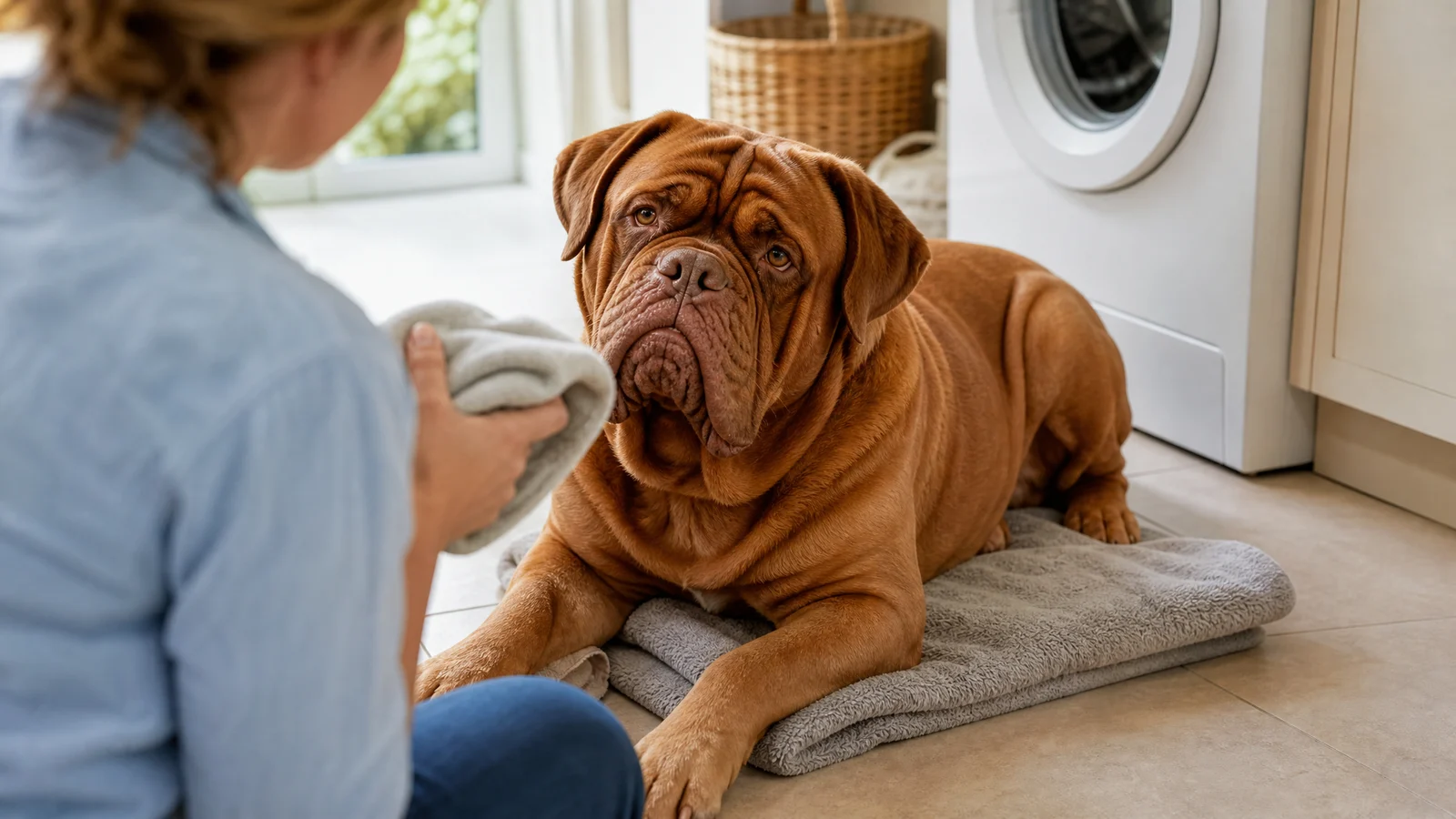
Accepting a hand on the cheek does not mean your Dogue de Bordeaux welcomes the cloth that follows it. Offering a paw may be comfortable until a nail tool moves closer. Each change adds something to the experience, and the response can change with it. Separating those moments gives you more useful information than deciding the dog dislikes grooming altogether.
A dog this large benefits from a clear way to participate and a dependable way to pause. The adult needs those signals too, because finishing the whole task can otherwise become more important than noticing how it feels.
This guide builds care around those permissions: readiness, touch, equipment and the handoff to another caregiver. We will keep necessary care under an appropriate professional plan while everyday practice develops at a comfortable pace.
A Reliable Pause During Dogue de Bordeaux Care
Begin with an arrangement the dog can leave without a struggle. Choose secure footing, enough room to change position and an adult who can stop promptly. When your Dogue turns away or withdraws a body part, pause the handling and reconsider the next step instead of immediately reaching again.
Best Friends handling guidance develops comfort with touch before more detailed handling of ears and paws. That order helps you identify which part needs teaching. It also prevents a familiar touch from becoming an unexpected introduction to several new sensations.
Keep the pause meaningful. Removing your hands while continuing to follow the dog around the room gives little relief. Let them move into an ordinary activity, and resume later only with an easier version they can manage comfortably.
A French Mastiff who remains still is not necessarily relaxed. Notice the whole response, including leaning away, changes in posture and whether they willingly return. Quiet participation and frozen tolerance can look similar if you watch only whether the task gets finished.
Decide what stopping will look like before beginning. Put tools where they can be set down safely without blocking the dog's route. Preparation makes it easier to honor a pause when your attention is divided between equipment and a large moving body.
Readiness Before Face, Ear or Nail Care
Choose an easy waking moment when the dog is comfortable and the room is calm. You are looking for a willing starting point, not taking advantage of a dog too tired to object. The same Dogue may accept one kind of touch readily and need much more preparation for another.

Observe the Approach Before Contact
Let the dog see your hand and the direction it will move. A sudden reach over the head can change the experience before any contact occurs. Begin from a position where you can move slowly and remain easy for the dog to see.
Notice whether the dog approaches, stays comfortably nearby or moves away. A suitable reward can make the small interaction worthwhile, but it should not draw the dog into a position where they then feel unable to leave. Keep the reward and the handling easy to separate.
Check your own posture too. Bending over a resting Dogue may be convenient for the person but less comfortable for the dog. Adjust your position so you can reach without crowding the face or obstructing movement.
Use the Return as Information
After a small touch, remove your hand and allow a pause. If the dog remains comfortable or willingly comes back, you have a useful place to continue. If they move away, make the next opportunity easier rather than immediately offering a larger reward to bring them back.
Watch behavior after the reward is finished. A dog may take food and then avoid the next approach. That response tells you more than the fact that the reward was eaten, and it helps prevent food from hiding a step that was too difficult.
Comfortable Touch Before Dogue de Bordeaux Care Tools
Separate body areas and movements instead of working through the whole dog in one session. Touching the outside of an ear, briefly supporting a paw and approaching a facial fold are different experiences. Build from what the dog accepts today, with enough pauses to recognize when a new part changes their response.
Face and Ear Contact
Start with a gentle touch near an area the dog already finds comfortable. Reward that easy participation, then remove your hand. Approaching a fold or lifting an ear flap can come later, in a small version that does not require the dog to remain still through a complete cleaning task.
Our Dogue towel training guide focuses on the familiar cloth and jowl routine. Keep the present lesson broader: accepting one wipe does not establish comfort with an ear check, a different texture or a longer period of handling.
Do not introduce products simply because the dog accepts touch. Ask your veterinarian which care is appropriate for the individual's folds and ears, and how to perform it. Training cooperation and choosing a care technique are connected decisions, but one does not replace the other.
Paws and Brief Support
Begin with contact higher on the leg if that is easier, then approach the paw gradually. Keep the dog's balance comfortable and avoid holding a leg in an awkward position. A brief supported touch can be a full lesson before any nail equipment is present.
The ASPCA grooming guidance recommends preparing dogs for paw handling before clipping. Notice differences between paws rather than assuming that success on one side transfers automatically. The adult's position may also change how secure the dog feels.
Let the paw return to a normal position promptly. Lengthening the hold, touching the toes and introducing a tool all add difficulty. Change a small part at a time so you can identify what remains comfortable and what needs more preparation.
Practice from a position you can maintain easily. If the adult is balancing awkwardly, handling may become hurried or inconsistent. Arrange the floor and your own support before inviting the dog into the lesson.
Care Equipment Adds More Than One Sensation
A cloth has a texture, a bottle has movement and perhaps a smell, and a nail tool can produce sound as well as contact. Introduce those features separately where practical. The dog can learn about an object at a comfortable distance before it becomes part of a care procedure.
Humane World grooming advice describes gradual preparation for nail equipment, including very small practice steps. That supports a patient introduction, not a requirement to finish every nail once the tool appears.
Use this table to choose a smaller lesson. The starting point depends on the dog, so these are options to observe rather than a fixed ladder everyone must complete in the same order.
| New Feature | Manageable Practice Possibility |
|---|---|
| A cloth approaching the face | Comfortable observation before a brief familiar touch |
| An ear-care item moving nearby | Reward calm presence without applying anything |
| A nail tool making a sound | Introduce the sound separately at an easy distance |
| Equipment near a supported paw | Keep contact brief and leave actual trimming for the appropriate step |
Inspect equipment before the dog joins you. Untangling supplies or searching for an item while holding a paw makes the session longer and less predictable. Put only the tools needed for that small lesson within reach.
When actual trimming or cleaning is needed, obtain a demonstration suited to your dog. This article teaches participation, not where to cut a nail or which substance to place in an ear. Professional guidance can keep necessary care from outpacing the dog's current training.
Necessary Care and Practice Need Separate Decisions
A sore area should not wait for a training program to become perfect. Arrange veterinary advice if you notice unusual odor, redness, tenderness or a sudden change in tolerance. Explain what the dog can currently accept so the team can plan care without assuming that a longer home lesson will solve the immediate problem.
Continue regular veterinary visits and bring your handling observations. Useful details include the body area, the tool involved and whether the dog avoids the approach before contact. That information is more specific than saying the dog has become difficult.
Keep practice within comfortable, non-urgent tasks while obtaining help. The following boundaries help adults avoid confusing learning with a need to finish care immediately.
- Do not repeatedly handle an area that appears painful.
- Ask for a practical care plan when home handling is unsafe.
- Tell the professional about previous growling, snapping or attempts to escape.
- Return to a manageable practice step after the necessary care has been addressed.
Seek qualified reward-based support when the dog's concern persists or the adults cannot read the stopping signals confidently. A large dog benefits from a plan that everyone can carry out safely. Needing help is a reason to improve the arrangement, not to keep practicing through a struggle.
Share Care Instructions With Another Adult
A useful care record tells the next person where to begin and where to stop. Record the small task the dog accepted, the position you used and how the session ended. Avoid broad claims such as being good with nails when only a brief paw touch was practiced.
Our Dogue de Bordeaux training foundations explains the value of consistent feedback. Apply that consistency to care by demonstrating the easy version before another adult adds their own approach, voice and reward delivery.
- Name the body area and the exact movement practiced.
- Describe the equipment feature introduced, if any.
- Note the dog's pause signal and the adult's response.
- Record the next easy step without promising a completion date.
Let a new caregiver begin below the previous person's most advanced step. Familiarity with one adult does not automatically transfer to another pair of hands. Keep the dog's response visible as the person changes, rather than assuming the written record guarantees the same result.
Bring that record to appointments when useful. It helps the professional understand what has been taught and what still needs support. The record should describe actual participation, including the points where a pause made the next attempt easier.
Cooperation Across Ordinary Dogue de Bordeaux Care
Keep touch, tools and completed procedures distinct in your expectations. Reward willing participation, make pauses dependable and obtain help for care that cannot wait. The dog learns that your hands provide understandable information.
As comfort develops, connect only the pieces that remain easy together. A few well-taught steps repeated calmly can improve daily care more than an occasional long session that leaves the Dogue avoiding the next approach. Let cooperation guide the pace.
 BehaviorCan a Dogue de Bordeaux Be Left Alone? Teaching Calm Time Apart
 Puppy trainingGetting Your Teenage Dogue de Bordeaux Through Adolescence
 Training basicsAre Dogue de Bordeaux Easy to Train? Sweet but Stubborn