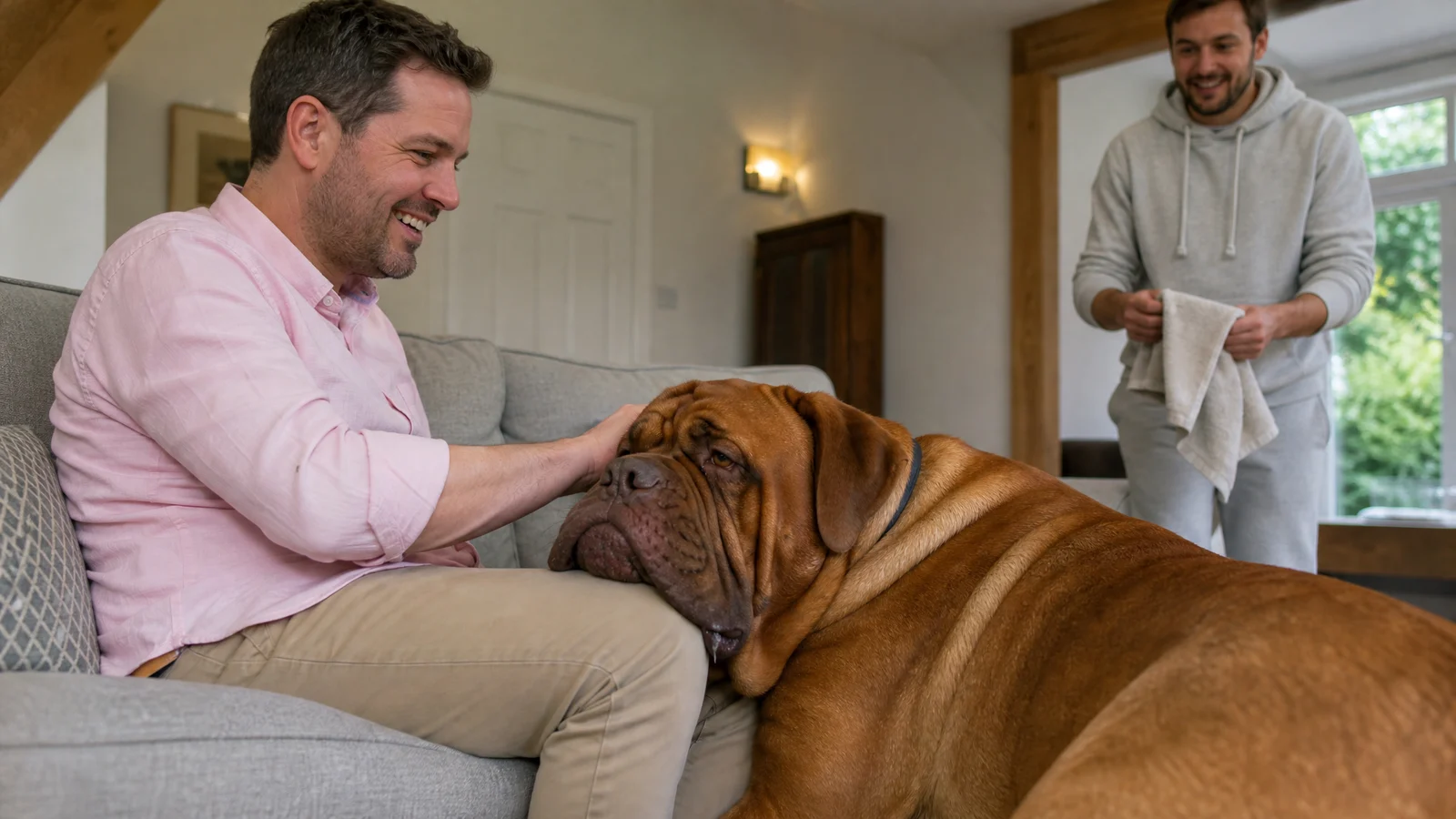
A guest settles onto the couch beside a Dogue de Bordeaux, and a long string of drool lands on their sleeve. The dog shakes their head, and a second arc hits the wall. The host lunges with a rag, and the dog ducks away, already learning that towels mean trouble.
Nothing in that scene is a fault. Loose, hanging jowls hold saliva and release it on their own schedule, and the breed sits at the top of the drooling scale. The towel is a routine to be taught, not a defeat. Handled badly, the rag becomes something to flee. Handled well, it earns you a dog who lets you check their mouth and skin for life.
In this article, we'll go through why daily care means wiping and not brushing, how to teach the towel as a signal for treats, how to build jowl handling in tiny steps, and where to station towels around your home.
Dogue de Bordeaux Care Training Means Wiping, Not Brushing
If you judge daily care by the coat, you reach for a brush. On this breed that habit points your effort at the wrong end of the dog. The drooling rating is 5 of 5, the very top of the scale, yet coat grooming frequency is only 1 of 5, the monthly end. Expect far more wiping than brushing, and train for the wiping.
The coat explains the low grooming score. The breed standard calls it short, fine and soft to the touch, so a soft brush or a damp hand handles most weeks. Shedding is rated 4 of 5, which means loose short hair on furniture and clothes, but that is a vacuuming matter more than a grooming one. The face is what needs attention after every meal and long drink.
This table shows how the ratings translate into a normal week.
| Trait | Rating | What it means for you |
|---|---|---|
| Drooling | 5 of 5 | Cloths in several rooms and a wipe after meals and drinks |
| Coat grooming frequency | 1 of 5 | A soft brush on a monthly rhythm is enough |
| Shedding | 4 of 5 | Loose short hair that a vacuum handles |
| Trainability | 4 of 5 | A dog who learns well when the rewards are good |
Because wiping happens many times a day, the dog's attitude toward it matters more than your technique. A dog who tolerates the cloth only while held still turns every wipe into a small argument. A dog who walks up and offers their face needs seconds. Behavior and training of this one breed is our focus, and the second outcome is almost always a training result. Teach the wipe once and the daily job gets easy.
A Dogue de Bordeaux's Drool Is Normal, Not a Fault
The drool comes from the build. The standard describes a massive, powerfully built dog, and the loose jowls collect saliva while the dog rests, then spill it when they lower their head, drink, eat or shake. A French Mastiff who looks tidy on the couch can still redecorate a wall in one motion, and there is no intent behind it.
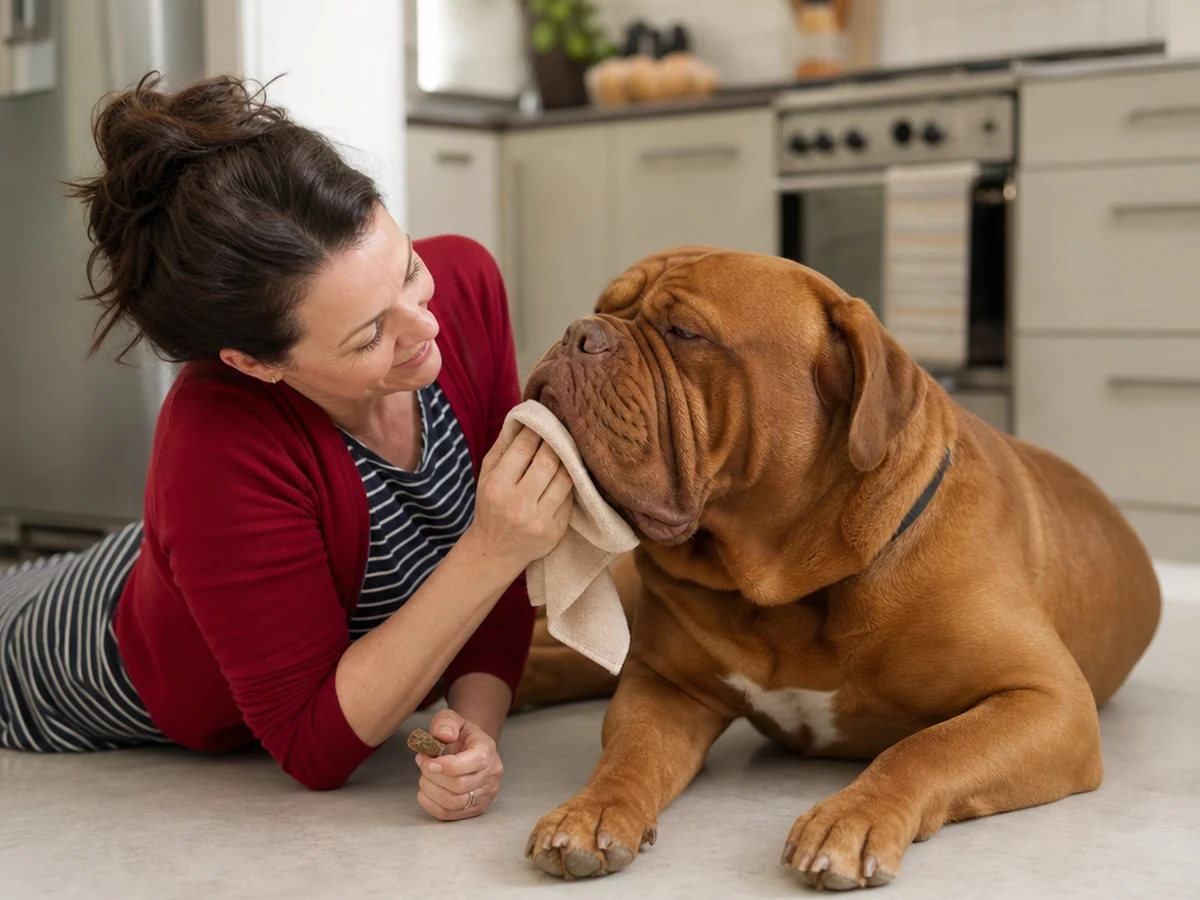
Several triggers push the volume up, and knowing them lets you predict the mess and place a cloth before it happens:
- Heat raises the flow, so a warm afternoon or a stuffy car means more drool than a cool morning.
- Excitement brings a surge, which is why greetings and the minutes before dinner are the wettest moments.
- Food and water soak into the jowls, and the bowl comes back out a few minutes later as drips.
- Head shakes fling what has collected, so the walls and furniture near the dog's favorite spot take the hits.
If you read the drool as misbehavior, your reaction shows in your hands. A sudden grab or an irritated sigh teaches a sensitive dog that hands near the face predict a bad mood. Dogues of proper temperament are described as sweet and sensitive souls, and sensitive dogs remember how face handling felt. Meet every drip with a calm routine. Plan for the drool the way you plan for rain.
Training Starts With a Towel That Predicts Treats
The towel needs a good reputation before it touches a face. Right now it may predict something unpleasant, a hurried wipe at a messy moment, so the first job is to rewrite that meaning. The sequence is simple: the towel appears, a treat follows, the towel disappears, and nothing gets wiped. Every step here follows the reward-based methods only position, using treats, praise and a marker word.
The same logic appears in muzzle-training guidance, where rewards come first so the dog sees the object as good news, and forcing it on an untrained dog tends to scare them and make each later attempt harder. A towel works the same way. Pay for calm first contact and every later wipe starts from a good place.
Work through the first sessions in the sequence below, and advance only after the dog has stayed relaxed at a given step several times running.
- Choose a quiet moment when the dog is settled, and hold a folded towel low and still, or lay it on the floor.
- The instant the dog looks at the towel, say a marker word like yes and hand over a tiny soft treat.
- Mark and pay a little better for a sniff, and better again for a nose bump.
- Put the towel away while the dog is still keen, so every session ends on a win.
- Repeat across several sessions until the dog turns toward the towel when it appears, ears up and body loose.
Let the dog's response tell you what to change. A dog who leans away needs a smaller fold and more distance. A dog who looks with no spark needs a softer, smellier treat. A dog who grabs and tugs earns nothing for the grab, so lay the towel down and pay only the calm touch. A dog who bumps it at once is ready for contact on the cheek.
Stubbornness deserves a word. Trainability is rated 4 of 5, so a Dogue who digs in is usually weighing whether the payoff is worth the effort. Raise the treat value before you raise the pressure, and keep the mood light.
Jowl Handling Training Grows From Tiny Steps
The jowls are the most useful place to teach and the most sensitive. If the dog accepts handling there, you can wipe, check the folds and let a vet look inside the mouth. If not, every attempt becomes a standoff. The way through is to cut the job into pieces so small that the dog is nearly always right, and to pay after each one. Change only one thing per session.
Start With a Chin Rest
Let the dog rest their chin in your open palm, which keeps your hand under the head where a heavy dog can see it. Mark and treat the moment the weight settles. If the dog hesitates, hold a treat low so the chin drops naturally, then build toward a few relaxed breaths of rest before paying. Approach from the side, because a hand coming over the top of the head is hard for any dog to read.
Add the Lip Lift
With the chin resting, slide a finger along the outside of the jowl, then mark and pay. Next raise the edge slightly for a moment, mark and pay. Stretch the lift over many sessions until you can see the skin beneath. If the dog pulls away, you lifted too far or held too long, so go back to the last step they enjoyed and ask for less.
From One Wipe to a Full Wipe
Bring a dry corner of the cloth to the lifted jowl for a single pass, then pay. Only when that feels boring do you add a second pass, then the other side, then the chin and under the lower lip. Blot instead of scrubbing, since damp skin is easily irritated. A full wipe is just these pieces linked, finished with a treat so the end of the cloth is the best moment.
While you are in the folds, look for redness, a sour smell or sticky skin, and treat that look as part of the session. Regular vet visits fit here too, since a dog who accepts the lift lets the vet examine the mouth and skin without a fight.
Short Training Sessions Fit a Dogue de Bordeaux
A sensitive, heavy dog gives you a narrow window. The standard describes the breed as calm and balanced with a high stimulus threshold, so a Dogue in a quiet room settles quickly, but that calm can slide into reluctance when a session drags. Energy is rated a moderate 3 of 5, so they would sooner lie down than keep working. Stop while the dog still wants more, which usually means after a handful of repetitions.
Brief sessions also protect the relationship. A 2020 study of 92 companion dogs measured stress after training and found calmer bodies and smaller cortisol rises in dogs trained with rewards. A dog who finishes relaxed comes back willingly, which matters for a breed that can dig in when they are not enjoying themselves.
Watch for these signs that a session has run its course, and stop on the first one rather than the third:
- Yawning, lip licking or a sudden sniff of the floor, which are small requests for a break.
- Turning the head away or leaning out of reach after a step that used to go well.
- Slower, heavier movement or panting, especially on a warm day when a big dog tires faster.
- Ignoring treats that the dog normally takes with enthusiasm.
- Lying down and refusing to rise, a polite way of saying they are finished.
When any of these appears, end calmly. Give a last treat, put the cloth away and let the dog rest. Ending early costs the dog nothing and teaches them that showing discomfort works, so they have no reason to escalate. Several brief sessions spread across a day beat one long one.
Where a Dogue de Bordeaux's Drool Lands Decides Towel Spots
Drool follows habits, so cloth placement should too. Watch your dog for a few days and note where the mess builds. Put a cloth at each place so the wipe happens when the drool does, because skin folds that stay wet are where irritation starts. A wipe is about keeping the jowls dry as much as keeping the room clean.
This table matches each common spot to its job.
| Spot | What happens there | Towel plan |
|---|---|---|
| Food and water bowls | Jowls soak up water and food, then drip on the floor | Cloth on a hook nearby, a wipe as soon as the dog finishes, and a washable mat under the bowls |
| Front door | Excited greetings bring a surge of drool | Cloth in a basket, and a wipe before the dog meets a guest |
| Couch | Head rests leave wet patches on fabric and on you | Washable throw on the dog's spot, a cloth over the arm, and a wipe before they climb up |
| Car | A warm car means heavier drool | Towel over the seat, a cloth in the door pocket, and a wipe on arrival |
Timing matters as much as place. Wipe after meals and long drinks, before the dog lies on a sofa or bed, and once excitement fades, because a calm dog accepts the cloth more readily. If you wait until the drool dries, you face a crusty fold and a dog who dislikes the scrubbing. Keep a treat pouch at each spot, and the location itself starts to predict a good moment.
A bib or neckerchief can protect clothing on trips, but introduce it with the patience you gave the towel. The RSPCA advises getting dogs used to grooming equipment gradually with rewards, and a bib counts as equipment. Let the dog sniff it, pay, then drape it for a moment and pay again.
Visitors and children need a plan too. Good with young children is rated 3 of 5, meaning with supervision, so face wiping stays an adult job. Our guide to socializing a Dogue around kids, dogs and strangers covers introductions without pressure.
Signs Towel Training Works and When to Get Help
A French Mastiff will drool for life, so a dry face was never the goal. The goal is a calm, willing wipe: a dog who walks to the towel, stays loose through it and lets you see what the jowls are hiding. For a sensitive, sometimes stubborn breed, that willingness is worth more than speed.
Compare your dog with these two lists each week and let them decide whether you advance, repeat a step or call for help. It is working when you see.
Your dog is ready to move on when they walk to the towel as soon as it appears and offer their face before you ask. Their body stays soft through the wipe, with a loose mouth, relaxed eyes and an easy tail, and they recover at once afterward and look to you for the next treat. They also allow a jowl lift and a look at the folds without pulling away.
Ask a vet or trainer for help when you see:
- Flinching, ducking or freezing as the towel nears, even after you return to earlier steps. A trainer who uses rewards can help you rebuild.
- Growling or snapping, which means the pace has outrun the dog. Pause face handling and bring in that trainer.
- Redness, sores, a sour smell or sticky skin in the folds, which belongs with your vet.
- A sudden change in drooling, especially much heavier drool, pawing at the mouth, trouble eating or a swollen face. Call your vet promptly.
Progress is rarely a straight line. If a good week is followed by a flinch, return to the last step the dog enjoyed, pay well and rebuild. Patient steps paid in soft treats turn the daily wipe into a habit the dog accepts, and that habit keeps you on top of the folds, the mouth and the mess.
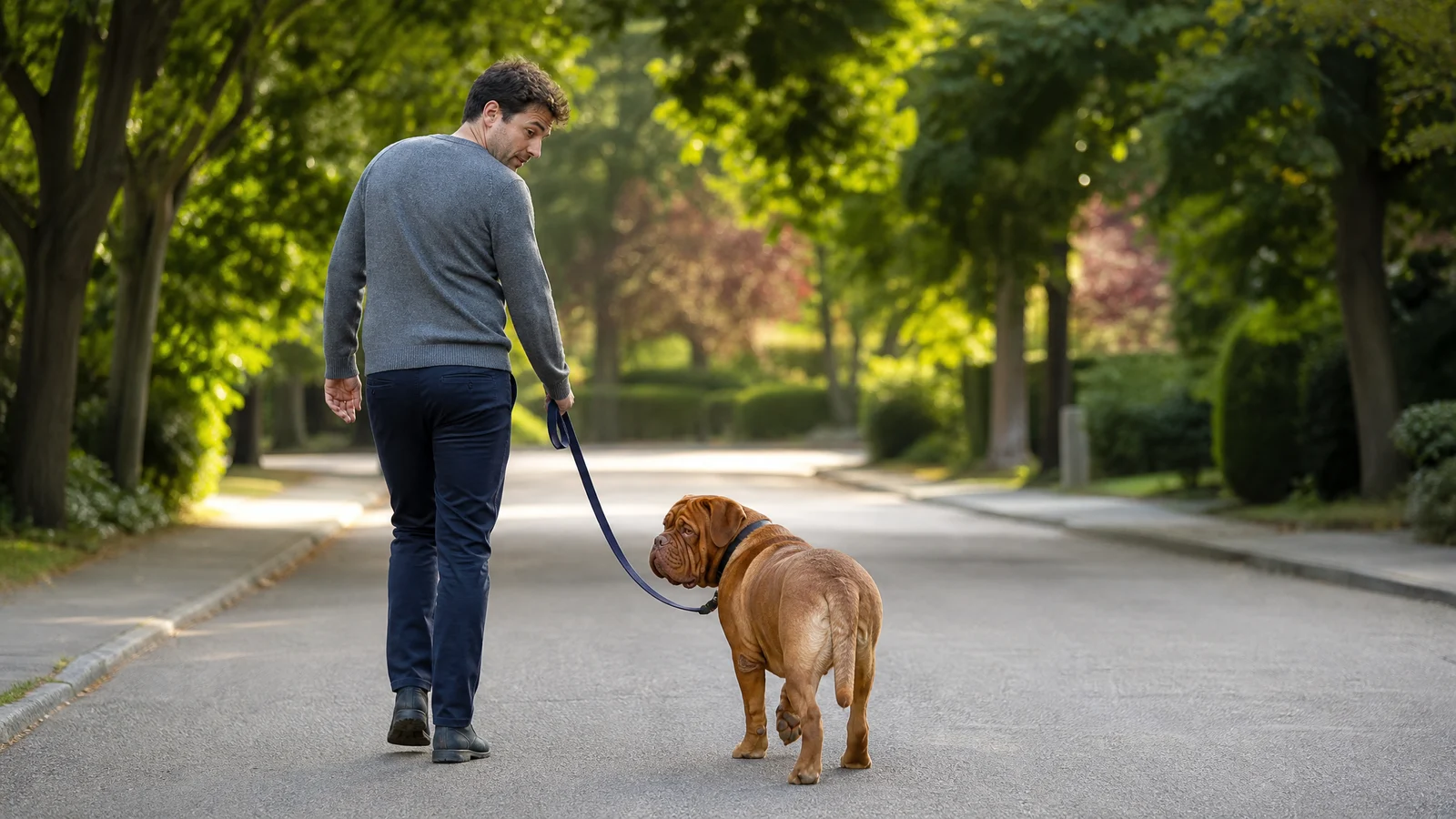
 Exercise and jobsCart Pulling, Rally or Agility: Which Jobs Suit a Dogue de Bordeaux?
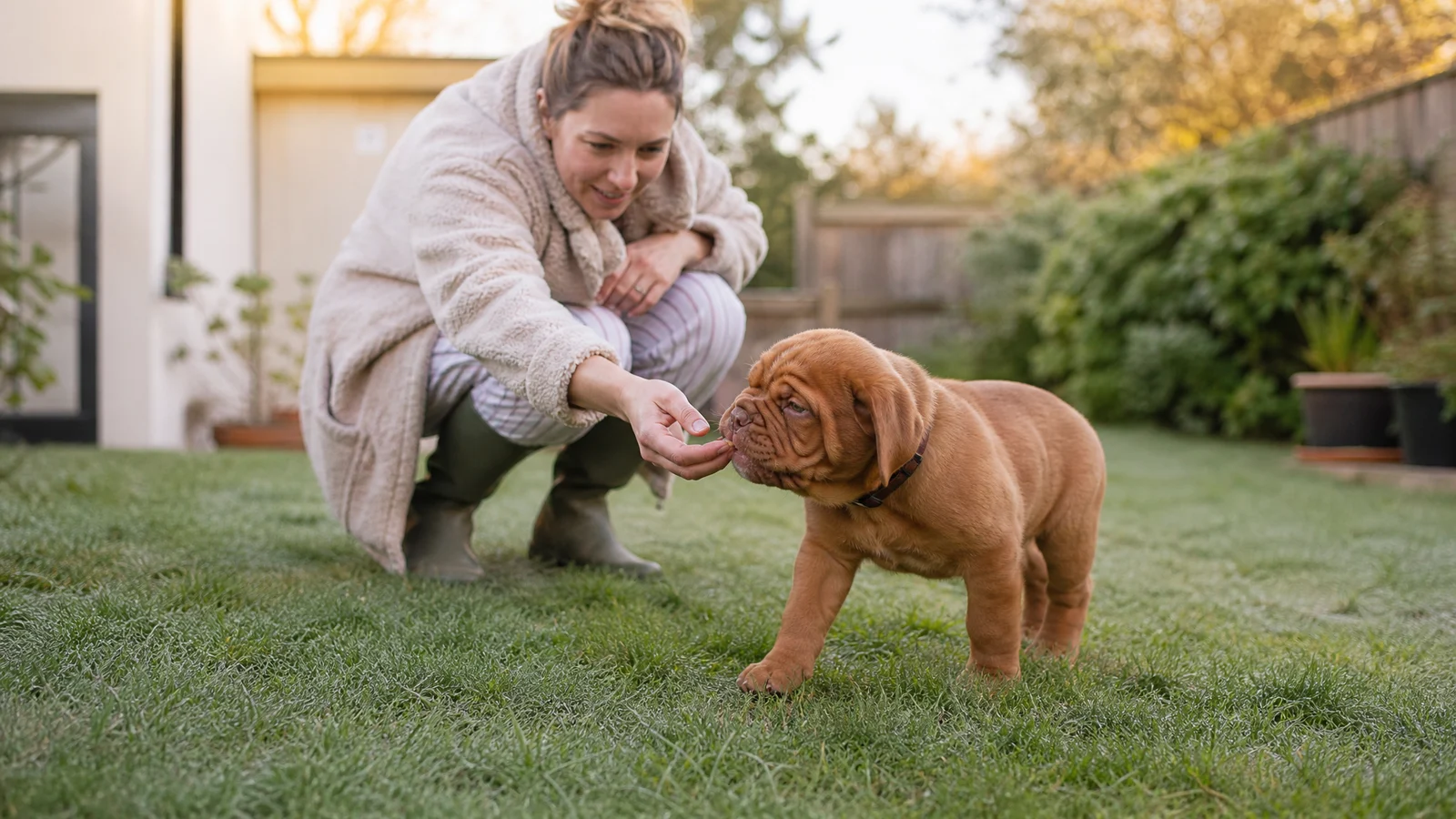
 Exercise and jobsDogue de Bordeaux Exercise Requirements: Body and Brain
 Training basicsA Dogue de Bordeaux Puppy Bathroom Routine That Sticks